2D Shapes Teaching Resources
Bring dimension to 2D shapes for primary students with printable worksheets, digital activities, maths games and more — created by teachers for teachers!
This comprehensive collection of teaching resources includes editable lessons on two-dimensional shapes, aligned to the Australian curriculum and ready to be printed and used in the classroom. Explore the entire collection to find educational games, geometric activities, posters and vocabulary word wall cards to assist your students when they are learning to identify 2D figures by their names and their attributes.
Teaching this part of the maths curriculum for the first time in a while? Read on for a primer from the teachers on the Teach Starter team.
What Are 2D Shapes?
Two-dimensional shapes, or 2D shapes, are shapes that have only length and width, but no depth. Each of these geometric shapes has its own unique characteristics and properties, such as the number of sides, the types of angles and the relationship between the sides and angles.
For example, a square has four equal sides and four right angles, while a circle has no sides and no angles.
Teaching about 2D geometric shapes is crucial in those early years classrooms as these are the building blocks of more complex geometric concepts. Understanding them is an important foundation for developing spatial reasoning skills. It will also lay the groundwork for learning about symmetry, angles and perimeter and area, among other geometry and measurement concepts.
2D Shapes — A Kid-Friendly Definition
Looking to provide a simple definition for your primary students? Here's a kid-friendly definition you can use:
A 2D shape is a flat shape that has only two dimensions — length and width. When something is two-dimensional, it's flat like a drawing or a picture on a piece of paper.
Understanding 2D shapes is important because it helps us recognise and describe the shapes we see around us, and it can also help us with math and other subjects.
2D Shape Examples
A definition is a good start, but providing concrete examples will help students begin to wrap their heads around these two dimensional-objects!
Let's look at some of the common examples of 2D shapes that we teach in the early years:
Square
A square is a 2D shape with four straight sides that are all equal in length and four right angles. It is a type of rectangle and a type of parallelogram.
Rectangle
A rectangle is a 2-dimensional shape that has four straight sides. Unlike a square, a rectangle has two sides that are longer than the other two. It has four right angles and opposite sides that are parallel and equal in length.
Parallelogram
Like a rectangle and square, the parallelogram has four sides and is considered a 2D shape. The four straight sides of a parallelogram are parallel to each other. Opposite sides of a parallelogram are equal in length, and opposite angles are equal in measure. Squares, rectangles and rhombuses are all examples of parallelograms.
Trapezium
A trapezium (or trapezoid) is a quadrilateral shape with two parallel sides and two non-parallel sides. The parallel sides are called the bases of the trapezium, and the non-parallel sides are called the legs. Even though a trapezium has four sides, it is not a parallelogram!
Triangle
A triangle is a two-dimensional shape that has three straight sides and three angles. The angles of a triangle always add up to 180 degrees.
Circle
A circle is a 2D geometric shape that is round and has no straight sides. It is defined as the set of all points in a plane that are at a fixed distance (called the radius) from a single point (called the center).
Ellipse
An ellipse is a 2D shape that is similar to a circle, but its shape is stretched out or elongated. It is defined as the set of all points in a plane whose distances from two fixed points (called the foci) add up to a constant value.
Pentagon
A pentagon is a 2D shape that has five straight sides and five angles. The word 'pentagon' comes from the Greek words 'penta' (meaning 'five') and 'gonia' (meaning 'angle'). Each angle of a regular pentagon measures 108 degrees, and the sum of the angles in a pentagon is 540 degrees.
Hexagon
A hexagon is a 2D shape that has six straight sides and six angles. Each angle of a hexagon measures 120 degrees, and the sum of the angles in a hexagon is 720 degrees. Snowflakes are a common example of hexagons found in nature, and so is the honeycomb!
Rhombus
A rhombus is a 2D shape with four straight sides that are all equal in length. It is a type of parallelogram, and it has opposite angles that are equal in measure.
Octagon
An octagon is an eight-sided 2D shape. A stop sign is an octagon that students might recognise from seeing it along the road on the way to school.
Quadrilateral
A quadrilateral is a 2D shape with four sides and four angles. The sum of the interior angles of a quadrilateral is always 360 degrees. The following are all examples of quadrilaterals:
- Square
- Rectangle
- Parallelogram
- Trapezium
- Rhombus
What Are Polygons?
Many of the 2D shapes that students learn about are polygons.
A polygon is a 2D shape that has three or more straight sides and angles. Polygons can have any number of sides, but they must be straight, and they must not cross each other.
The word 'polygon' comes from the Greek words 'poly' (which means 'many') and 'gonia' (which means 'angle').
Here are some common examples of polygons:
- Triangles
- Squares
- Rectangles
- Pentagons
- Hexagons
- Octagons
A circle and an ellipse are both 2D shapes, but they are not polygons. They have a curved shape, while polygons consist of a closed structure with sides.
- Plus Plan
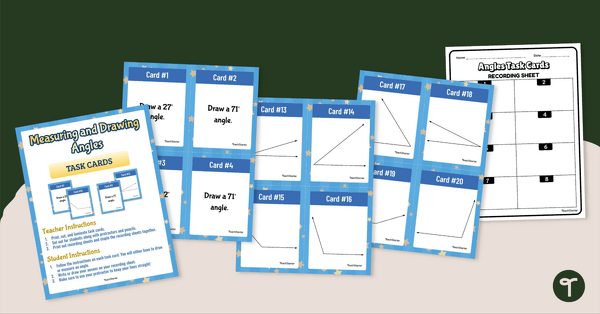
Measuring and Drawing Angles – Task Cards
Improve student understanding of angle measurement with this set of 24 task cards.
- Plus Plan
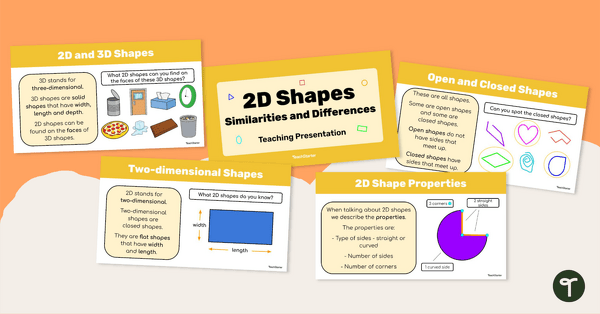
2D Shapes Similarities and Differences Presentation
Support teacher instruction to help enable students to identify similarities and differences between 2-D shapes with this 18-slide deck.
- Free Plan
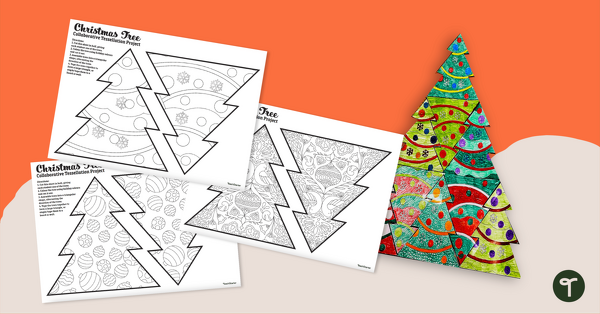
Tessellation Christmas Tree - Printable Project
Engage your students in the weeks before Christmas with a collaborative Christmas Tree Tessellation project.
- Plus Plan
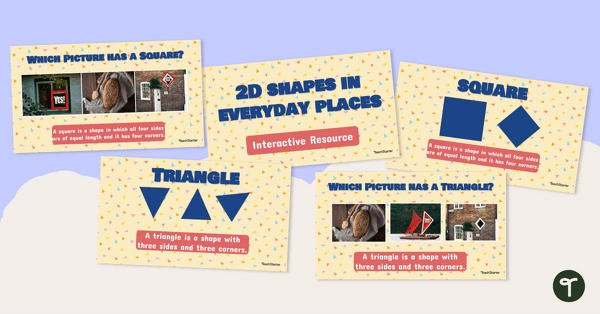
2D Shapes in the Environment Interactive Activity
Teach students to recognise and name 2D shapes in component parts of everyday items in their environment.
- Plus Plan
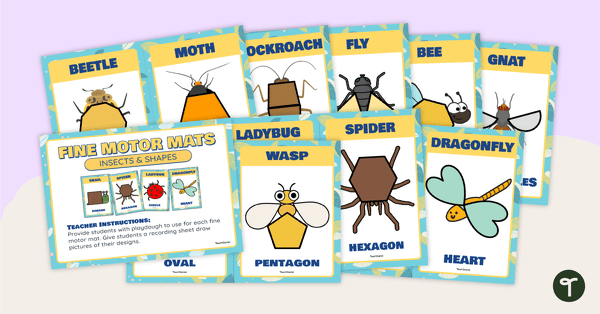
Bug Shapes - Playdough Mats
Build fine motor skills and build shape recognition skills with a set of fun minibeast playdough mats.
- Free Plan
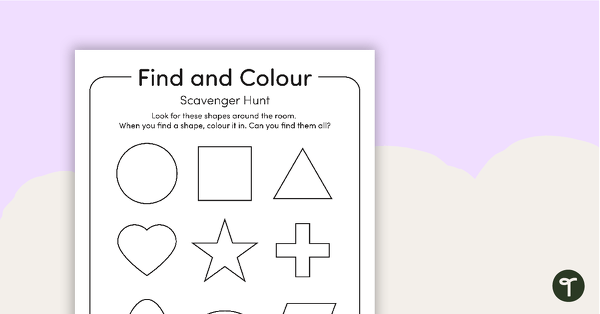
Find and Colour – Scavenger Hunt
A scavenger hunt where students search for 2D shapes in their surrounding environment.
- Free Plan
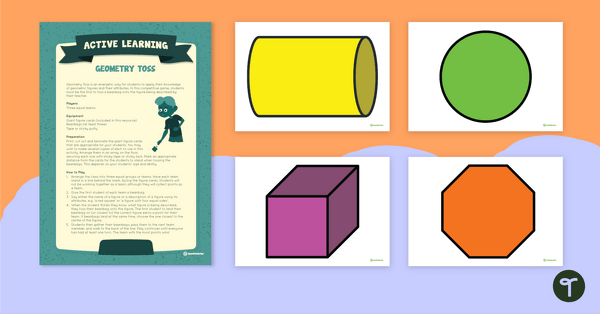
Geometry Toss - Active Learning Game
Explore the differences between 2D shapes and 3D objects with an active game!
- Plus Plan
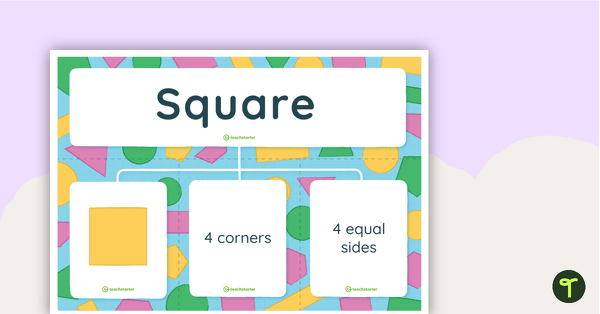
2D Shape Match-up Puzzles
A set of puzzles that match up 2D shapes and their properties.
- Plus Plan
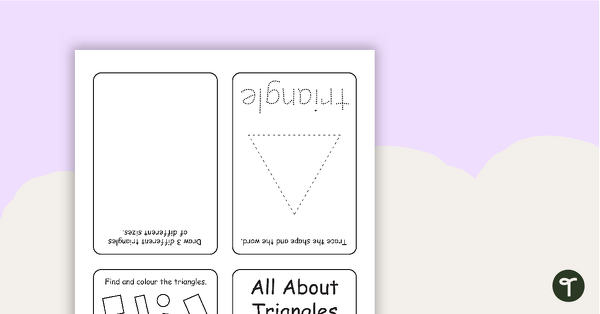
All About Triangles Mini Booklet
A mini booklet to assist younger students in recognising and drawing triangles.
- Plus Plan
2D Shape Character Templates
A cute 2D shape display for your classroom.
- Plus Plan
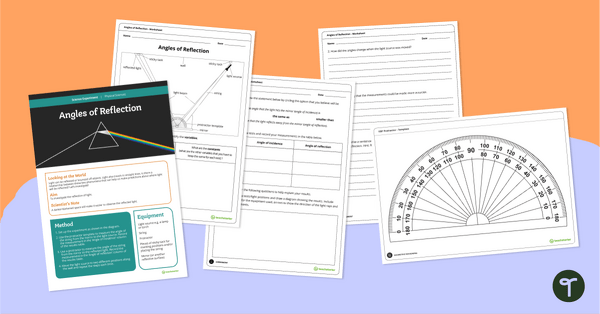
Science Experiment - Angles of Reflection
A science experiment that explores reflected light.
- Plus Plan
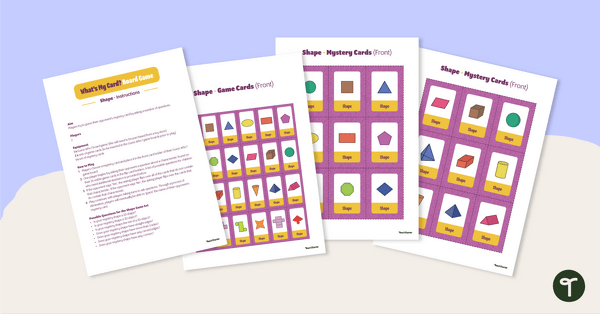
What's My Card? Shape Board Game
Consolidate knowledge of 2d shapes and 3D objects with a game of shape Guess Who!
- Plus Plan
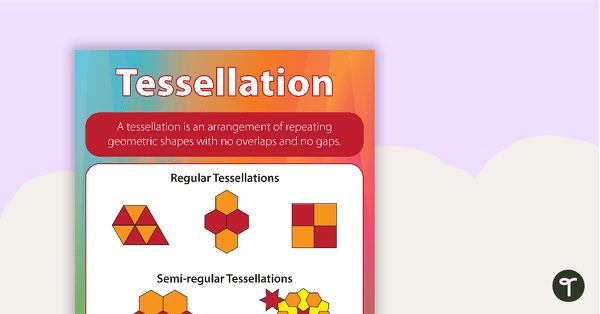
Tessellation Poster
Making tessellating patterns is fun!
- Plus Plan
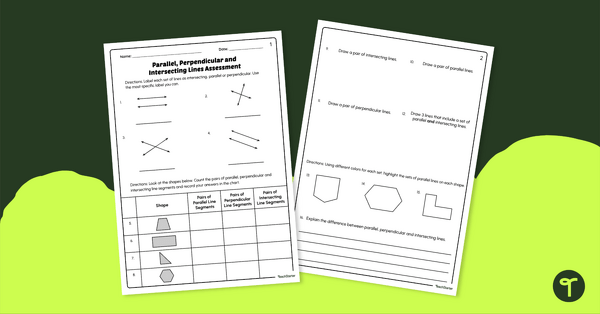
Parallel and Perpendicular Lines Quiz
Administer this parallel and perpendicular lines quiz to assess your students’ ability to identify types of line pairs in a variety of settings.
- Plus Plan
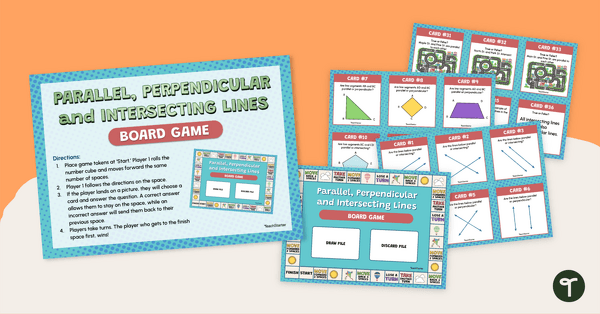
Parallel Perpendicular Lines Activity — Board Game
Play this parallel perpendicular lines activity with your students to give them practice identifying line types in a variety of settings.
- Plus Plan
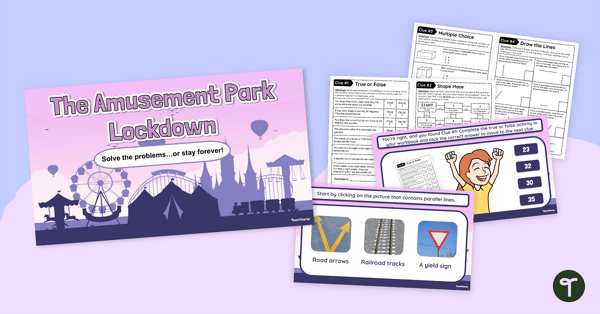
Parallel and Perpendicular Lines Activity — Escape Room
Engage your students with this parallel and perpendicular lines activity that encourages cooperation and problem solving to escape!
- Plus Plan
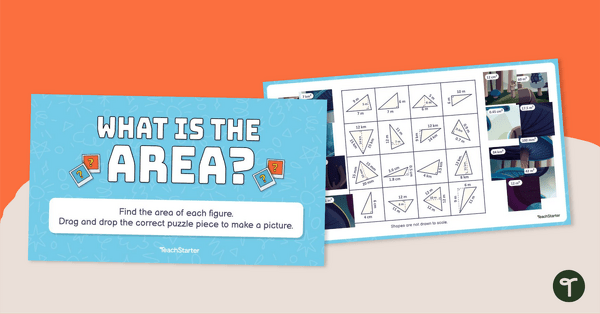
Interactive Area Puzzle (Triangles)
Have your students find the area of 16 triangles on the board and match the corresponding pieces to reveal a mystery picture.
- Plus Plan
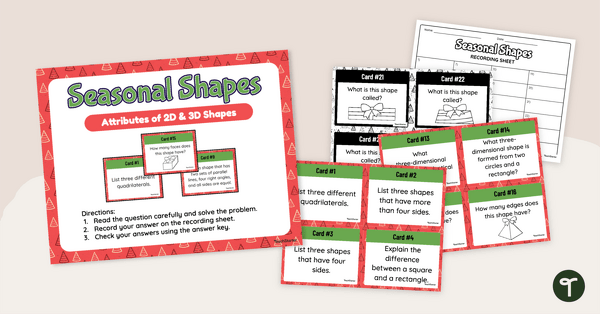
Christmas Maths - Properties of Shapes Task Cards
Combine Christmas and maths with these 2D and 3D Shape Christmas Maths Activity Task Cards for Year 4.
- Plus Plan
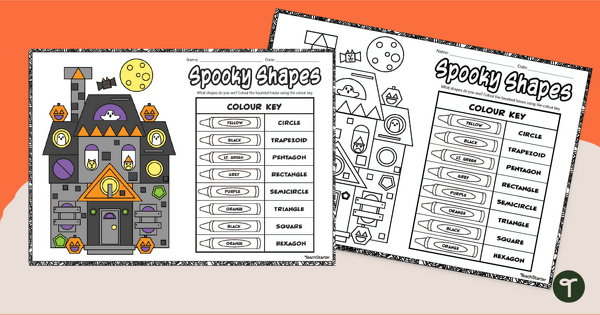
Halloween Shapes - Colour By 2D Shapes Worksheet
Don’t get too spooked while trying to identify 2D shapes with a printable Halloween Shapes Colour by Code worksheet!
- Plus Plan
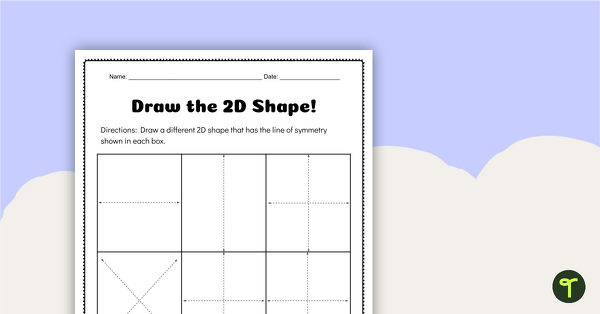
Draw the 2D Shape! Worksheet
Use this single-page symmetry worksheet to spark students’ creativity, as they think of and draw shapes which fit the provided lines of symmetry.
- Plus Plan
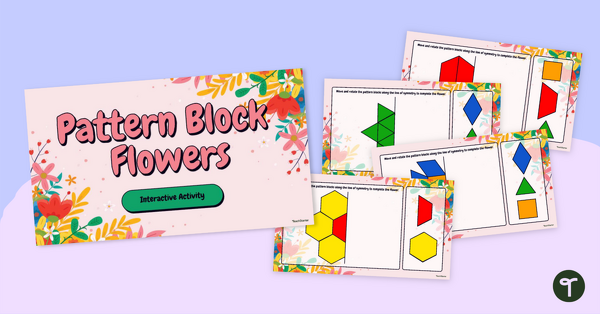
Pattern Block Flowers Interactive
Use this flower-themed interactive activity for your students to practise using manipulatives to create or expand on shapes using a pattern or symmetry model.
- Plus Plan
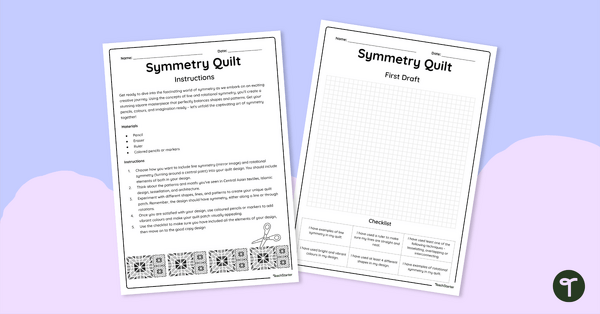
Line and Rotational Symmetry Quilt Activity
Have your students apply their knowledge of line and rotational symmetrical designs and collaborate with their peers using this fun quilt design activity!
- Plus Plan
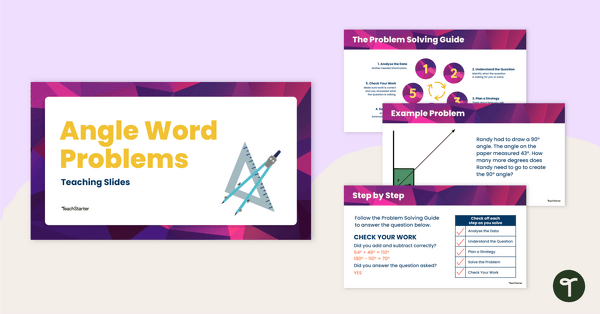
Angle Word Problems Teaching Slides
Help your students tackle angle word problems with ease using this step-by-step problem-solving guide.
- Plus Plan
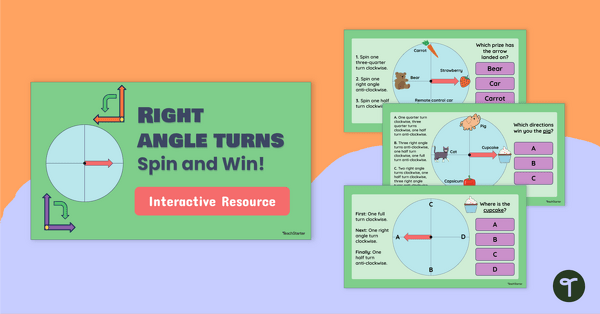
Right Angle Turns: Spin and Win! – Interactive Game
Get your Year 3 students spinning to win with this engaging digital maths game about right angles as measures of a turn.
- Plus Plan
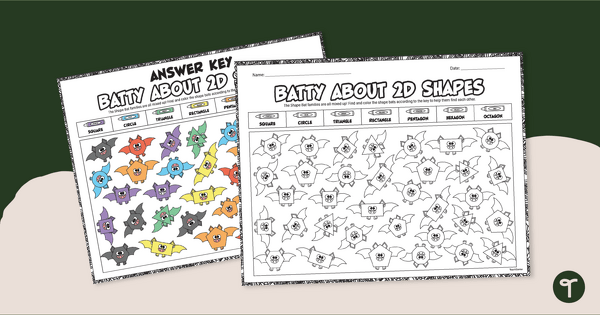
Batty for 2D Shapes - Halloween Shapes Worksheet
Go batty and identify the 2D shapes with a printable Halloween Shapes worksheet.
- Plus Plan
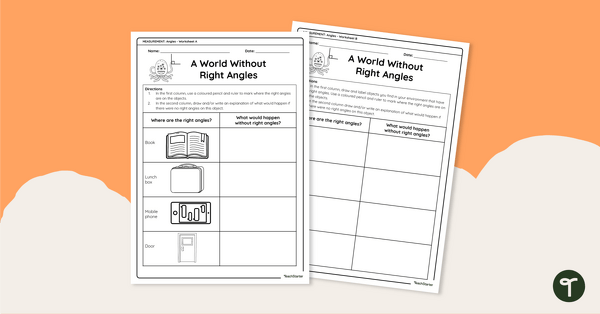
A World Without Right Angles – Worksheet
Help your students explore the vital role that right angles play in our environment with this differentiated maths worksheet.
- Plus Plan
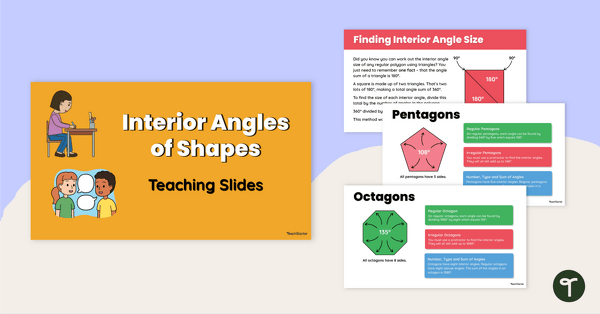
Interior Angles of Shapes Teaching Slides
Explore the interior angles of common two-dimensional shapes with this comprehensive set of teaching slides.
- Plus Plan
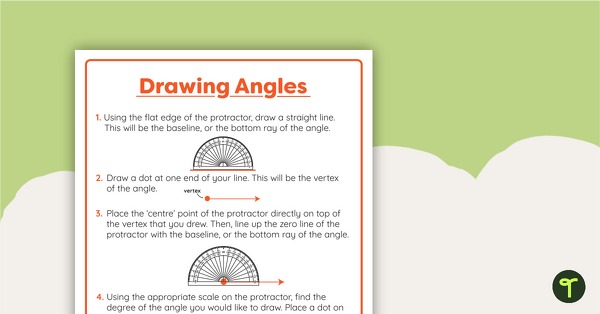
Drawing Angles Poster
Remind your students how to draw angles using a protractor with this classroom anchor chart.
- Plus Plan
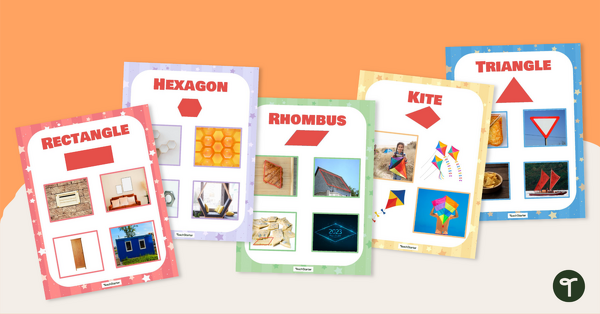
2D Shapes in the Environment Poster Pack
Explore 2D shapes in the environment using this set of 8 display posters showing the shapes and everyday examples.
- Plus Plan
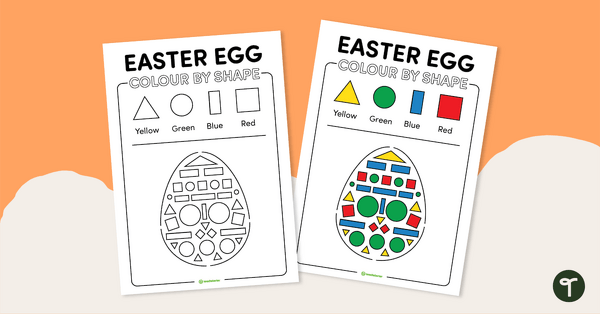
Colour by 2D Shape (Easter Egg)
An Easter-themed colour by 2D shape activity.
- Plus Plan
Shape Seekers PowerPoint
An interactive 162-slide PowerPoint that follows the story of a professor and their new invention that turns 2D shapes into 3D objects.
- Plus Plan
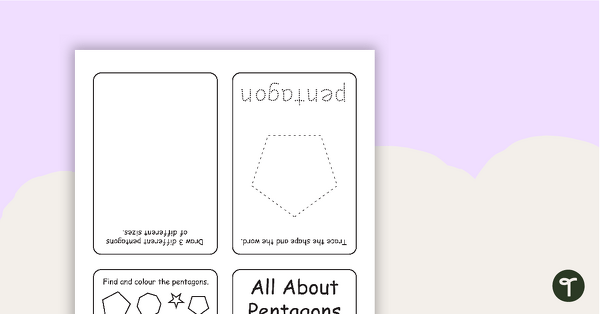
All About Pentagons Mini Booklet
A mini booklet to assist younger students in recognising and drawing pentagons.
- 2D Shapes Worksheets
- 2D Shapes Games
- 2D Shapes Posters
- 2D Shapes Teaching Presentations
- 2D Shapes Templates
- 2D Shapes for Preschool/Kindergarten
- 2D Shapes for Foundation Year
- 2D Shapes for Year 1
- 2D Shapes for Year 2
- 2D Shapes for Year 3
- 2D Shapes for Year 4
- 2D Shapes for Year 5
- 2D Shapes for Year 6
- 2D Shapes for Year 7