Angles Teaching Resources
Explore angles worksheets, hands-on activities, games and more resources created by teachers for your lesson plans!
This collection of maths resources for primary school teachers is aligned with the Australian Maths Curriculum, and it's been stocked with everything you will need to teach students how to identify the different types of angles, measure real-life examples, determine the measure of an unknown angle and more!
Lay the groundwork for your students' understanding of geometry and spatial relationships with resources that have undergone a careful review by the maths teachers on the Teach Starter team to ensure they're ready for your lesson plans and your students!
New to teaching this portion of the maths curriculum? Or maybe you're just looking for fresh ways to engage your students on the topic? Read on for a primer from our teacher team, including a kid-friendly definition and a look at different types of angles and angle pairs from right to acute, complementary to adjacent and so on.
What Are Angles? A Kid-Friendly Definition
If you're introducing angles for the first time, it can be helpful to have a kid-friendly definition on hand to start the lesson. Here's one that our teacher team likes to use!
Shapes are made up of lines and corners, or what we call vertices. Angles are the measure of those corners or vertex points.
What Are the Different Types of Angles and Their Functions?
Depending on the year level you're teaching, we know the types of angles you will be talking about in your classroom will likely differ. That said, here's a quick reminder of the various types of angles, along with a look at their functions, to use as a refresher.
1. Right Angle
Right angles measure exactly 90 degrees and look like the corners of a square. They're found in shapes such as squares and rectangles, and they're typically the first angle kids learn about in primary school.
Right angles create stability in structures and ensure that objects fit together properly. They also help determine directions, so they play into map skills and navigation.
2. Acute Angle
An acute angle is one that measures less than 90 degrees but more than 0 degrees. Found all around us — from the corners in triangles to the hands of the classroom clock when it shows a time earlier than 3:00 — acute angles appear in designs and constructions anywhere a sharp or narrow corner is needed.
These angles are typically used to describe relationships in triangles and other geometric shapes.
3. Obtuse Angle
An obtuse angle measures more than 90 degrees but less than 180 degrees. This angle type can also be spotted in the classroom clock hands, but it appears when the time is after 3:00. Obtuse angles are also found in the shapes of many irregular polygons.

Obtuse angles can describe the bending or opening of objects, and they're used in design to create open space.
4. Straight Angle
Students are often surprised to find out that a straight line is a type of angle! Named a 'straight angle,' it measures exactly 180 degrees.
Understanding straight angles is fundamental to understanding the relationships between lines and their directions.

5. Reflex Angle
When you have an angle that measures more than 180 degrees but less than 360 degrees, it's called a reflex angle.
Reflex angles often appear in situations where bending or curving is important.
Types of Angle Pairs
In addition to the types of individual angles, there are also a host of angle pairs that have a special relationship with one another.
1. Adjacent Angles
When you have two angles that share a common vertex and a common side but do not overlap, they're known as adjacent angles.
2. Vertical Angles
Vertical angles are pairs of angles that are opposite when two lines intersect. They are always congruent, which means they have the same measure.
Upper years students who are ready to learn about the properties of angles formed by intersecting lines tend to start by learning about this angle type.
They'll find these angle pairs in the letter X and at some street intersections. Learning about them will form the basis for understanding angles formed by transversals.
3. Complementary Angles
When a pair of angles add up to 90 degrees, they're called complementary angles. These types of angles can be adjacent or non-adjacent.
These angles can also be found right in the classroom on your clock. They're the angles created between the minute and hour hands of a clock when they add up to 90 degrees.
4. Supplementary Angles
Supplementary angles combine to form a straight line. This angle pair represents two angles that add up to 180 degrees when put together.
Two sets of right angles can be supplementary as their sum is 180 degrees (90 + 90 =180), and a set of obtuse and acute angles can also be supplementary.
5. Corresponding Angles
Corresponding angles are in the same relative position on the two parallel lines and the transversal. They have equal measures.
Corresponding angles are found when a transversal intersects two parallel lines, such as in a fence or many different architectural structures.
6. Alternate Interior Angles
Angles that are on opposite sides of the transversal and inside the parallel lines are called alternate interior angles. They have equal measures.
7. Alternate Exterior Angles
Angles found on opposite sides of the transversal and outside the parallel lines are known as alternate exterior angles. Like alternate interior angles, these also have equal measures.
Like corresponding angles, alternate interior angles and alternate exterior angles can both be found when a transversal intersects two parallel lines.
8. Linear Pair
A linear pair is a set of two adjacent angles that is formed when two lines intersect each other at a single point.
- Plus Plan
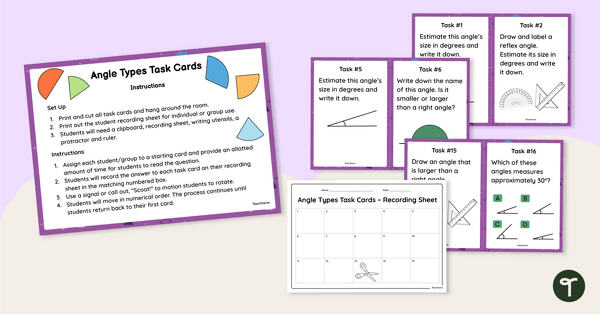
Types of Angles Task Cards
Explore the six main types of angles with this set of 24 task cards.
- Plus Plan
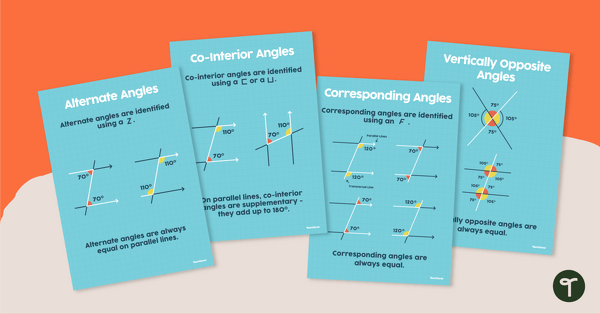
Advanced Angles Poster Pack
Teach your students about alternate, co-interior, corresponding and vertically opposite angles with this set of classroom posters.
- Plus Plan
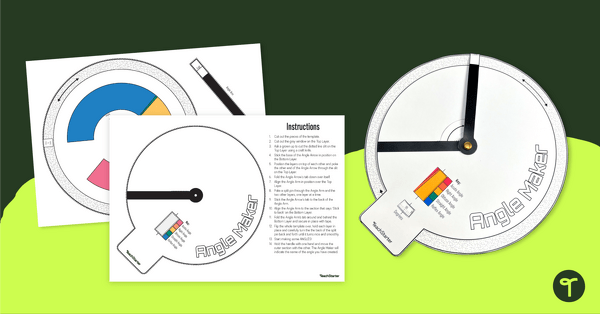
Printable Angle Maker Template
Create and classify some angles with this hands-on printable that is super fun to use.
- Plus Plan
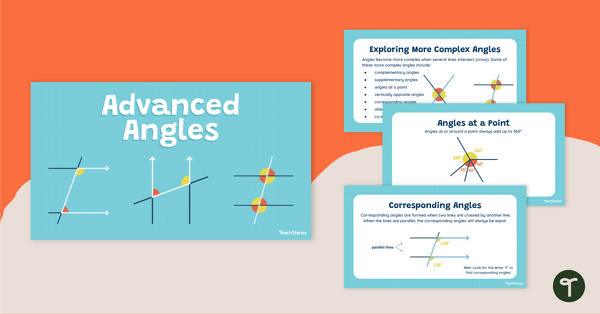
Advanced Angles Teaching Slides
Teach your students about advanced angle types with this teaching presentation perfect for upper primary school maths lessons.
- Plus Plan
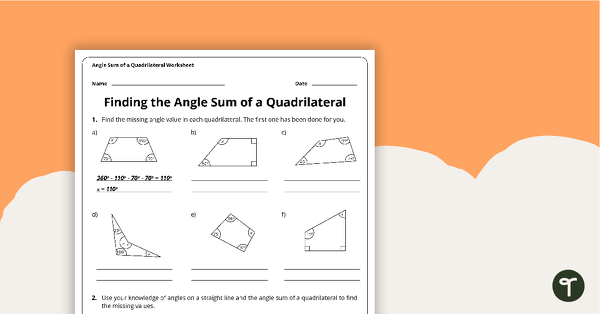
Angle Sum of a Quadrilateral – Year 7 Maths Worksheet
Calculate the missing angle in a variety of quadrilaterals with this one-page worksheet.
- Plus Plan
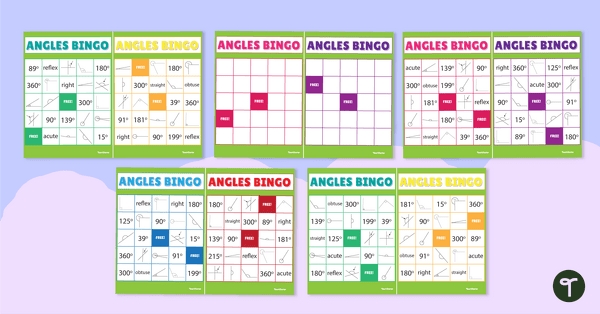
Angles Bingo
Generate excitement about angles in your classroom by playing this whole-class types of angles bingo game.
- Plus Plan
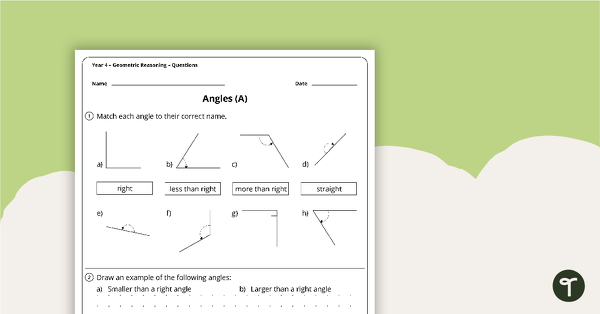
Geometric Reasoning Worksheets - Year 4
2 geometric reasoning worksheets linked to the Australian Curriculum.
- Plus Plan
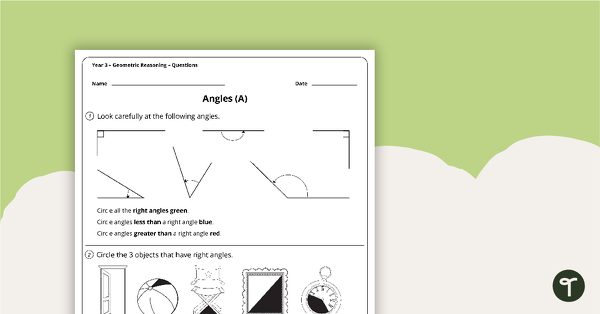
Geometric Reasoning Worksheets - Year 3
2 geometric reasoning worksheets linked to the Australian Curriculum.
- Plus Plan
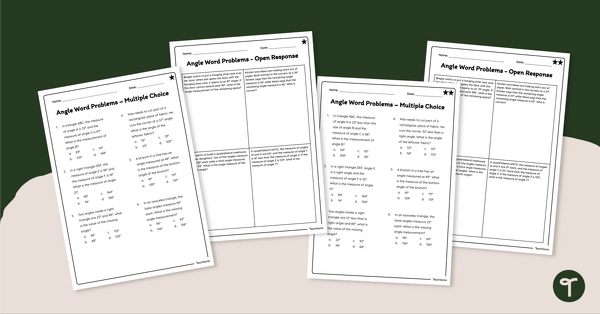
Angle Word Problems – Worksheet
Download these angles word problem worksheets so your students can practise calculating missing angles.
- Plus Plan
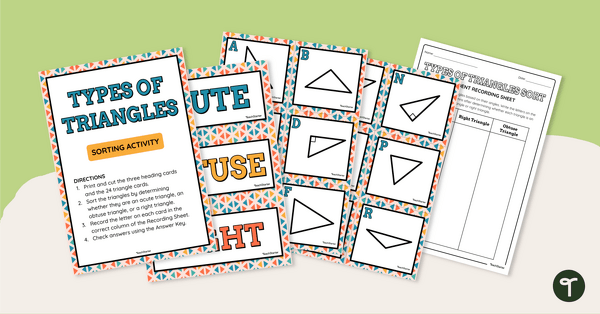
Classifying Triangles (By Angles) Sorting Activity
Play this sorting game when learning how to classify triangles according to their internal angles.
- Free Plan
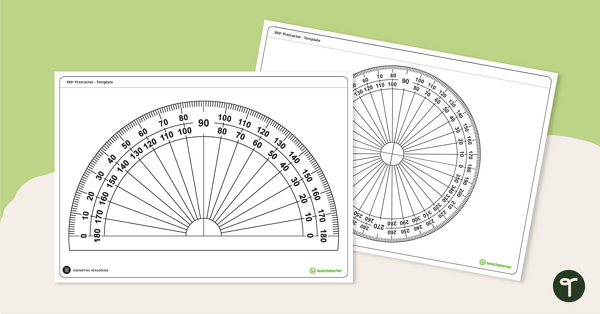
Printable Protractor Templates
Teach your students how to measure angles using a protractor with these 180° and 360° printable protractor templates.
- Plus Plan
Types of Triangles Interactive Game
Explore the properties of acute, right and obtuse triangles with this interactive space adventure!
- Plus Plan
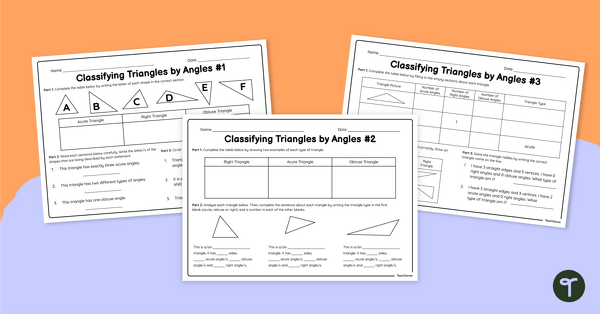
Classifying Triangles (By Angles) Worksheets
Practise classifying and sorting triangles based on their internal angles with this set of 3 worksheets.
- Plus Plan
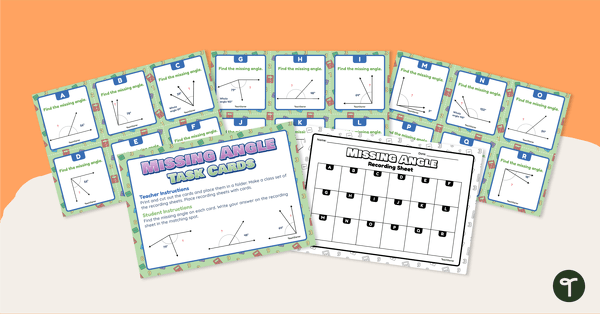
Missing Angle Task Cards
Practise how to find the measure of a missing angle with this set of 18 task cards.
- Plus Plan
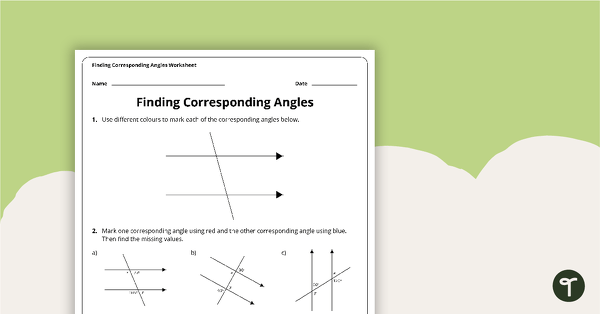
Finding Corresponding Angles – Year 7 Maths Worksheet
Identify and calculate corresponding angles with this one-page maths worksheet.
- Plus Plan
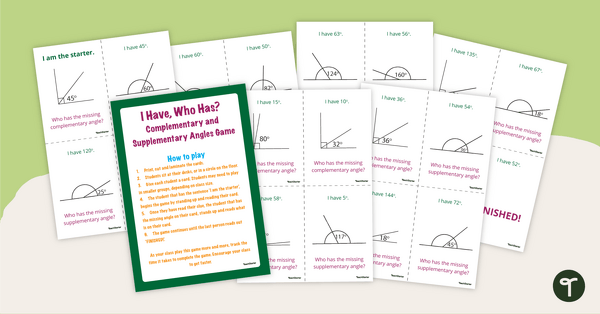
I Have, Who Has? – Complementary and Supplementary Angles Game
Play a whole-class game to review complementary and supplementary angles.
- Plus Plan
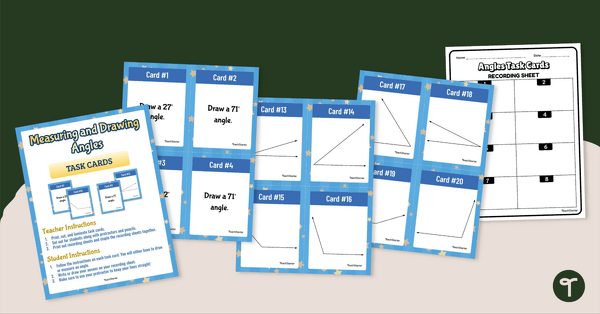
Measuring and Drawing Angles – Task Cards
Improve student understanding of angle measurement with this set of 24 task cards.
- Plus Plan
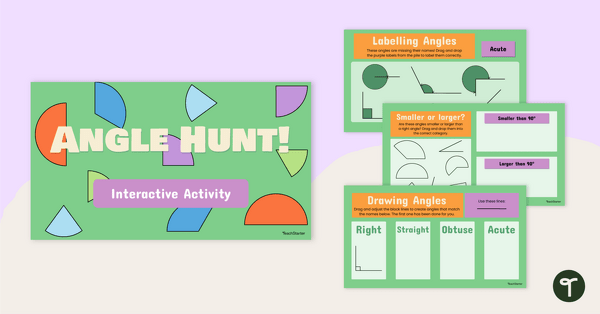
Angle Hunt – Interactive Maths Game
Review the six main angle types (acute, right, obtuse, straight, reflex and revolution) with an interactive digital learning activity.
- Plus Plan
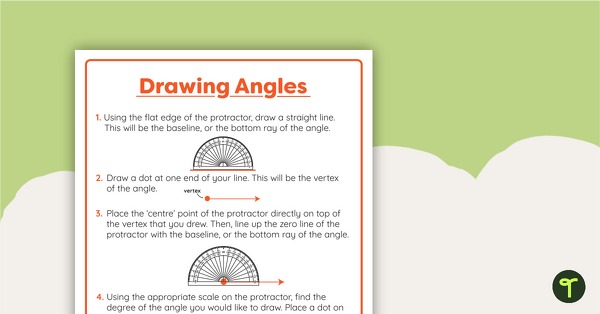
Drawing Angles Poster
Remind your students how to draw angles using a protractor with this classroom anchor chart.
- Plus Plan
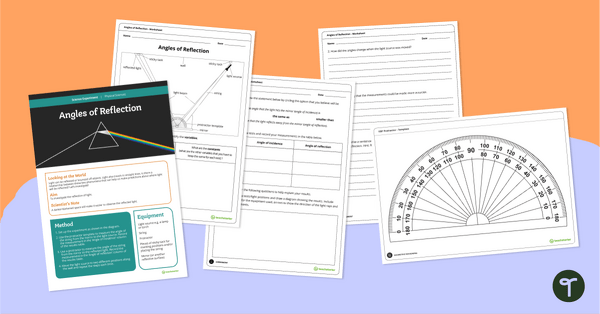
Science Experiment - Angles of Reflection
A science experiment that explores reflected light.
- Plus Plan
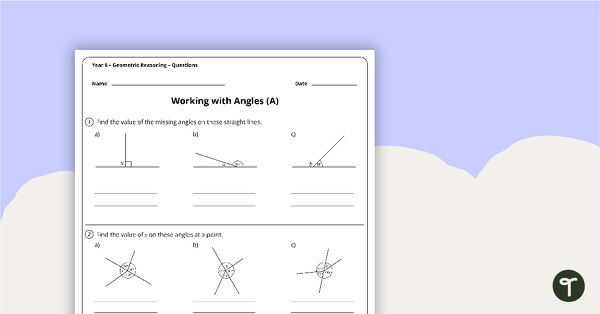
Geometric Reasoning Worksheets - Year 6
2 worksheets linked to the Australian Curriculum.
- Plus Plan
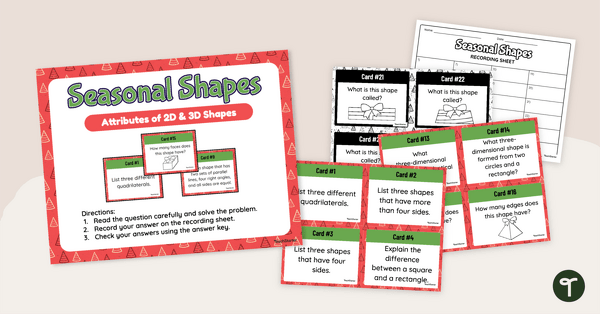
Christmas Maths - Properties of Shapes Task Cards
Combine Christmas and maths with these 2D and 3D Shape Christmas Maths Activity Task Cards for Year 4.
- Plus Plan
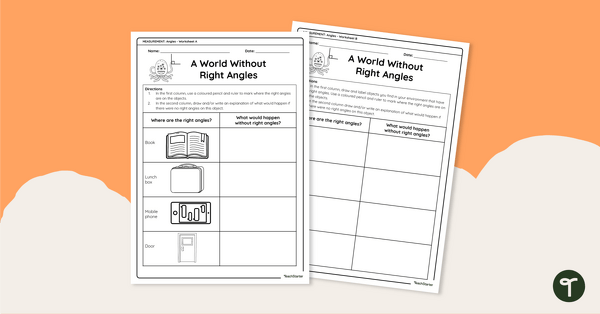
A World Without Right Angles – Worksheet
Help your students explore the vital role that right angles play in our environment with this differentiated maths worksheet.
- Plus Plan
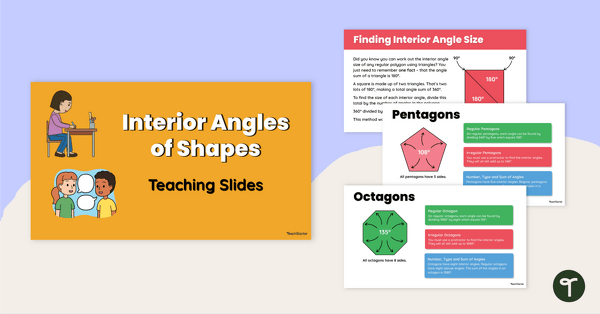
Interior Angles of Shapes Teaching Slides
Explore the interior angles of common two-dimensional shapes with this comprehensive set of teaching slides.
- Plus Plan
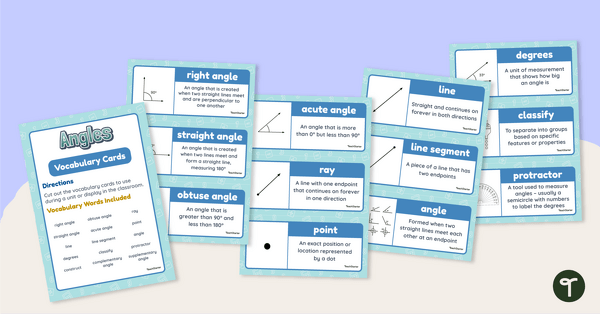
Understanding Angles – Word Wall Vocabulary Cards
Promote maths vocabulary development with this set of 15 vocabulary cards focusing on angles.
- Plus Plan
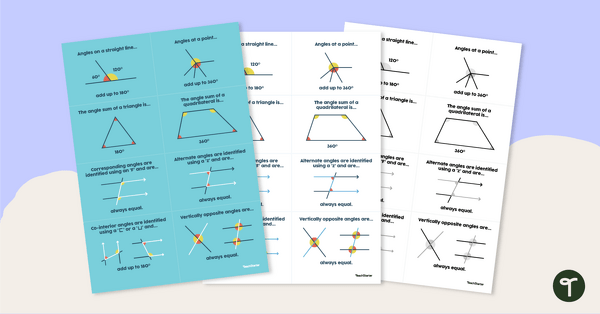
Advanced Angles Factsheet
Teach your students about angles and their properties with with this easy reference fact sheet.
- Plus Plan
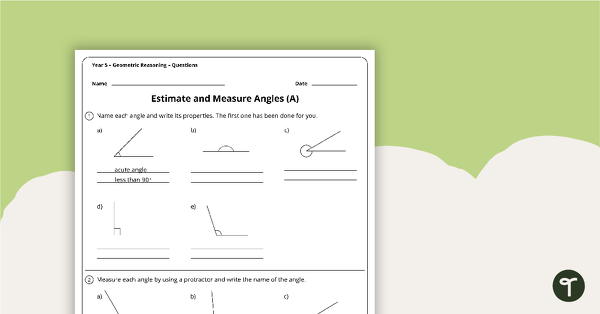
Geometric Reasoning Worksheets - Year 5
4 geometric reasoning worksheets linked to the Australian Curriculum.
- Plus Plan
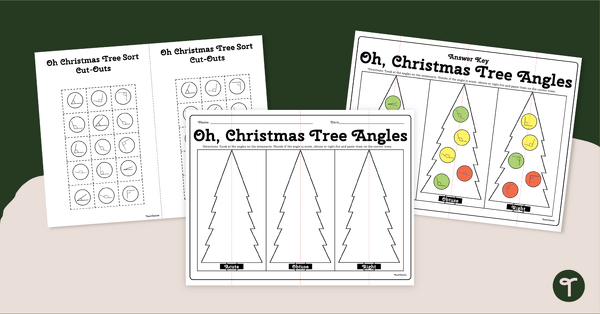
Christmas Angles Worksheets
Identify acute, obtuse, and right angles with a Christmas Angle Worksheet for Year 4.
- Plus Plan
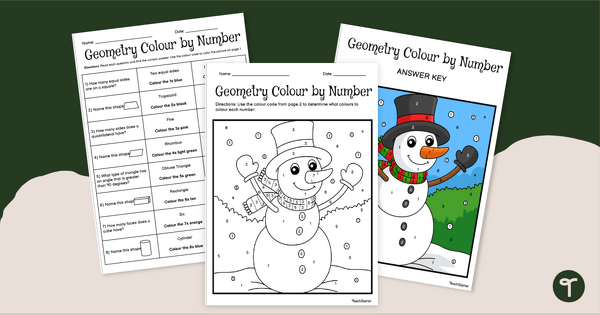
Christmas Colouring By Number - 2D and 3D Shapes Worksheet
Practise classifying 2D and 3D shapes with a printable Christmas colouring-by-number worksheet.
- Plus Plan
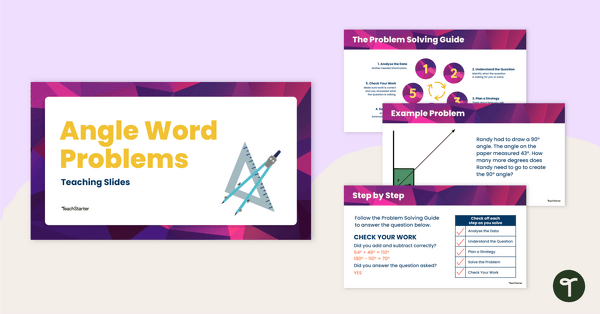
Angle Word Problems Teaching Slides
Help your students tackle angle word problems with ease using this step-by-step problem-solving guide.
- Plus Plan
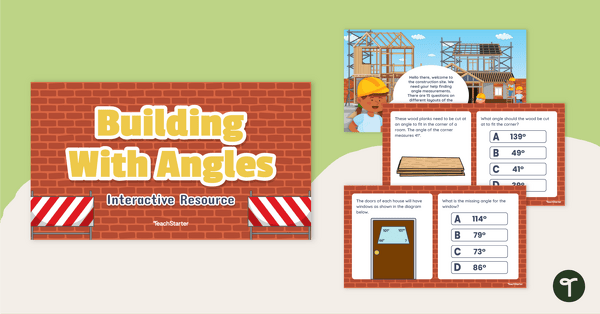
Building With Angles – Interactive Game
Transport your students to a local construction site to solve building-related angle problems with this interactive maths game.
- Plus Plan
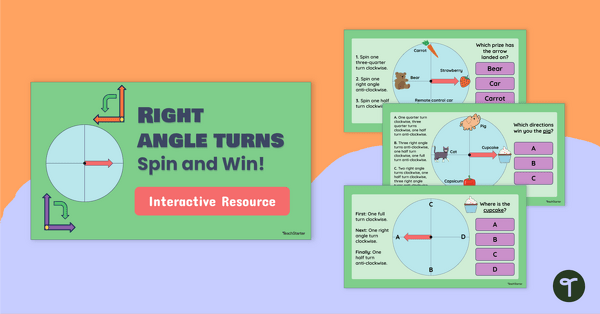
Right Angle Turns: Spin and Win! – Interactive Game
Get your Year 3 students spinning to win with this engaging digital maths game about right angles as measures of a turn.