Electrical Energy Teaching Resources
Build your electrical energy lesson plans with printable worksheets, activities and Google Slide templates created by teachers for primary science teachers like you.
This collection of Australian science curriculum-aligned resources includes editable options and resources that our teacher team has already differentiated for you to make science lesson planning easier!
Explore printable and digital versions of our most popular electrical energy activities, including key electricity vocabulary, kid-friendly experiments and projects. Each resource has undergone rigorous review by a Teach Starter teacher team member to ensure it's ready to be used in your classroom.
Whether it's your first year teaching electrifying lessons or you're just looking for some new ideas, we have you covered! Read on for a primer from our teacher team!
What Is Electricity? A Kid-Friendly Definition
Electricity is a form of energy that powers many of the devices we use every day, like lights, computers and even some cars.
Electricity is often something we take for granted, but most people in the 21st century would be at a complete loss without it.

Who Invented Electricity? The Real Story of Where It Came From
Electrical energy has always existed in nature — it wasn't invented. But there are specific inventors you might want to teach your students about to help them understand why we have the electrical power we use today.
An American inventor named Benjamin Franklin is often credited with discovering electricity in 1752. The story goes that Franklin attached a wire to a kite in a thunderstorm to demonstrate that lightning had electrical energy.
This is a popular story ... but it turns out plenty of scientists had worked with electricity before him! English scientist William Gilbert, for example, is credited with coining the term 'electricus' in 1600 — later changed to electricity, of course.
His fellow Englishman, Stephen Gray, is credited with discovering the difference between electrical insulators and conductors in the 1720s — nearly 30 years before Benjamin Franklin pulled out his kite.
5 Fun Electricity Facts for Kids to Share With Your Class
Want to zap your class with a bit of excitement to engage them on the topic of electricity? Try using these fun facts about electric to get them hooked:
- Electricity travels fast ... almost as fast as the speed of light!
- There is a fish called an electric eel that can generate electricity. They use this electric power to shock their prey and to defend themselves from predators.
- Our brains use electricity to send messages to the rest of our bodies. These signals tell parts of our body to move or feel.
- Have you ever seen water bend? It's real! Static electricity can actually bend water.
- When a volcano erupts, it can sometimes create electricity and even send out bolts of lightning.
- Plus Plan
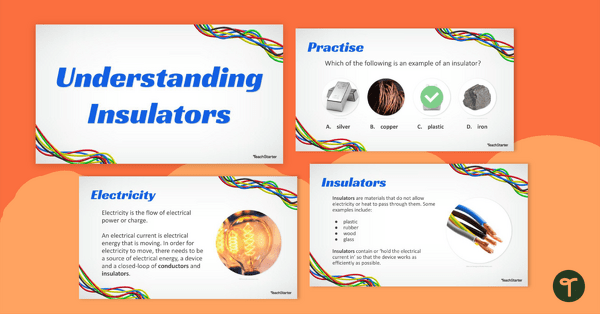
Understanding Insulators Teaching Slides for Year 6
Teach your students about electrical and thermal insulators with this teaching presentation.
- Plus Plan
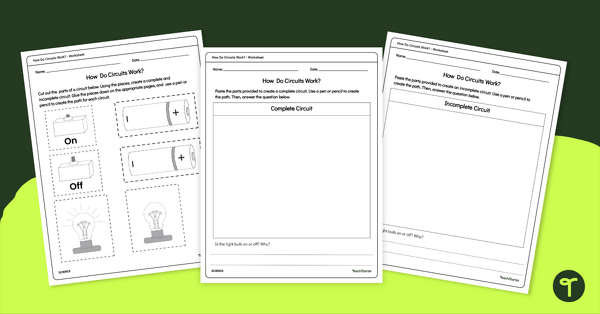
How Do Circuits Work? Worksheet for Year 6
Guide your students to create a diagram that shows complete and incomplete circuits and explain their function with this worksheet.
- Plus Plan
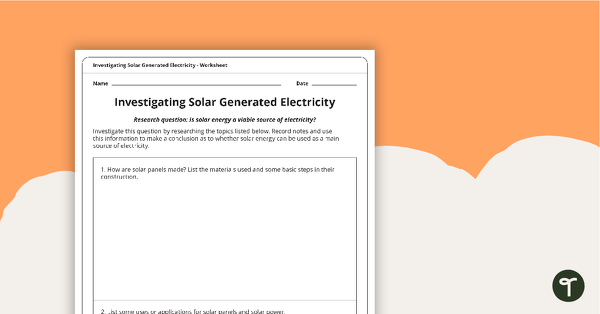
Investigating Solar Electricity - Worksheet
A worksheet that helps students discern if solar power is a viable source of electricity.
- Plus Plan
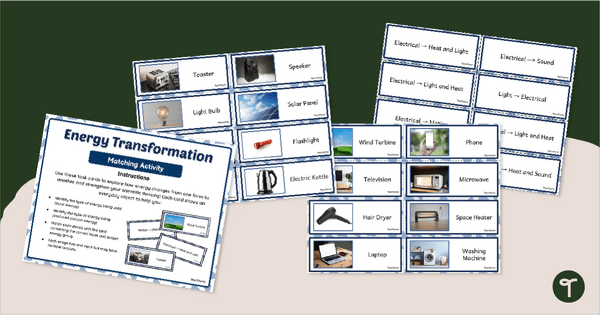
Energy Transformation Game - Matching
Observe and identify ways that devices transform energy with a printable Energy Transformation Game.
- Plus Plan
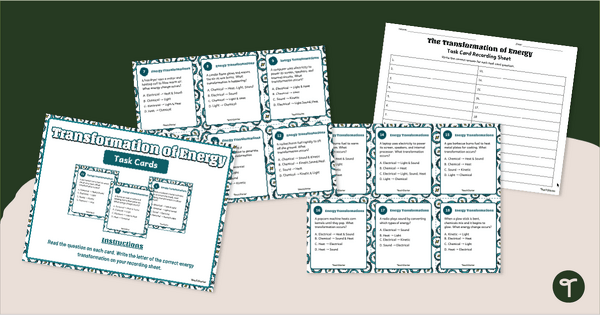
Transformation of Energy Task Cards
Identify ways that energy changes forms with our printable set of Transformation of Energy Task Cards.
- Plus Plan
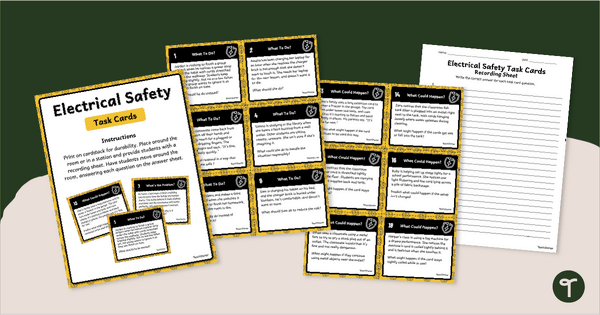
Electrical Safety Task Cards
Encourage safe behaviours when dealing with electrical devices with our printable Electrical Safety Task Cards.
- Plus Plan
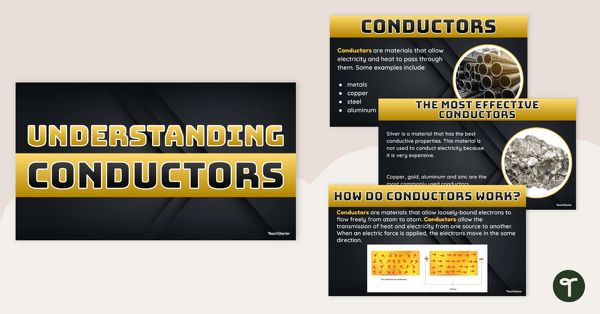
Understanding Conductors PowerPoint
Teach your students about the basics of conductors with this 17-slide teaching presentation.
- Plus Plan
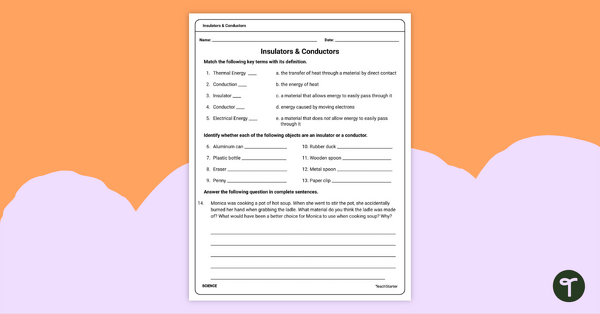
Conductors and Insulators Worksheet
Use this insulators and conductors worksheet with your students to practise identifying the characteristics of thermal and electrical energy.
- Free Plan
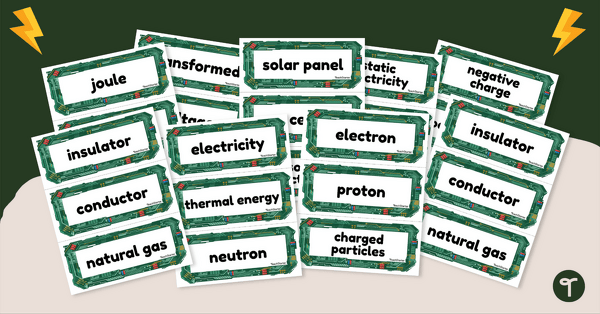
Electricity Word Wall Vocabulary
Use this teacher-created electricity resource to teach electricity-related vocabulary. Build a word wall with your students during your electricity lessons.
- Free Plan
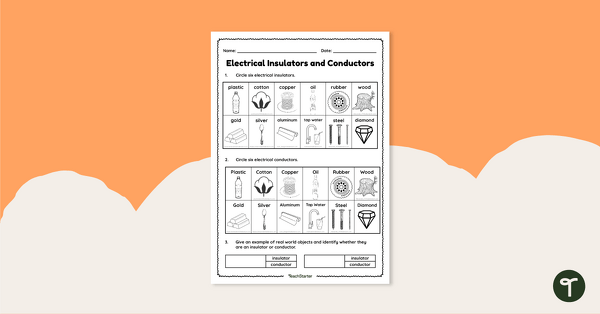
Insulators and Conductors Worksheet
Identify different insulators and conductors of electrical energy with this worksheet.
- Plus Plan
Electric Avenue - Understanding the Non-contact Force of Electrostatics PowerPoint
A teaching presentation introducing the students to the non-contact force of electrostatics.
- Plus Plan
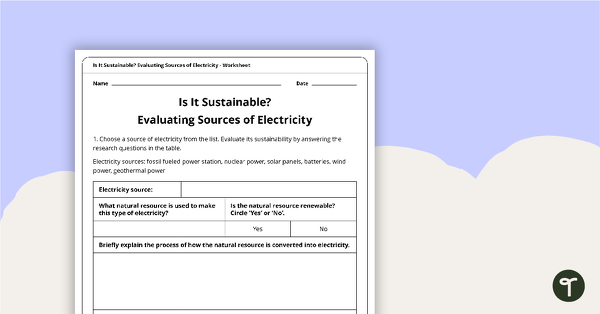
Is It Sustainable? Evaluating Sources of Electricity Worksheet
A worksheet for considering whether an energy source is sustainable.
- Plus Plan
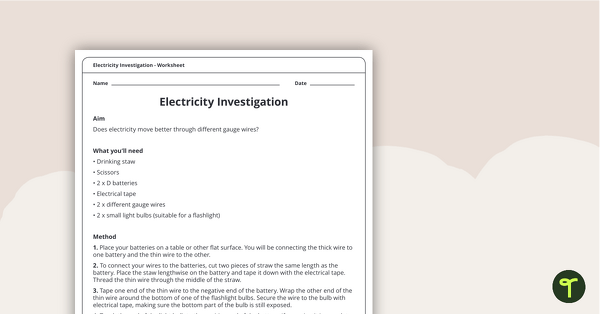
Electricity Investigation - Worksheet
An investigation of whether electricity moves better through different wire gauges.