Highlight the features of the body with a Human Body Labelling Worksheet pack.
This worksheet provides an opportunity for students to identify and label features on their bodies.
Updated: 24 Nov 2025
Highlight the features of the body with a Human Body Labelling Worksheet pack.
Editable: Google Slides
Non-Editable: PDF
Pages: 8 Pages
Years: F - 1
Differentiated: Yes
Explores the characteristics, needs and uses of living things
Describes observable features of living things and their environments
Living things have a variety of external features and live in different places where their basic needs, including food, water and shelter, are met
Living things grow, change and have offspring similar to themselves
Living things have a variety of external features and live in different places where their basic needs, including food, water and shelter, are met
Living things grow, change and have offspring similar to themselves
Living things have a variety of external features and live in different places where their basic needs, including food, water and shelter, are met
Living things grow, change and have offspring similar to themselves
Observe external features of plants and animals and describe ways they can be grouped based on these features
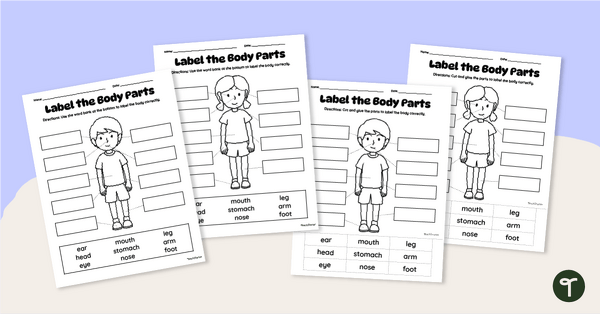
Highlight the features of the body with a Human Body Labelling Worksheet pack.
This worksheet provides an opportunity for students to identify and label features on their bodies.
Explores the characteristics, needs and uses of living things
Describes observable features of living things and their environments
Living things have a variety of external features and live in different places where their basic needs, including food, water and shelter, are met
Living things grow, change and have offspring similar to themselves
Living things have a variety of external features and live in different places where their basic needs, including food, water and shelter, are met
Living things grow, change and have offspring similar to themselves
Living things have a variety of external features and live in different places where their basic needs, including food, water and shelter, are met
Living things grow, change and have offspring similar to themselves
Observe external features of plants and animals and describe ways they can be grouped based on these features

We create premium quality, downloadable teaching resources for primary/elementary school teachers that make classrooms buzz!
Would you like something changed or customised on this resource? While our team makes every effort to complete change suggestions, we can't guarantee that every change will be completed.
Did you spot an error on this resource? Please let us know and we will fix it shortly.
Are you having trouble downloading or viewing this resource? Please try the following steps:
If you are still having difficulty, please visit the Teach Starter Help Desk or contact us .
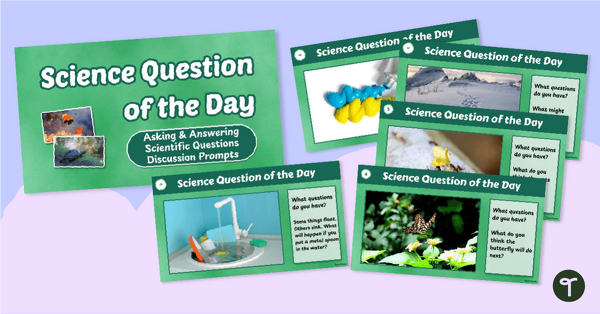
Teach your students to ask questions, observe the world, and make scientific predictions with our Science Question of the Day Discussion Prompt Slide Deck.
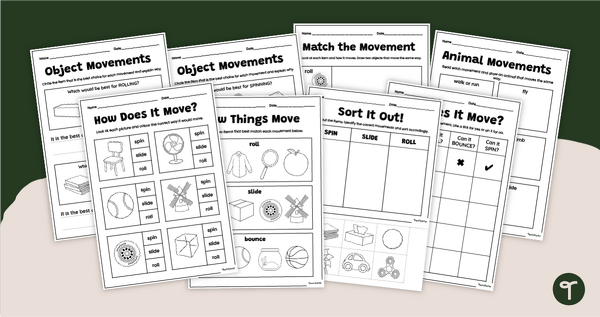
Download our ‘How Things Move’ Worksheet Pack to boost science inquiry skills and encourage your students to explore force and motion.
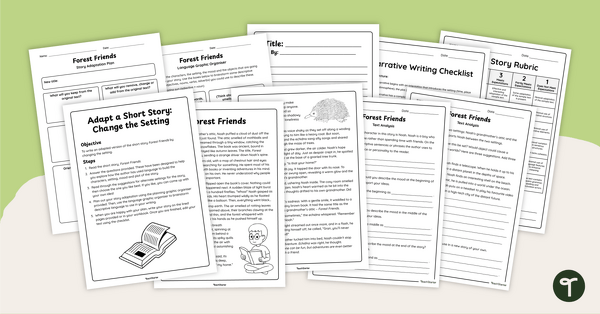
Explore the role the narrative setting plays within a story with this engaging and fully scaffolded writing project booklet for primary students.

Help students determine examples of investigable science questions with our ‘Is It An Investigable Question’ sorting activity.
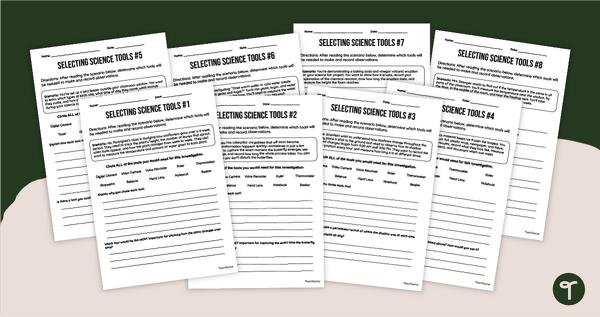
Demonstrate knowledge of different science lab equipment and investigation tools while boosting science inquiry skills with a set of printable Select a Science Tool Worksheets.
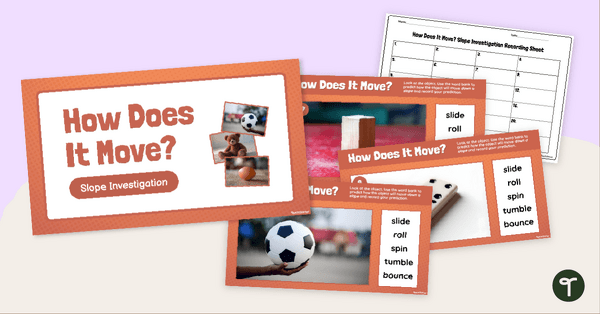
Explore movement and make science predictions with our Make It Move! Slope Investigation Slideshow and recording sheet.
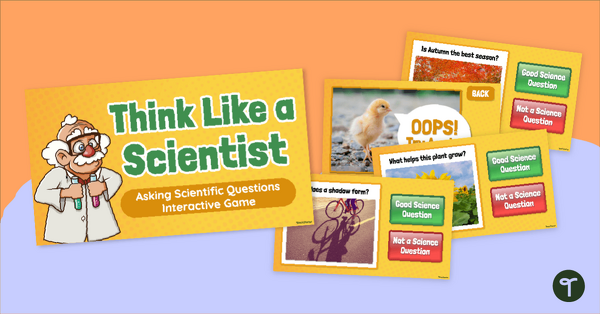
Encourage scientific thinking and teach your students how to identify scientific questions with an engaging science inquiry game.
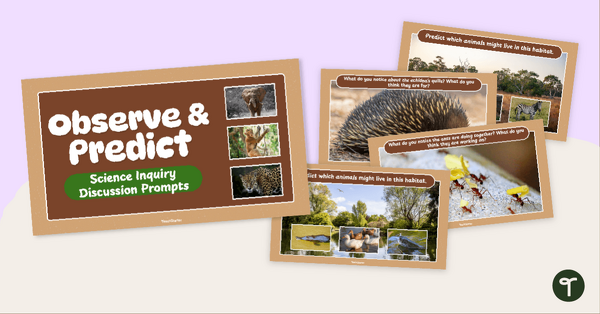
Practise making observations and scientific predictions about the natural world with engaging Science Inquiry Discussion Prompts.
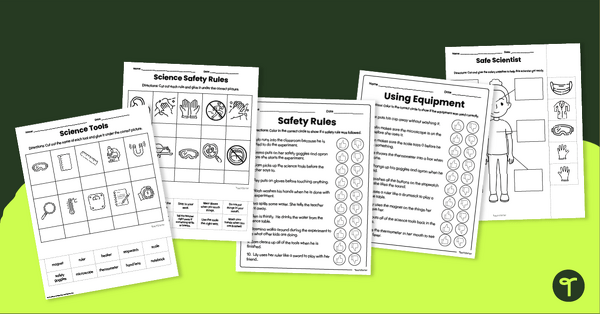
Explore science lab equipment and safety rules with a printable pack of Science Safety Worksheets.
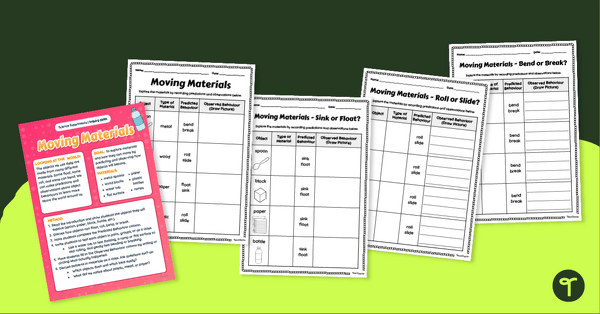
Explore materials and how they behave with an engaging Moving Materials Science experiment pack.
0 Comments
Write a review to help other teachers and parents like yourself. If you'd like to request a change to this resource, or report an error, select the corresponding tab above.