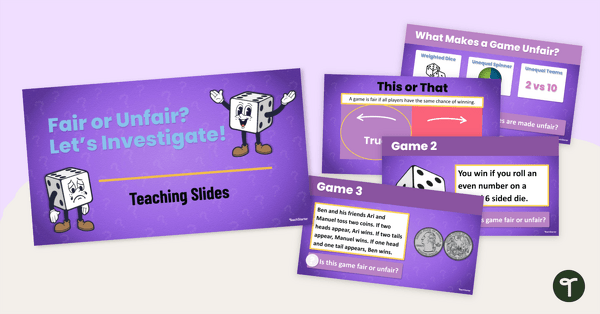
Use this probability maths games presentation to teach your students how to identify if a game is fair or unfair using probability.
Engaging Probability Maths Games — ‘Fair or Unfair?’ Teaching Slides
Make probability concepts meaningful and engaging with these Probability Maths Games Fair or Unfair teaching slides! Designed to spark critical thinking and classroom discussion, these ready-to-use slides guide students through a variety of real-world and imaginative scenarios to determine whether a game is fair or unfair.
From analysing uneven spinners to evaluating coin toss outcomes and dice games, students will practise reasoning, apply probability knowledge and defend their thinking. Each scenario encourages discussion to deepen understanding. These probability maths games teaching slides are a low-prep, high-impact way to introduce fairness in games and build a strong foundation in probability concepts.
More Fair and Unfair Games Probability Activities
Supplement these teaching slides with additional activities that will deepen student thinking. Here are two fair and unfair games probability activity ideas:
Create-Your-Own Game – In pairs or small groups, students design a simple game of chance using dice, spinners, cards or coins. They must clearly explain the rules and whether they believe the game is fair or unfair. Play the games to test students’ theories!
Classroom Discussion: Have a classroom discussion about well-known board games. Are these games fair? Why or why not? Is there a way a certain player can gain an unfair advantage, for example, by going first or gaining a certain asset? If so, how can the game be made more fair?
And make sure to check out the additional probability maths games linked below to continue to explore this topic with your students!
Grab These Probability Fair Game Teaching Slides Today
These probability fair game teaching slides are available in both Google Slides and PowerPoint formats. To download them, click the drop-down arrow on the download button and choose the format that works best for your classroom.
This resource was created by Kendall Britnell, a teacher and a Teach Starter collaborator.
Want More Probability Games and Activities?
We’ve got you covered! Check out some of our favourite probability games below.
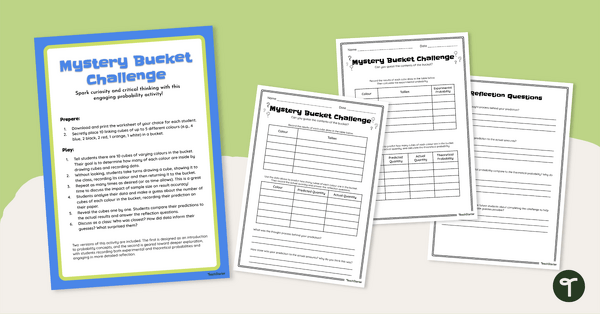
Invite your students to create their own experiments with this unfair or fair game probability investigation. Conduct probability experiments like our ‘Mystery Bucket Challenge’ to give your students hands-on experience with concepts of chance. Use our hands on probability activities to make teaching concepts of chance and experimental probability a student-centered experience.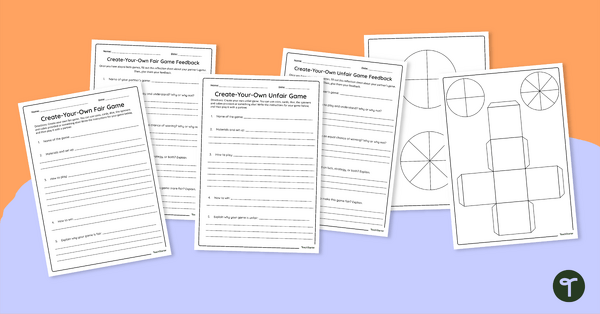
teaching resource
Create-Your-Own Unfair or Fair Game Probability Activity
teaching resource
Probability Experiments — Mystery Bucket Challenge
teaching resource
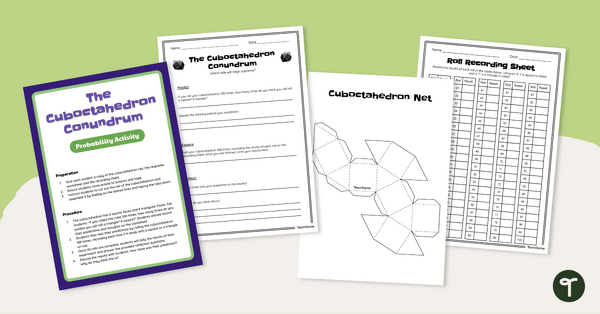
Hands On Probability Activities — Cuboctahedron Conundrum


0 Comments
Write a review to help other teachers and parents like yourself. If you'd like to request a change to this resource, or report an error, select the corresponding tab above.