Victorian Curriculum
VC2S2U12
sound can make materials vibrate and vibrating materials can make sound; different actions can be used to produce sounds of varying pitch and volume
- identifying how sounds are made, associating some of them with something vibrating, and then investigating how sound energy makes things vibrate, such as when speaking, using tuning forks, observing vibrations produced by a ‘twanged’ ruler held on a desk, experimenting with different ways of holding or positioning the ruler to produce observably different vibrations and sounds, and observing music speakers
- designing and making instruments that produce different sounds, such as drums, rainsticks, thongophones and box guitars, and using them to build vocabulary such as ‘loudness’ and ‘pitch’ to describe the sounds
- exploring different ways to produce sound using familiar objects, and actions such as striking, blowing, scraping, plucking and shaking
- making earmuffs from a variety of different materials to investigate which provides the best insulation against sound
- finding patterns between the pitch of a sound and features of the object that produced it, or between the volume of a sound and the strength of the vibrations that produced it
- discussing situations where echoes are produced and exploring how some people with vision impairment, and animals such as dolphins and bats, use echolocation to locate objects in their environments
Show more
2 of 34
teaching resources for those 'aha' moments
- Plus Plan
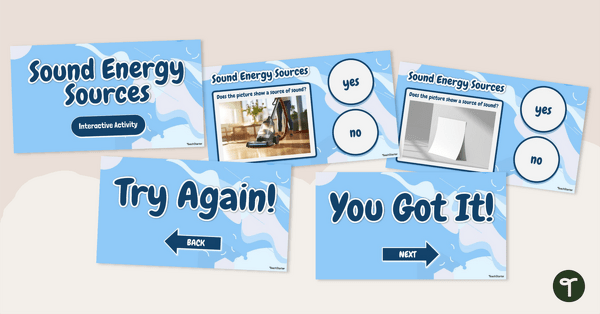
Sound Energy Sources Interactive Activity
With your students, explore the sources of sound energy and how we sense them using this interactive science activity.
- Plus Plan
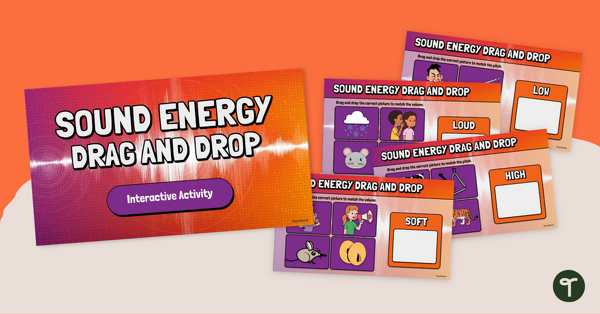
Sound Energy Digital Learning Activity
Enhance students' ability to identify and describe sound energy concepts in a hands-on and immersive manner with this Sound Energy Digital Learning Activity