ELAR 3.9
Multiple genres: listening, speaking, reading, writing, and thinking using multiple texts--genres. The student recognizes and analyzes genre-specific characteristics, structures, and purposes within and across increasingly complex traditional, contemporary, classical, and diverse texts. The student is expected to:
- (1) demonstrate knowledge of
distinguishing characteristics of well-known children's
literature such as folktales, fables, fairy tales, legends, and myths;
- (A) explain rhyme scheme, sound devices, and structural elements such as stanzas in a variety of poems;
- (B) discuss elements of drama such as characters, dialogue, setting, and acts;
- (C) recognize characteristics and structures of informational text, including:
- (D) the central idea with supporting evidence;
- (i) features such as sections, tables, graphs, timelines, bullets, numbers, and bold and italicized font to support understanding; and
- (ii) organizational patterns such as cause and effect and problem and solution;
- (iii) recognize characteristics and structures of argumentative text by:
- (E) identifying the claim;
- (i) distinguishing facts from opinion; and
- (ii) identifying the intended audience or reader; and
- (iii) recognize characteristics of multimodal and digital texts.
- Plus Plan
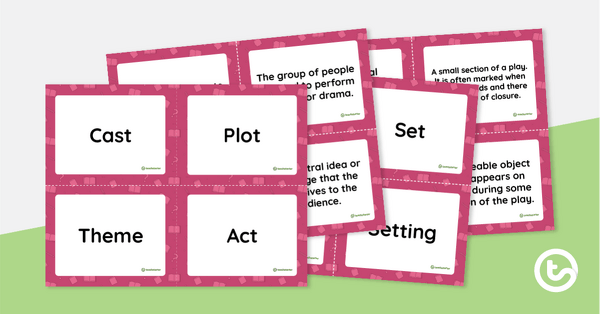
Drama Vocabulary Flash Cards
A set of 16 flash cards to practice defining the different elements of a drama.
- Plus Plan
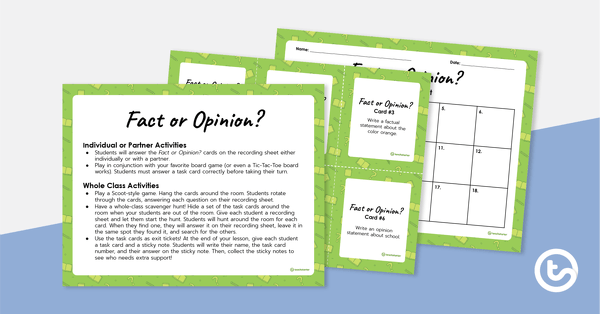
Fact or Opinion? - Activity Cards
A set of 18 activity cards to practice distinguishing between fact and opinion statements.
- Plus Plan
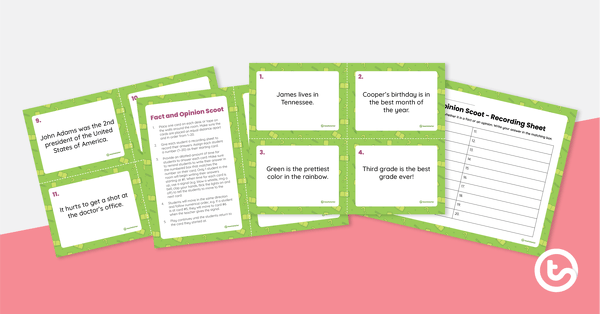
Fact and Opinion Scoot Activity
A set of 20 fact and opinion task cards to use as a whole-class scoot activity.
- Plus Plan
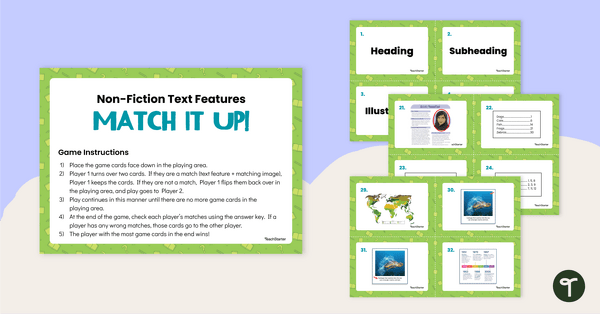
Nonfiction Text Features: Match It Up!
Download this nonfiction text features game to teach elementary school students about the common text features of informational texts.
- Plus Plan
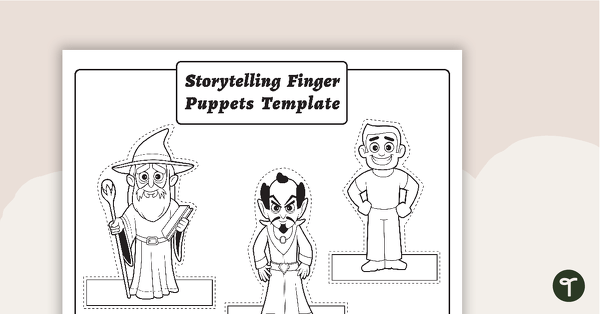
Storytelling Finger Puppets Template
A set of 15 finger puppets that can be used to spark the imagination for creative writing or to perform puppet shows.
- Plus Plan
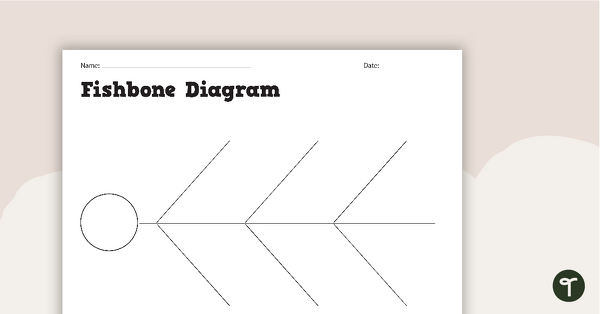
Fishbone/Herringbone Diagram Graphic Organizer
A blank fishbone and herringbone diagram to use in any subject area.
- Plus Plan
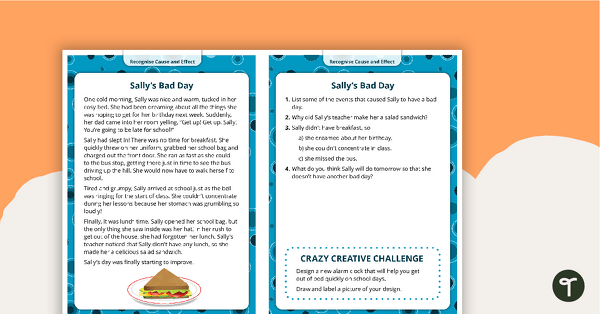
Comprehension Task Cards - Recognizing Cause And Effect
A set of comprehension task cards to help students recognize cause and effect when reading.
- Plus Plan
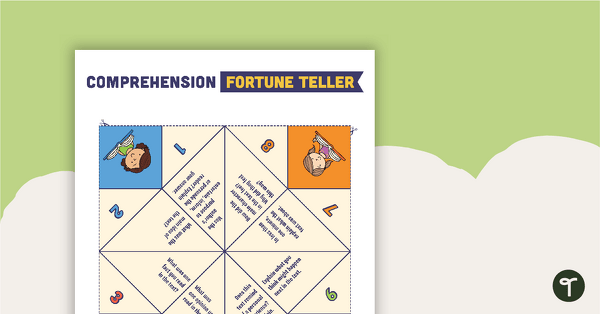
Comprehension Paper Fortune Teller
A fun reading comprehension strategy activity for students to use after reading a text.
- Plus Plan
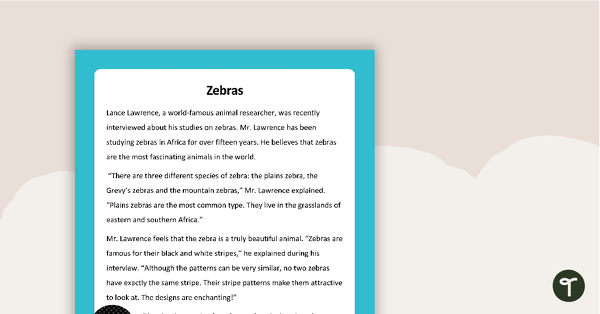
Distinguish Between Fact and Opinion Worksheets
Help students distinguish between fact and opinion with this engaging zebra-themed comprehension task designed to strengthen critical thinking and reading skills.
- Plus Plan

Comprehension Strategies – Interactive PowerPoint
An engaging 44 slide interactive PowerPoint to use in the classroom when introducing comprehension strategies.
- Plus Plan
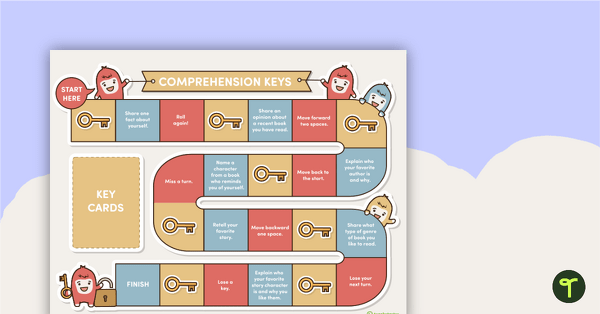
Comprehension Keys Board Game
A fun comprehension strategy board game for students to play during literacy rotations.
- Plus Plan
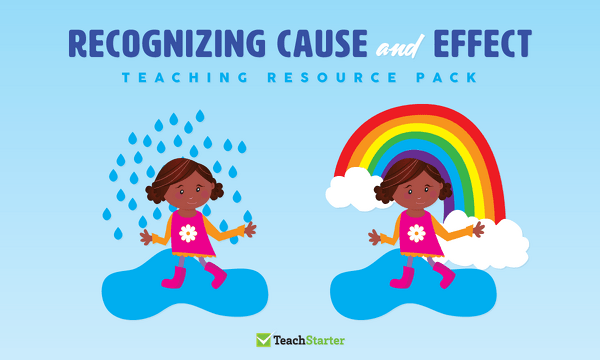
Comprehension Strategy Teaching Resource Pack - Recognizing Cause and Effect
A comprehensive resource pack helping students to recognize cause and effect.
- Plus Plan
Celebrating Poetry Month in the Primary Grades – Weeks 4 and 5
Celebrate National Poetry Month in the primary classroom with this planning guide and set of resources.
- Plus Plan
Celebrating Poetry Month in the Primary Grades - Week 3
Celebrate National Poetry Month in the primary classroom with this planning guide and set of resources.
- Plus Plan
Celebrating Poetry Month in the Primary Grades - Week 2
Celebrate National Poetry Month in the primary classroom with this planning guide and set of resources.
- Plus Plan
Spring Is Here – Animated Poem Video
Use this spring poem with your students to welcome in the season of springtime.