Organisms and Environments
In this strand, students begin to understand how organisms within an ecosystem interact. Students investigate producers to learn how they make food. Students build on their understanding of food chains, from Grade 3, as they explore food webs where they describe the flow of energy and the role of producers, consumers, and decomposers. They also use fossil evidence to describe environments of the past. Additionally, students explore plant structures and their functions. Students also differentiate between inherited and acquired traits of organisms.
- Plus Plan
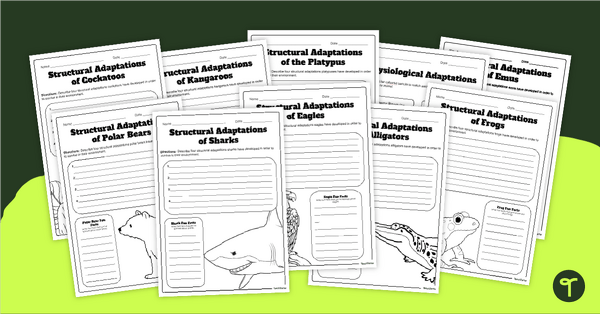
Animals With Adaptations - Worksheet Pack
Use these animal adaptation worksheets when teaching students about the structural, behavioral, and physiological adaptations of animals.
- Plus Plan
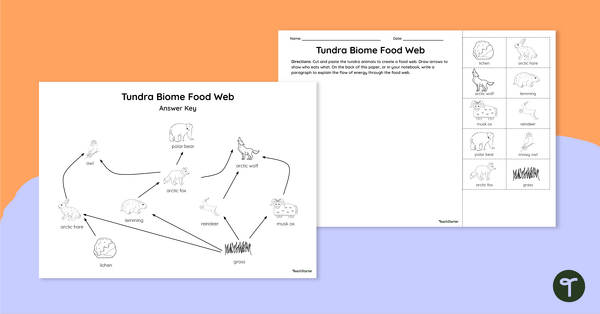
Tundra Biome Food Web - Cut and Paste Worksheet
Challenge students to create a food web and explain how energy flows between organisms with this cut-and-paste worksheet.
- Plus Plan
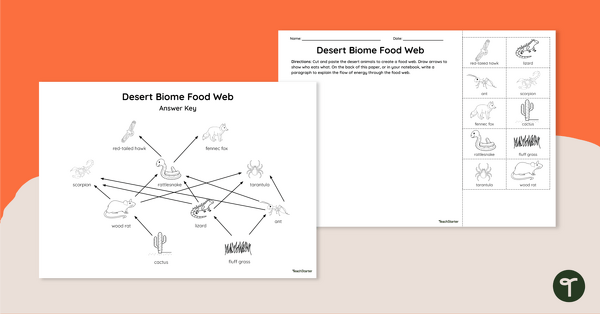
Desert Biome Food Web - Cut and Paste Worksheet
Challenge students to create a food web and explain how energy flows between organisms with this cut-and-paste worksheet.
- Plus Plan
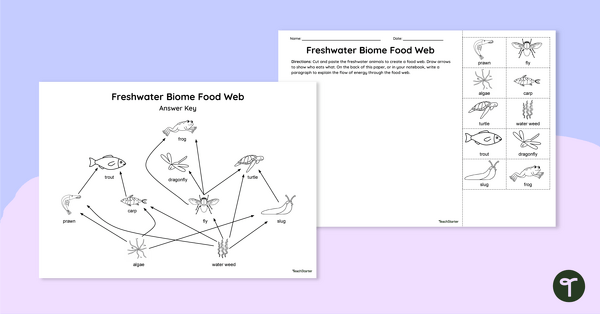
Freshwater Biome Food Web - Cut and Paste Worksheet
Challenge students to create a food web and explain how energy flows between organisms with this cut-and-paste worksheet.
- Plus Plan
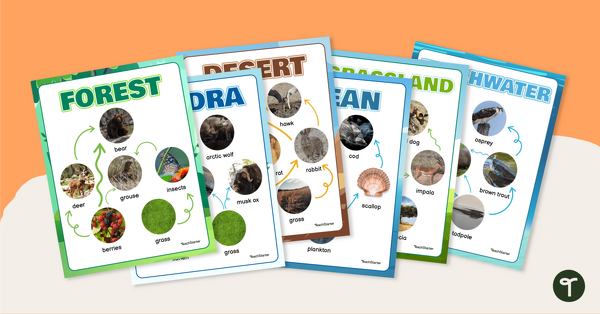
Biome Food Web - Anchor Charts
Learn how energy flows through food webs in different biomes with this set of classroom anchor charts.
- Plus Plan
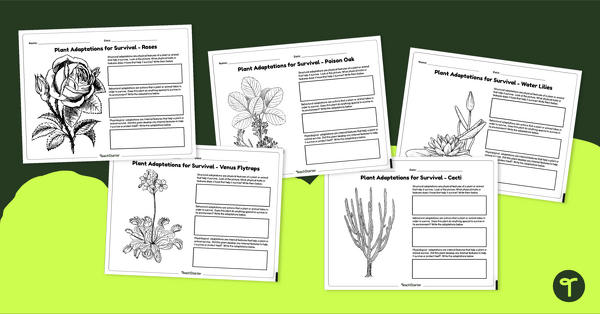
Plant Adaptations Worksheets
Learn about different plants' behavioral, structural, and physiological adaptations with printable plant adaptation worksheets.
- Plus Plan
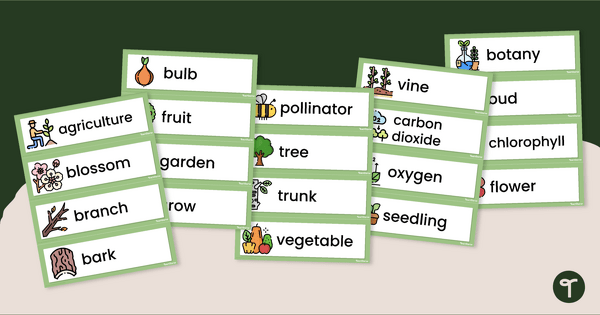
Plants - Illustrated Word Wall
Discover the world of plant-related vocabulary with an illustrated plant word wall display.
- Free Plan
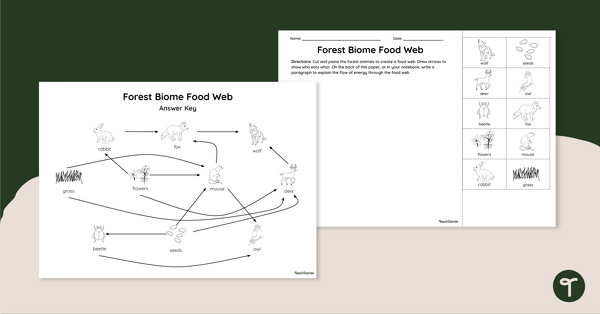
Forest Biome Food Web – Worksheet
Challenge students to create a food web and explain how energy flows between organisms with this cut-and-paste worksheet.
- Plus Plan
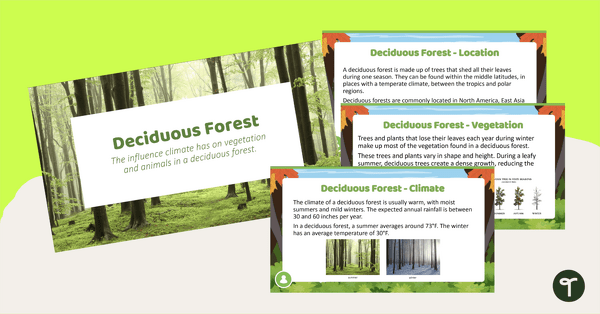
Deciduous Forest Biome Slide Deck
An 11-slide editable PowerPoint to use in the classroom when learning about deciduous forests.
- Plus Plan
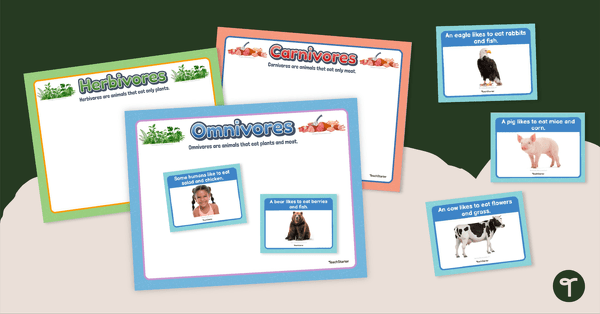
Herbivores, Carnivores, and Omnivores – Sorting Activity
Determine if animals are omnivores, carnivores, or herbivores based on their diet with this sorting activity.
- Plus Plan
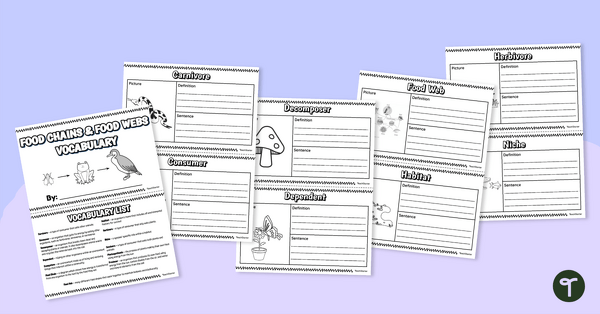
Food Chains & Food Webs – Vocabulary Booklet
Reinforce science vocabulary by creating a booklet to reference when studying food chains and food webs.
- Plus Plan
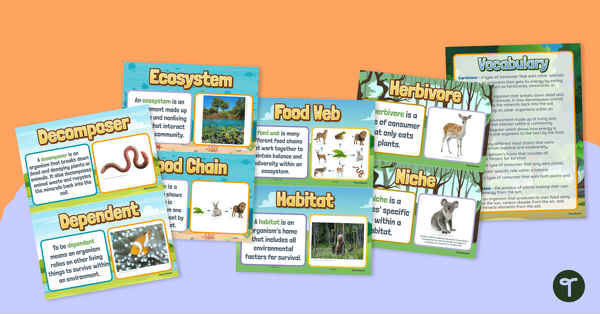
Food Chains & Food Webs – Vocabulary Posters
Display this set of science vocabulary posters in your classroom when learning about food chains and food webs.
- Plus Plan
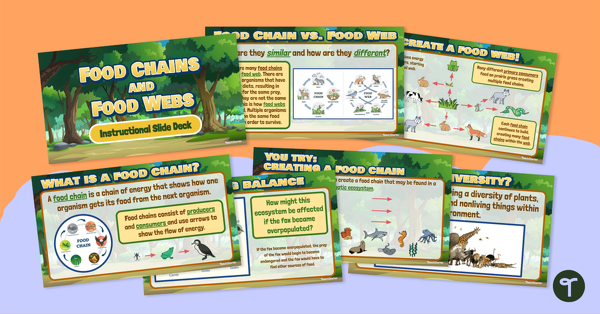
Food Webs vs. Food Chains – Instructional Slide Deck
Learn the difference between a food chain and a food web with this 18-slide instructional slide deck.
- Plus Plan
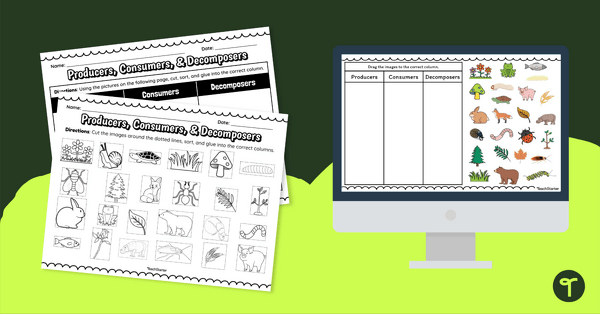
Producers, Consumers, and Decomposers – Interactive and Printable Activity
Sort producers, consumers, and decomposers, with this printable and interactive activity.
- Plus Plan
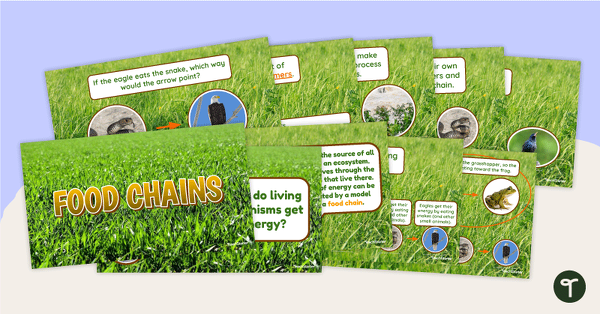
Food Chains – Teaching Presentation
Learn about the flow of energy in a food chain with this 12-slide teaching presentation.
- Plus Plan
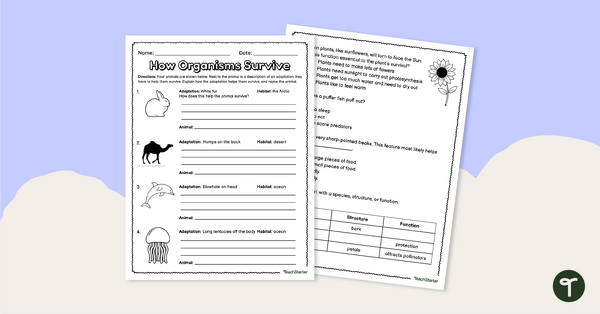
How Organisms Survive – Worksheet
Use this worksheet to identify and describe different animal and plant adaptations which help them survive in their environment.
- Plus Plan
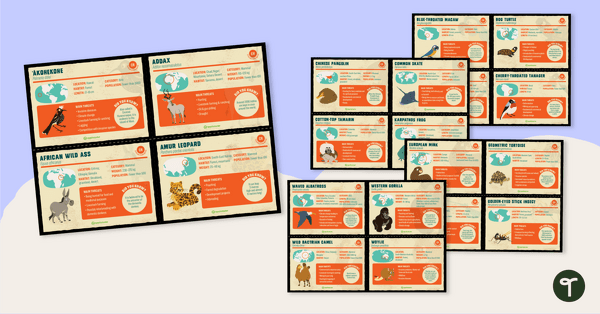
Endangered Species Fact Cards
Explore 64 species and subspecies that are on the critically endangered list with this set of fact cards.
- Plus Plan
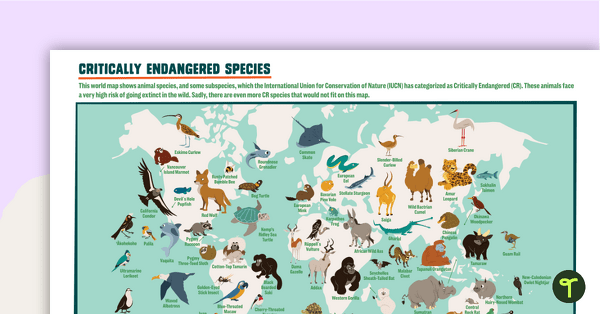
Critically Endangered Species Map
Use this endangered species world map when exploring animals that have been placed on the Critically Endangered list.
- Plus Plan
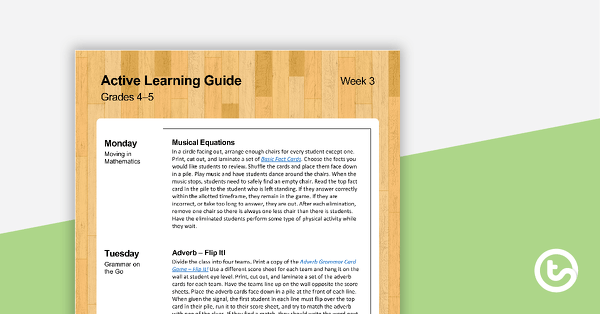
Active Learning Guide for Grades 4-5 - Week 3
Use this weekly active learning guide to celebrate National Physical Fitness Month in your Grade 4 or Grade 5 classroom.
- Plus Plan
Grade 5 Daily Warm-Up – PowerPoint 1
A 75-slide PowerPoint presentation containing a variety of quick warm-up activities.
- Plus Plan
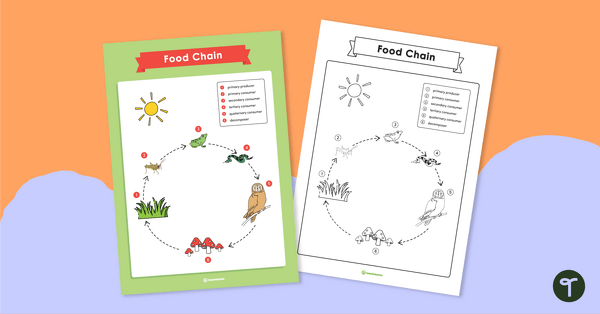
Food Chain Poster
A poster to display in the classroom that shows the food chain.
- Plus Plan
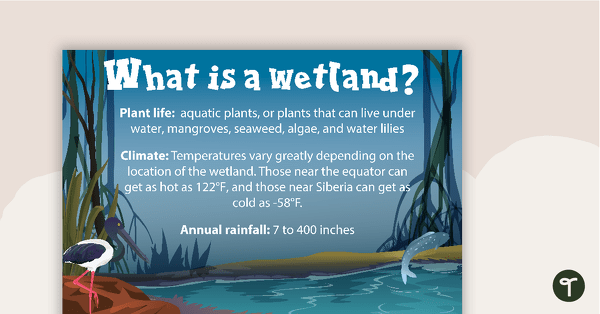
What is a Wetland? Poster
A poster with information about the plant life, climate, and annual rainfall that characterize a wetland environment.
- Plus Plan
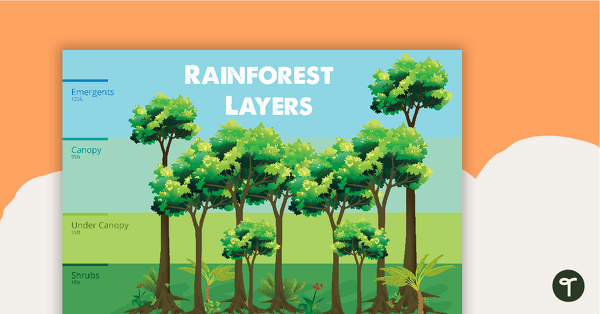
Rainforest Layers - Poster
A poster that explains the layers of a rainforest.
- Plus Plan
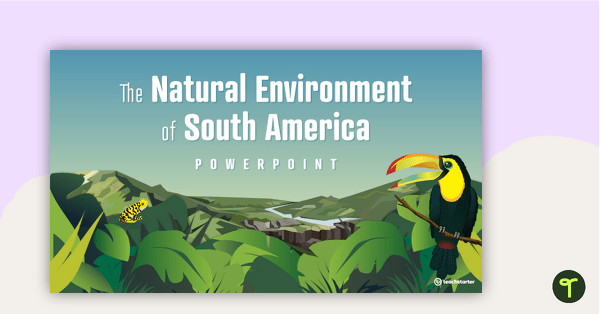
The Natural Environment of South America PowerPoint
A 17-slide editable PowerPoint template to use when introducing students to the climate, vegetation, and animals of South America.
- Plus Plan
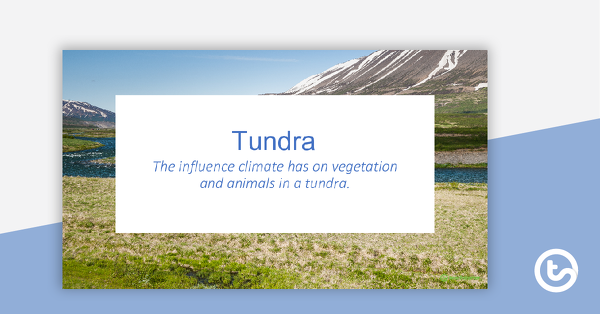
Tundra PowerPoint
An 11-slide editable PowerPoint to use in the classroom when learning about tundras.
- Plus Plan
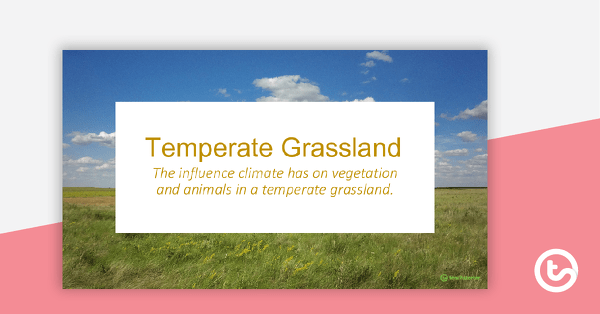
Temperate Grassland PowerPoint
An 11-slide editable PowerPoint to use in the classroom when learning about temperate grasslands.
- Plus Plan
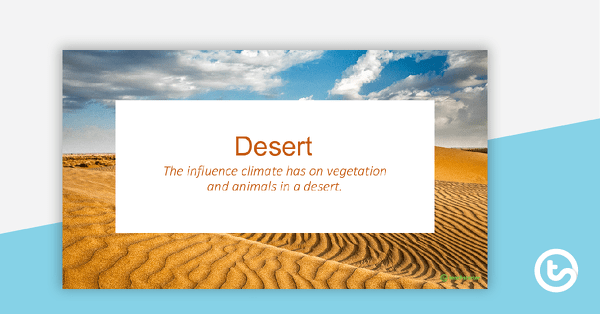
Desert PowerPoint
An 11-slide editable PowerPoint to use in the classroom when learning about deserts.