Scientific and Engineering Practices
Scientific inquiry is the planned and deliberate investigation of the natural world using scientific and engineering practices. Scientific methods of investigation are descriptive, comparative, or experimental. The method chosen should be appropriate to the grade level and question being asked. Student learning for different types of investigations include descriptive investigations, which involve collecting data and recording observations without making comparisons; comparative investigations, which involve collecting data with variables that are manipulated to compare results; and experimental investigations, which involve processes similar to comparative investigations but in which a control is identified.
(i) Scientific practices. Students ask questions, plan and conduct investigations to answer questions, and explain phenomena using appropriate tools and models.
(ii) Engineering practices. Students identify problems and design solutions using appropriate tools and models .
(iii) To support instruction in the science content standards, it is recommended that districts integrate scientific and engineering practices through classroom and outdoor investigations for at least 50% of instructional time.
- Plus Plan
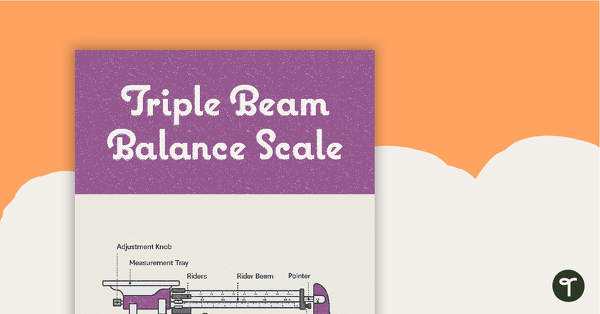
Triple Beam Balance Scale Poster – Diagram with Labels
A poster containing a diagram with labels showing the key parts of a triple beam balance scale.
- Plus Plan
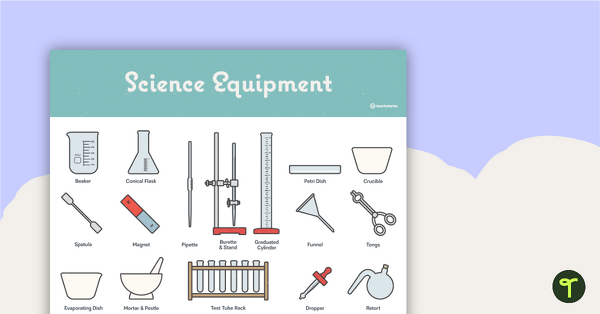
Lab Equipment Poster – Diagram with Labels
A poster containing a diagram with labels showing standard lab equipment.
- Plus Plan
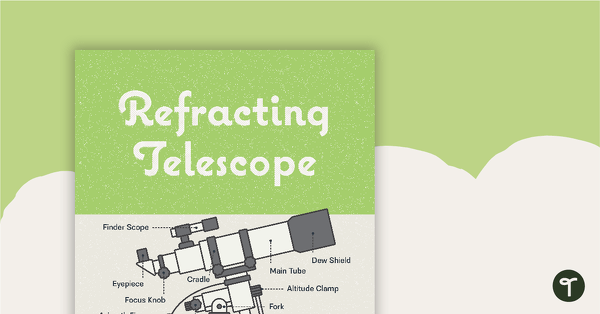
Refracting Telescope Poster – Diagram with Labels
A poster containing a diagram with labels showing the key parts of a refracting telescope.
- Free Plan
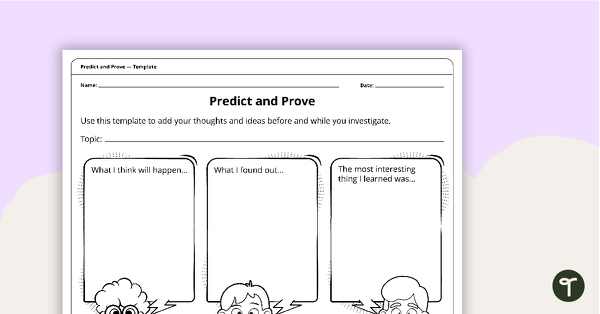
Predict and Prove – Template
A template to help introduce making a hypothesis before starting an investigation.
- Plus Plan
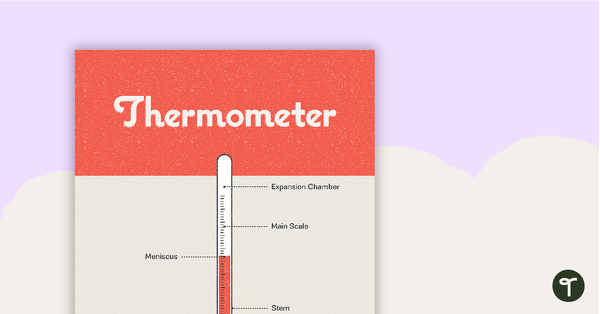
Thermometer Poster – Diagram with Labels
A poster containing a diagram with labels showing the key parts of a thermometer.
- Plus Plan
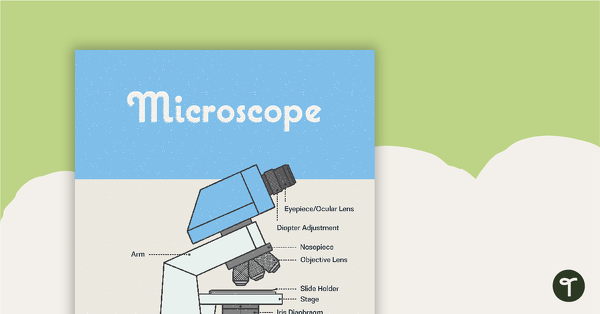
Microscope Poster - Diagram with Labels
A poster containing a diagram with labels showing the key parts of a microscope.
- Plus Plan
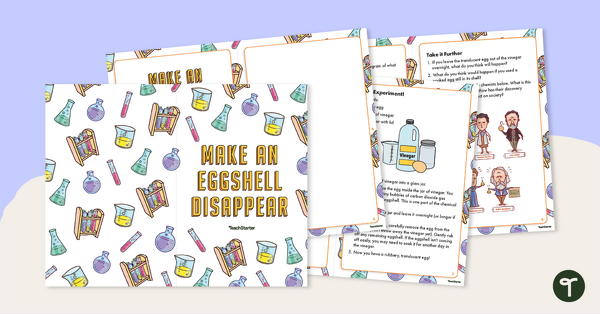
Make an Eggshell Disappear - Science Experiment Booklet
Investigate chemical reactions with this hands-on experiment booklet.
- Plus Plan
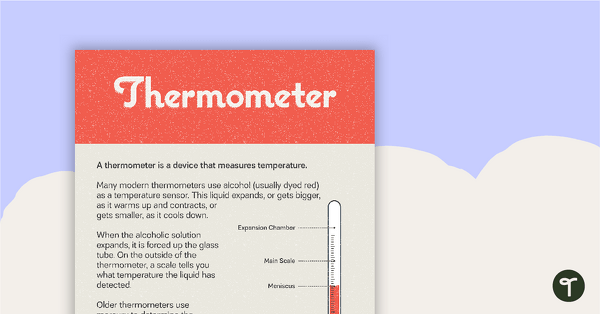
Thermometer Poster (with Description)
A poster to display in the classroom when learning about the thermometer.
- Plus Plan
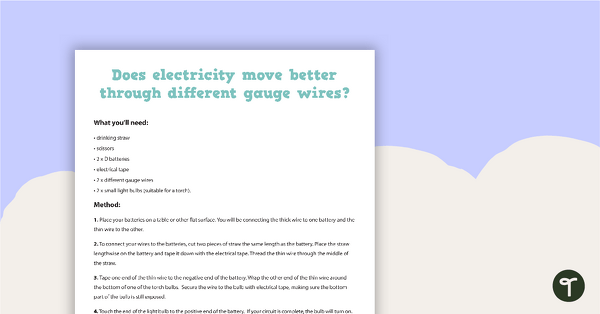
Electricity Experiment
An experiment to investigate if electricity moves better through different gage wires.
- Plus Plan
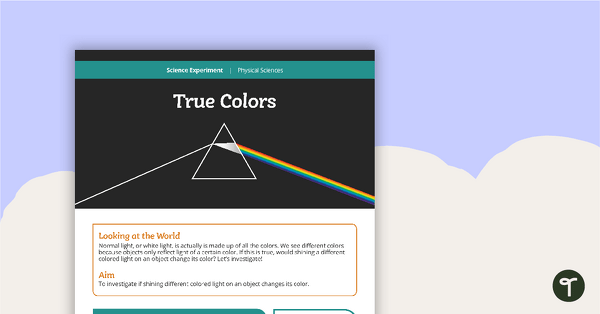
Science Experiment - True Colors
A science experiment that explores the perception of color.
- Plus Plan
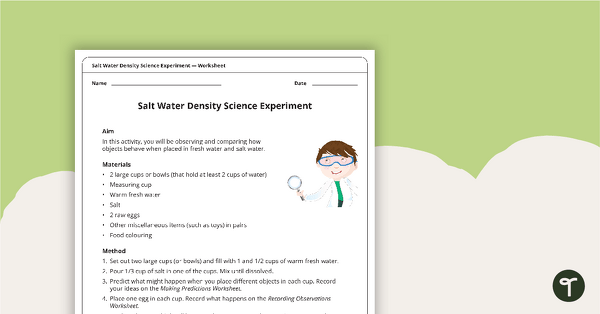
Salt Water Density Experiment
A hands-on science experiment about salt water density.
- Plus Plan
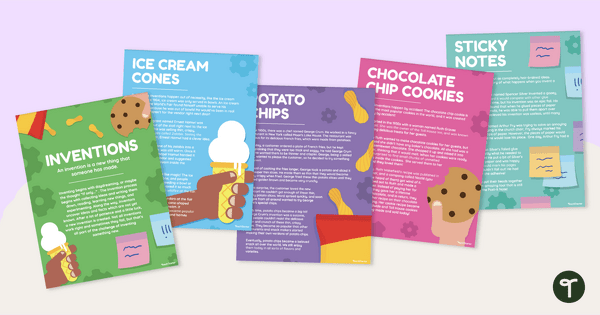
Accidental Inventions - Printable Posters and Reading Passages
Discover some of the world’s most famous (and accidental) inventions with a set of printable invention posters.
- Plus Plan
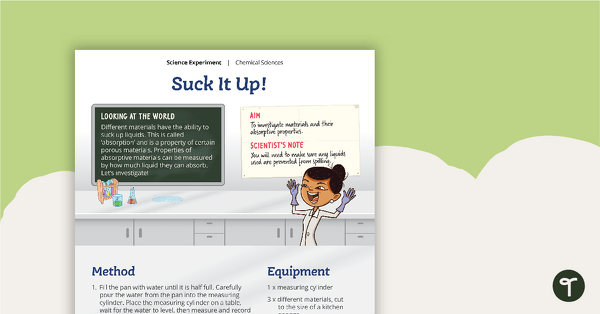
Science Experiment - Suck It Up!
A science experiment which investigates the absorptive properties of various materials.
- Free Plan
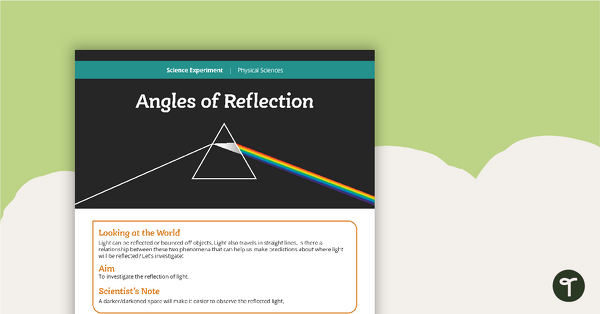
Science Experiment - Angles of Reflection
A science experiment that explores reflected light.
- Plus Plan
Freedom of Choice PowerPoint - Developing Scientific Lines of Questioning
A teaching presentation discussing the development of scientific lines of questioning.
- Plus Plan
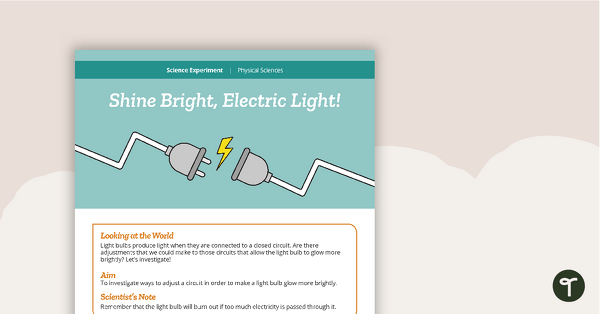
Science Experiment - Shine Bright, Electric Light!
A science experiment that investigates how changes to electrical circuits affects their components.
- Plus Plan
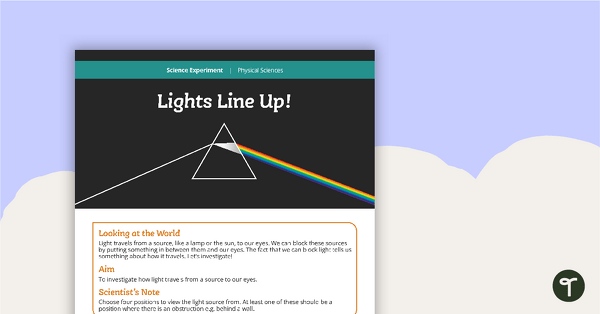
Science Experiment - Lights Line Up!
A science experiment which explores light.
- Plus Plan
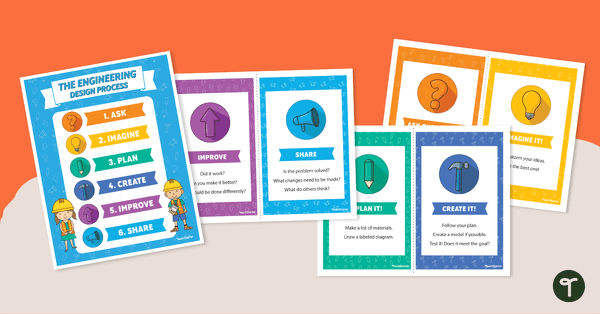
STEM - Engineering Process Poster Pack
Classroom posters outlining the STEM engineering design process.
- Plus Plan
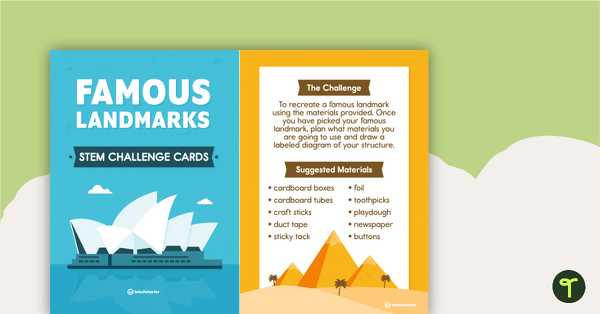
Famous Landmarks STEM Challenge Cards
A set of 8 famous landmarks STEM challenge cards encouraging students to build famous structures.
- Plus Plan
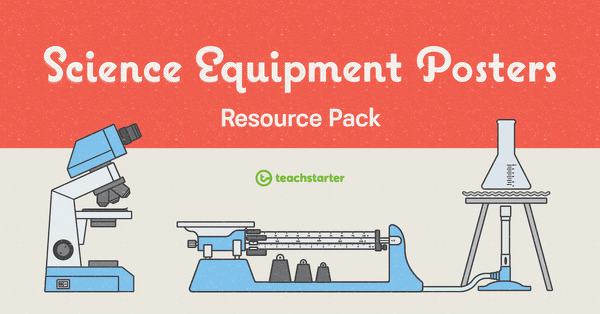
Science Equipment Poster Pack for the Classroom With Labels
A poster resource pack containing diagrams with labels of various pieces of scientific apparatus.
- Plus Plan
Slime - Solid, Liquid, or Gas?
A 60-minute lesson in which students will recognize that not all substances can be easily classified on the basis of their observable properties.
- Plus Plan
Knowing Matters!
A 60-minute lesson in which students will explore how knowledge of states of matter and their changes can help inform practices and decision making.
- Plus Plan
Going, Going, Gone!
A 60-minute lesson in which students will recognize that substances exist in different states depending on the temperature.
- Plus Plan
Changing States of Matter
A 60-minute lesson in which students will explore the way solids, liquids, and gases change in different situations.
- Plus Plan
Gases
A 60-minute lesson in which students will observe that gases have mass and take up space.
- Plus Plan
Liquids
A 60-minute lesson in which students will identify the observable characteristics of liquids and how they behave in different ways.
- Plus Plan
Solids
A 60-minute lesson in which students will identify the observable characteristics of solids and how they behave in different ways.
- Plus Plan
Matter Matters!
Introduce students to key terms and concepts related to matter and states of matter with this 60 minute lesson.
- Plus Plan
What's the Matter?
A 60-minute lesson designed to activate students' prior knowledge of solids, liquids, and gases.