Antonyms Teaching Resources
Are you teaching antonyms this school year? Printable worksheets, digital activities, and more options for the English teacher have been created just for you by the Teach Starter teacher team!
Explore a curriculum-aligned teaching resource collection full of options for your writing or reading rotations with editable options to help differentiate instruction for your individual students.
Has it been a while since you were teaching this part of the English curriculum? Our teacher team knows what it’s like to suddenly teach a brand-new grade level after years away, so we’ve put together a quick refresher on antonyms! Read on for a guide on the meaning of antonym, how we use antonyms, and even how to pronounce this tricky word!
Definition of Antonym for Kids
The obvious place to start teaching this topic is with an antomy definition, isn't it? Your students will need to know what an antonym is and how it differs from a synonym. Put in the most simple terms that kids can understand, an antonym is a word that means the opposite of another word.
For example, 'tall' is the antonym of 'short' because the words mean the opposite of one another.
What Is an Antonym?
Let's dig a little deeper than that definition and take a look at what an antonym actually is and does in written texts.
Typically adjectives or adverbs, these words are valuable for young writers to learn as they help us describe things more precisely and increase our vocabulary.
Alongside learning about synonyms, teaching students about this type of vocabulary word also helps them as they begin to compare and contrast things. After all, when we know that something is not like something else, it helps us identify what that thing is!
How Do You Pronounce Antonym?
Are your students' tongues tripping over the pronunciation of this word? Have them slow down their speech and try breaking it up into three sounds — [AN] + [TUH] + [NIM].
Antonym Examples for Kids
Using examples can help your students start to grasp the concept of how to use these words in their own writing. Here are some fun examples of antonyms that kids always love:
- Lazy — Active
- Boring — Fun
- Yummy — Yucky
5 Types of Antonyms
It may be a fairly simple thing to explain that two words with opposite meanings fit into the antonym category, but we would be remiss if we didn't address that there are various types! Understanding the way these break down can help students better understand how to use words effectively to convey their intended meaning.
The five types of antonyms our students work with are:
Gradable antonyms
These are antonyms that represent opposite ends of a spectrum and can be used to describe different degrees of a quality. Some examples include:
- Hot and cold
- Tall and short
- Big and small
- Fast and slow
- Young and old
Complementary antonyms
This type of antonym represents a binary relationship where the presence of one implies the absence of the other. In other (more kid-friendly) terms, they're opposites but they work together to describe the same thing. For example, 'on' and 'off' are complementary antonyms. If you want to describe a light switch, you might say 'turn the light on' or 'turn the light off.' Both sentences include antonyms to describe the same action.
Some examples include:
- Alive and dead
- Male and female
- On and off
- Push and pull
- Day and night
Complementary antonyms are helpful because they give us a complete picture of something by showing us both sides of it. It's like having two puzzle pieces that fit together perfectly to make a complete picture.
Relational antonyms
This type of antonym helps us to describe a relationship between two concepts. Some examples include:
- Parent and child
- Teacher and student
- Borrower and lender
- Employer and employee
Auto-antonyms
These are words that can be very confusing to kids. That's because these words are technically the same, but they have opposite meanings depending on the context in which they are used. Some examples include:
- Cleaved (to stick together) and cleaved (to split apart)
- Sanction (to permit) and sanction (to punish)
- Dust (to remove dust) and dust (to add dust)
- Oversight (to supervise) and oversight (a mistake)
Converse antonyms
Our final type on this list is a set of words that describe the relationship between two concepts where one concept implies the other. Some examples include:
- Buy and sell
- Borrow and lend
- Teach and learn
- Above and below
Fun Antonym Activities for Kids
Teaching antonyms can be exciting, fun, and engaging if you use the right resources, but it can be boring, dull, and tedious if you don't get it right (see what we did there?!). This collection of antonym activities for kids is stocked with ideas to make sure your antonym lessons are the former:
- Antonym games
- Synonyms and antonyms worksheets
- Antonym matching activities
- Antonym posters
- Antonym anchor charts
- Google Interactive antonym activities
- Antonym flashcards
- Thesaurus skills
- And more!
- Free Plan
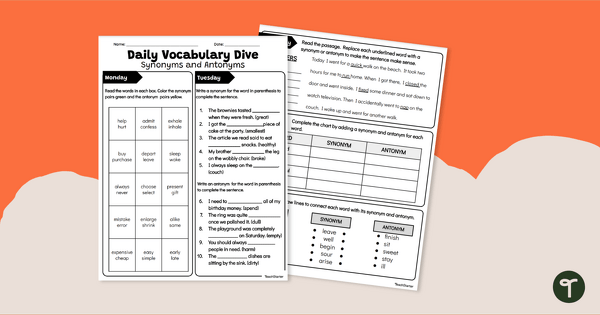
Daily Vocabulary Dive - Synonyms and Antonyms Worksheet
Give your students a daily dose of synonym and antonym review with a 5-day vocabulary warm-up worksheet.
- Plus Plan
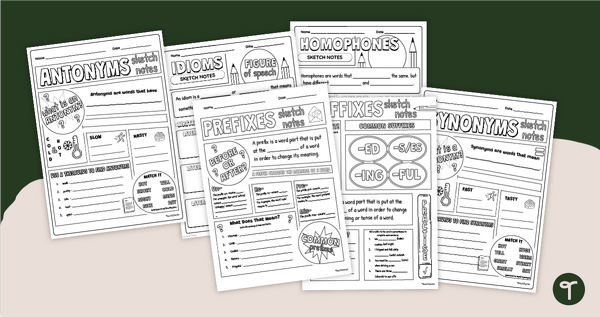
Vocabulary Sketch Notes Template Pack
Review a variety of vocabulary skills and help your students build note-taking skills with our printable Vocabulary Sketch Notes Template Pack.
- Plus Plan
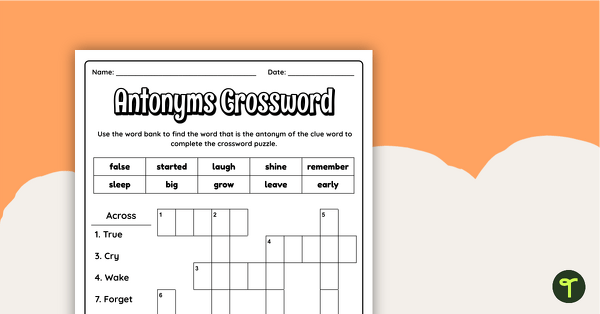
Antonym Word Search
Download this antonym word search set that helps students identify opposite meanings and strengthen their understanding of contrast in language.
- Free Plan
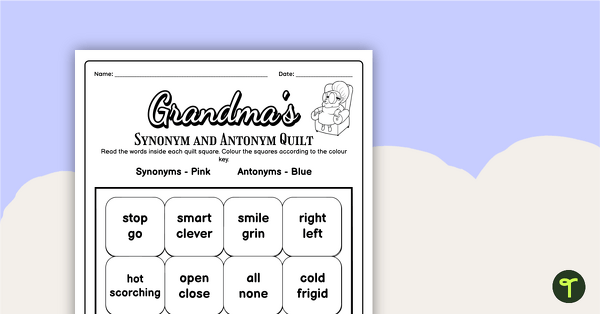
Colour the Synonyms and Antonyms Worksheet
Explore vocabulary with this synonyms and antonyms worksheet for Year 4 students.
- Plus Plan
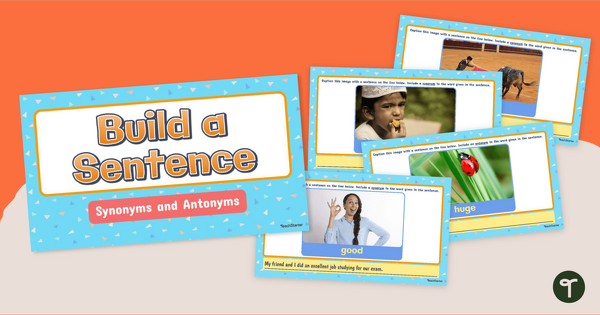
Synonyms and Antonyms Sentences – Interactive Activity
Get your students writing synonyms and antonyms sentences inspired by visual prompts with this engaging digital activity.
- Plus Plan
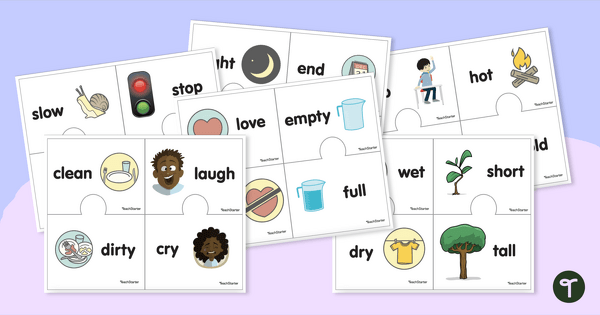
I Have, Who Has? Antonym Game
Boost vocabulary understanding with an antonym game that helps students confidently identify and apply opposite meanings in real sentences.
- Plus Plan
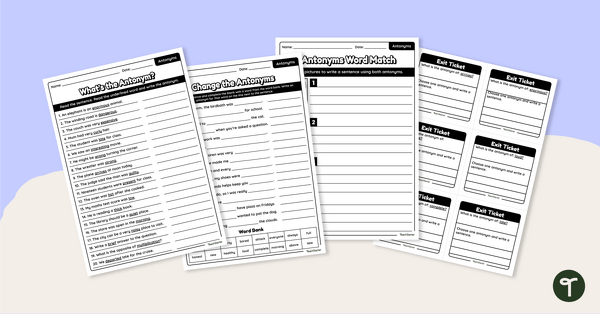
Antonym Worksheets
Practise identifying and using antonyms with a set of worksheets for students in Year 4.
- Plus Plan
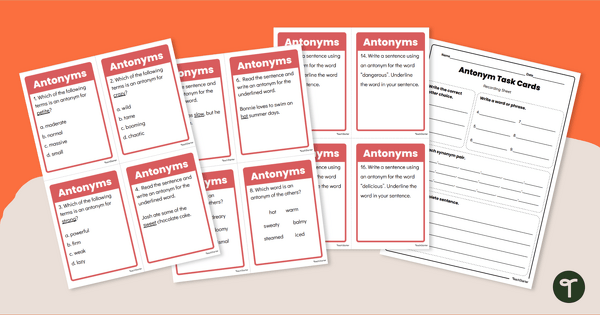
Antonyms Task Cards
Build vocabulary and recognition of antonyms with a set of 24 task cards.
- Plus Plan
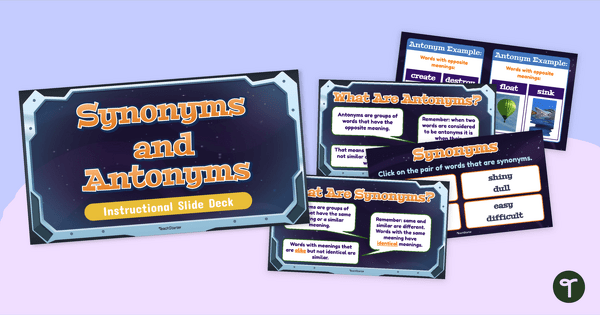
Synonyms and Antonyms PowerPoint
Use this synonyms and antonyms PowerPoint to expand your students’ vocabularies and teach them about the nuances between words.
- Plus Plan
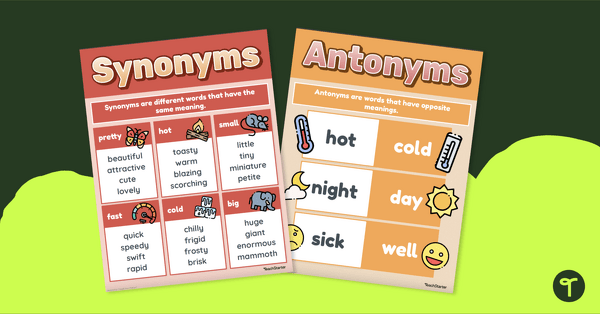
Synonym and Antonym Posters
Print a pair of handy synonym and antonym anchor charts for your students to reference during writing lessons.
- Plus Plan
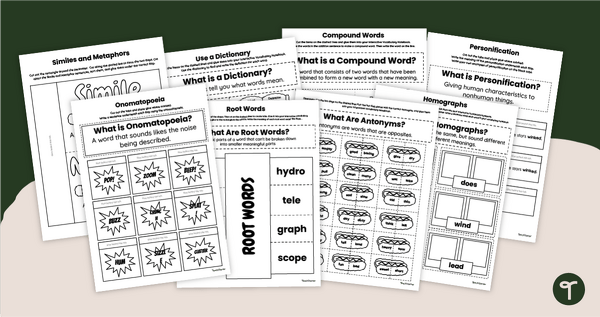
Vocabulary Foldables for Interactive Notebooks
Use Vocabulary Foldables to help your students demonstrate and review a variety of vocabulary concepts.
- Plus Plan
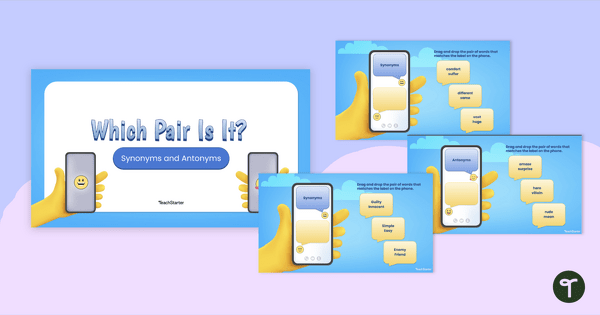
Fix the Text! – Digital Activity for Synonyms and Antonyms
Engage your students with this digital activity for synonyms and antonyms that helps them practise vocabulary in a fun and engaging way.
- Free Plan
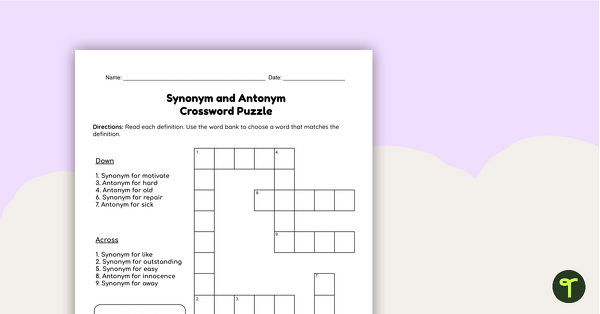
Synonym and Antonym Crossword Puzzle
Review vocabulary skills and boost your students’ knowledge of synonyms and antonyms with a crossword puzzle worksheet.
- Plus Plan
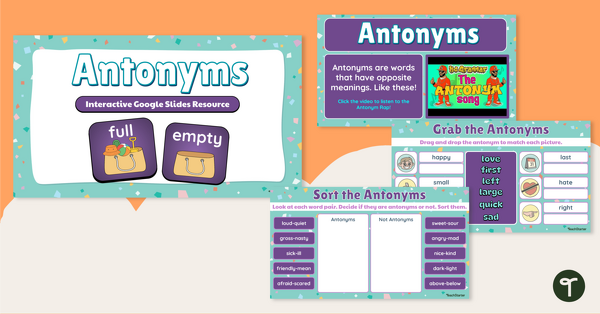
Antonyms Interactive Activity
Discover the world of antonyms with an engaging digital learning activity.
- Plus Plan
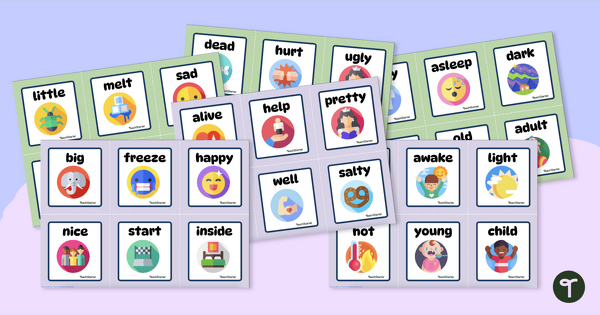
Antonym Flashcards
Boost your students vocabulary skills with a set of illustrated antonym flash cards.
- Plus Plan
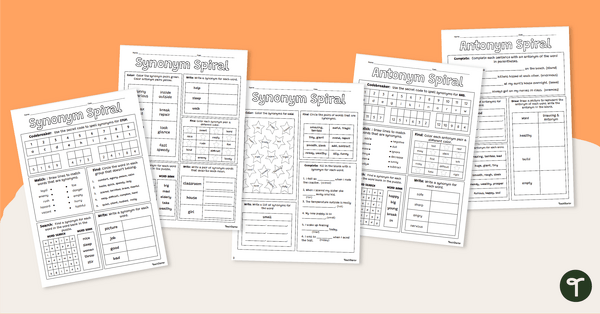
Synonyms and Antonyms Practice Worksheets
Boost vocabulary skills with daily review worksheets on synonyms and antonyms.
- Plus Plan
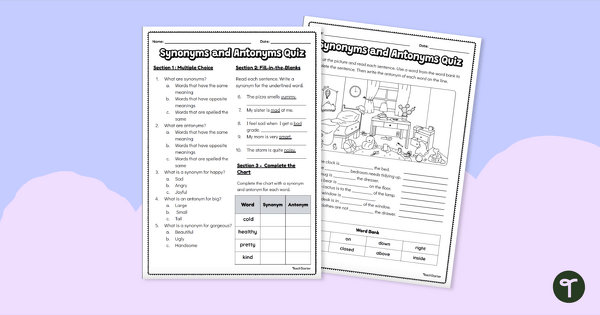
Synonyms and Antonyms Quiz
Assess your students’ knowledge of synonyms and antonyms with a vocabulary quiz.
- Plus Plan
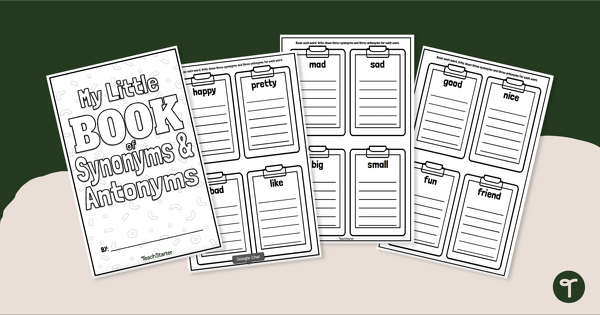
My Book of Synonyms and Antonyms
Combat overused words in your students’ writings by having them build their very own book of synonyms and antonyms.
- Plus Plan
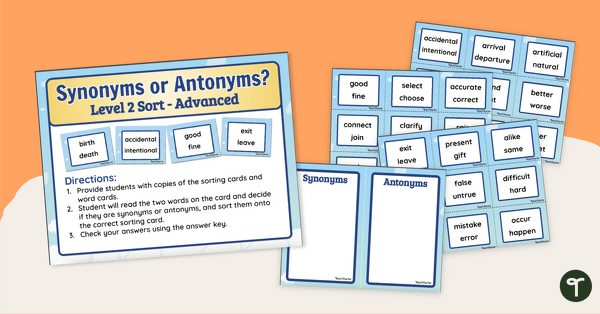
Antonyms and Synonyms Sorting Activity
Teach antonyms and synonyms with this hands‑on sorting activity that helps students confidently identify word relationships through meaningful, active learning.
- Plus Plan
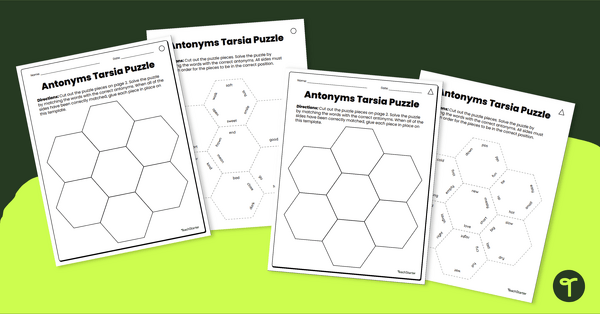
Antonyms Polygon Puzzle
Match antonym pairs with an engaging opposite words tarsia puzzle.
- Plus Plan
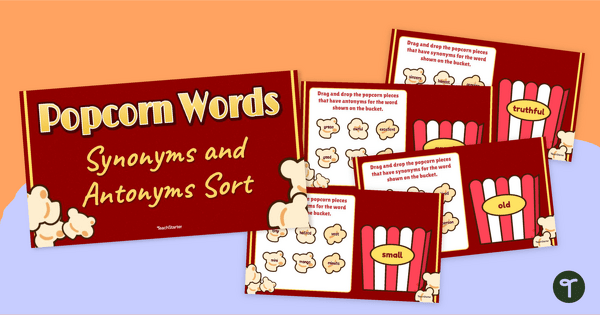
Synonyms and Antonyms – Digital Sorting Activity
Make your students’ vocabulary skills ’POP’ with an interactive, drag-and-drop synonym and antonym activity.
- Plus Plan
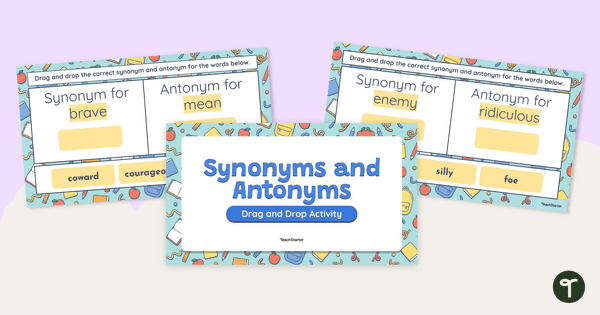
Synonyms and Antonyms – Digital Matching Activity
Identify synonyms and antonyms with an interactive, drag-and-drop sorting activity.
- Plus Plan
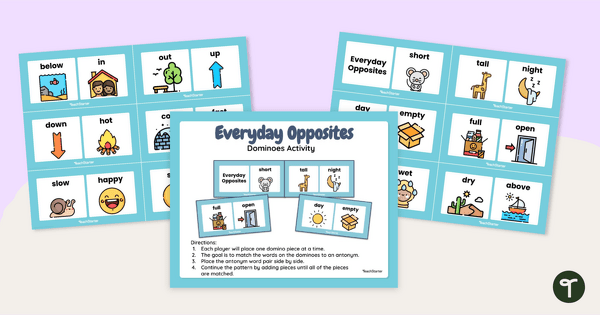
Everyday Opposites - Antonym Game
Have some wordplay fun with an Everyday Opposites domino game!
- Plus Plan
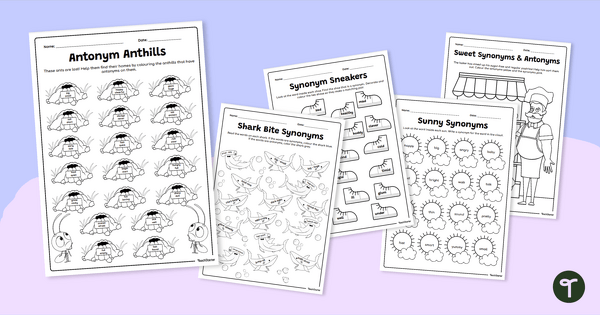
Synonyms and Antonyms Worksheet Pack
Practice identifying and using synonyms and antonyms with five fun vocabulary worksheets.
- Free Plan
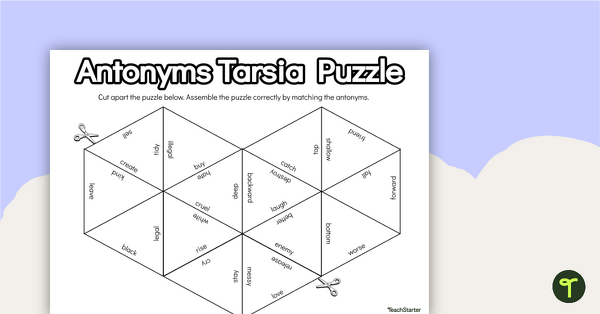
Antonyms Tarsia Puzzle
Match antonym pairs with an engaging opposite words tarsia puzzle.
- Plus Plan
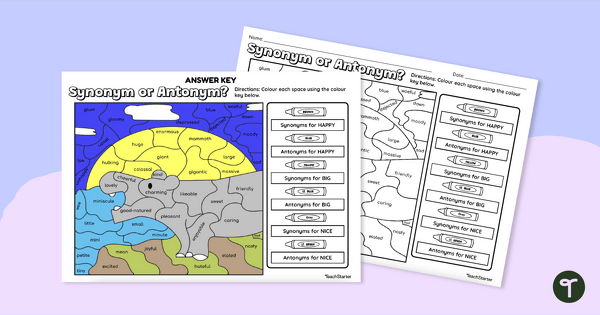
Colour By Code Worksheet – Synonyms and Antonyms
Reveal the hidden picture and practise using synonyms and antonyms with a vocabulary colour-by-code worksheet.
- Plus Plan
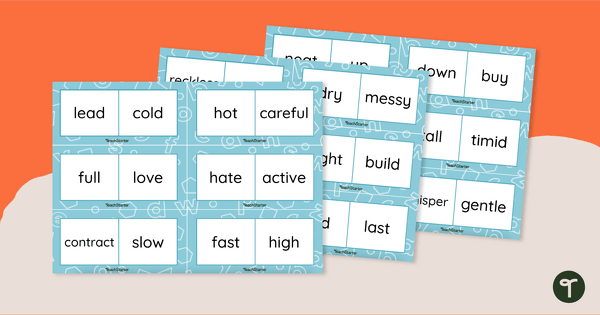
Antonym Domino Game
Have some wordplay fun with an Antonym Domino game!