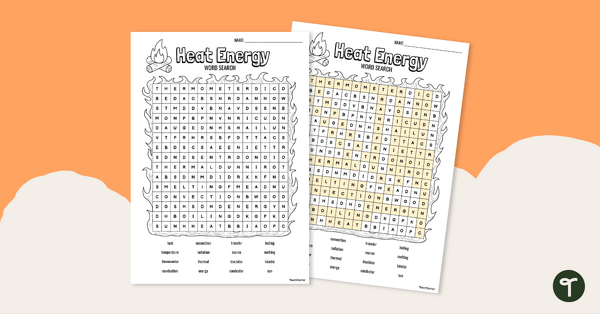
Help students remember heat energy vocabulary with this Heat Energy word search.
Kick Off Vocabulary Instruction With a Heat Energy Word Search
Learning heat energy vocabulary is like discovering the secret language of heat. When children understand the words, they can talk about how heat works and explain why some things are hot while others are cold. A teacher has created this heat energy word search to help kids get exposed to and use heat energy words.
This Heat Energy Word Search includes the following vocabulary words:
| heat | temperature | thermometer | conduction | convection |
| radiation | thermal | energy | transfer | source |
| insulator | conductor | boiling | melting | sun |
Science Activities to Match Heat Energy Vocabulary Learning
- Use a thermometer to measure the temperature of different places.
- Heat various objects made of different materials by placing them in the sun. Use a thermometer to measure their temperature over time. Which materials conduct heat the best?
- Fill a transparent container with water and add a few drops of food colouring. Place the container in the sunlight and observe convection currents with warmer water rising and cooler water sinking.
- Create a solar oven using a pizza box and foil. Use it to melt chocolate. Discuss how the sun is the source of heat energy.
- Use two ice blocks – put one in direct sunlight and the other in the shade. Compare the rate at which they melt. The sun’s radiation will melt the ice faster.
- Heat a pot of water until it starts ti boil. Discuss how the water molecules gain kinetic energy as they heat up, causing them to move faster and turn into steam.
Download This Thermal Energy Word Search
Use the drop-down menu to choose between the easy-to-download PDF version of this Thermal Energy Word Search or the editable Google Slides version.
More Heat Energy Resources
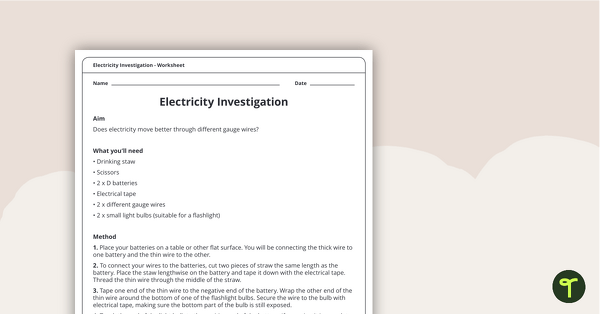
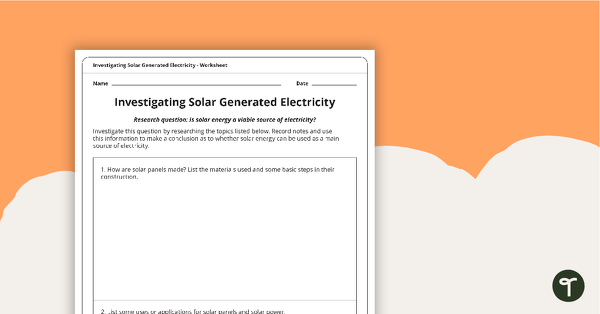
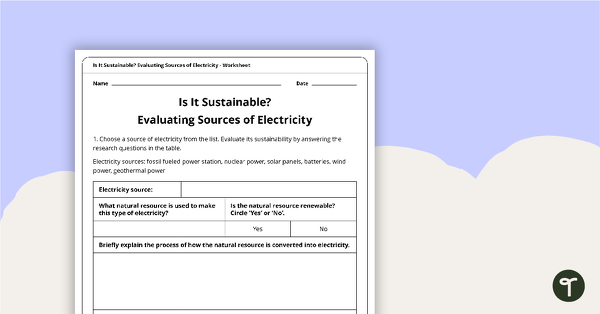
[resource:2031966] [resource:10241] [resource:2022398]


0 Comments
Write a review to help other teachers and parents like yourself. If you'd like to request a change to this resource, or report an error, select the corresponding tab above.