Addition Strategies Teaching Resources
Make teaching addition strategies easier this school year with worksheets, printables, math games, and more created by elementary teachers for elementary teachers like you.
Aligned with both TEKS and the Common Core Math curriculum standards, the digital and printable teacher resources in this collection cover a range of grade levels, so you can find just what you need for your lesson plans. Whether you're teaching kindergartners how to count on, explaining the commutative property to your 3rd grade class or working on your students' front-end estimation skills, we've got you covered!
Has it been a while since you taught math, or at least this particular part of the curriculum? Our teacher team knows a quarter of American teachers switch grades every year, and sometimes you could use a quick refresher.
What Are Addition Strategies?
Using strategies in math teaches students to think flexibly about numbers and will help them develop automaticity. So, what does it mean in the context of addition?
The term addition strategies refers to the different methods and techniques that can be used by our students to solve addition problems.
These strategies are an important part of developing fluency and building a deeper conceptual understanding — not to mention more efficient than counting as students flex their math muscles!
6 Addition Strategy Examples That Can Help Elementary Students Build Fluency
Looking for examples of some of the addition strategies that can help put your students on the path to a more procedural model? Here are a few that can be used side by side:
Counting On Strategy
Kindergarten and 1st graders can start with the larger number and count on from there to begin mastering addition.
Counting On Strategy Example — If students want to find the sum of 7 + 3, they would start with 7 and count on 3 more (8, 9, 10).
Making 10
Finding ways to make one of the numbers a multiple of 10 and then adding the remaining number is a simple but effective strategy to help first and second graders build fluency.
Making 10 Strategy Example — If your student is looking to find the sum of 7 + 4, they could make 7 into 10 by adding 3 and have 1 left to add on.

Doubles Strategy
The doubles strategy for addition is based on the fact that adding a number to itself is the same as doubling that number.
Double Strategy Example — To add 8 + 7, one can think of it as 7 + 7 (which equals 14) and then add one more to get 8 + 7 = 15.
Number Bonds
Number bonds involve breaking the problem down into smaller parts that can be added together.
Number Bonds Strategy Example — To find the sum of 7 + 3, you could think of the problem as (5 + 2) + 3.
Place Value
This strategy involves breaking down numbers into their individual digits and adding them one column at a time, starting with the ones place, then the tens place, etc.
Mental Math
Using mental math as an addition strategy involves rounding, front-end estimation and compensation.
- Plus Plan
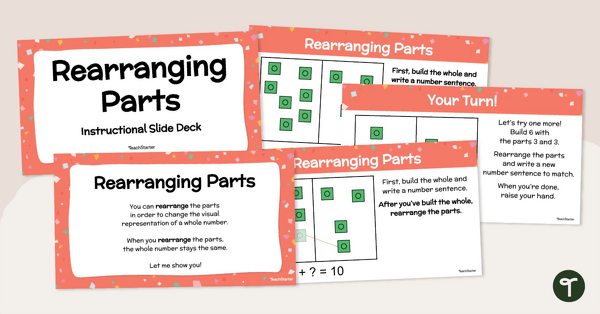
Rearranging Parts – Instructional Slide Deck
Learn how to decompose numbers less than or equal to 10 into pairs in more than one way with this instructional slide deck.
- Plus Plan
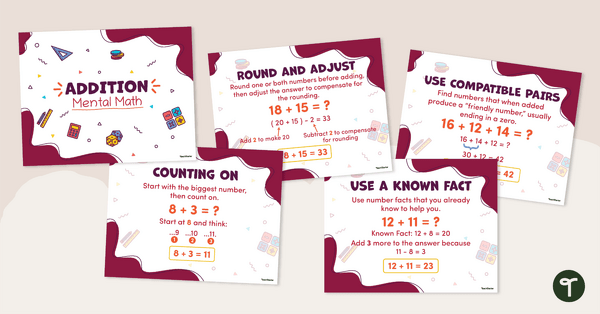
Mental Math Addition Posters
Use this set of addition posters in your classroom when teaching different mental math strategies.
- Plus Plan
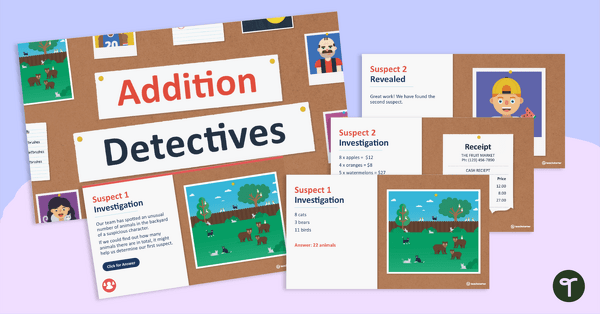
Addition Detectives - Interactive Math Game
An engaging 43-slide PowerPoint themed as a detective story in which students are tasked with using different addition strategies to reveal suspects.
- Plus Plan
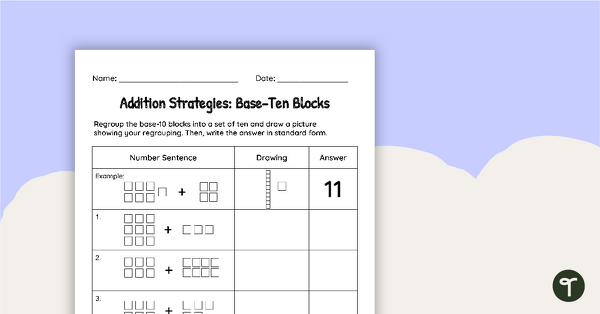
Addition Strategies: Base-Ten Blocks Worksheet
Practice using the strategy of using base-10 blocks and regrouping to find the sum.
- Plus Plan
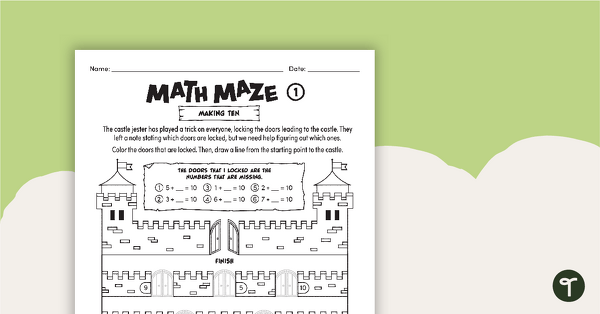
Math Mazes – Making Ten
A set of mazes where students find missing addends to solve the maze.
- Plus Plan
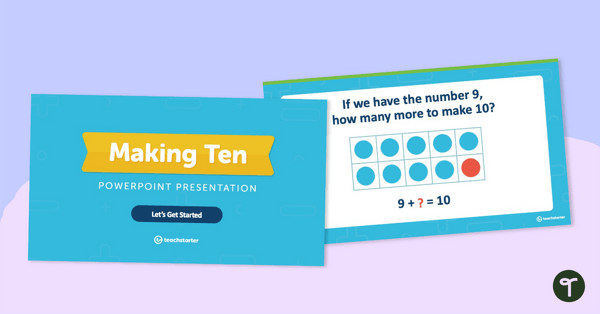
Making Ten Teaching Slide Deck
A 14-slide PowerPoint that uses engaging animations to walk students through the 'making ten' addition strategy.
- Plus Plan
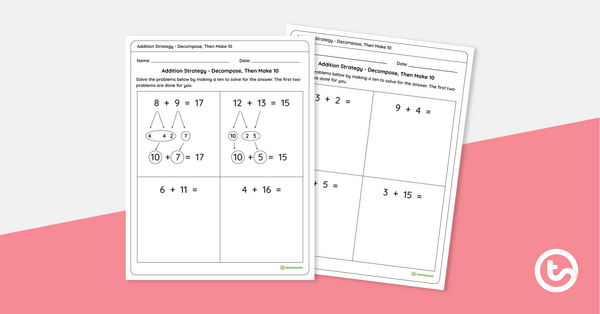
Addition Strategy - Decompose, Then Make 10 Worksheet
Build addition strategies using digits 1-10 with this two-page decomposing numbers worksheet.
- Plus Plan
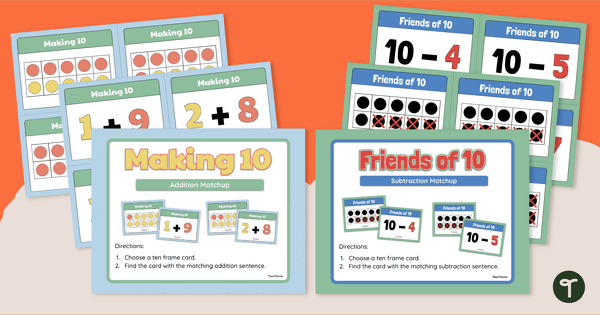
Tens Frame - Addition and Subtraction Match-Up Activity
Build addition and subtraction skills with two tens frame matching games.
- Plus Plan
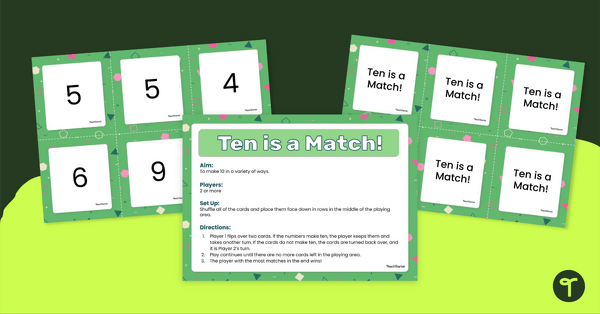
Ten is a Match! - Memory-Style Game
Practice matching two numbers that add up to 10 with this set of 24 number cards.
- Plus Plan
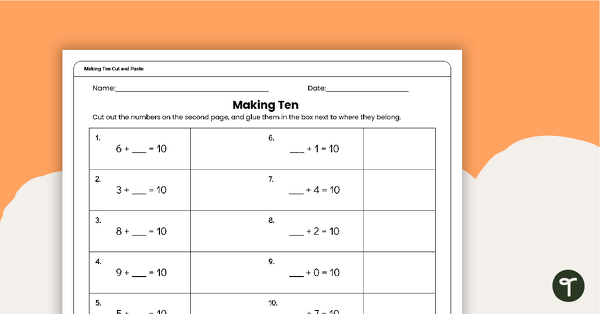
Making Ten Cut and Paste Worksheet
A cut and paste worksheet to practice finding the missing addend when making ten.
- Plus Plan
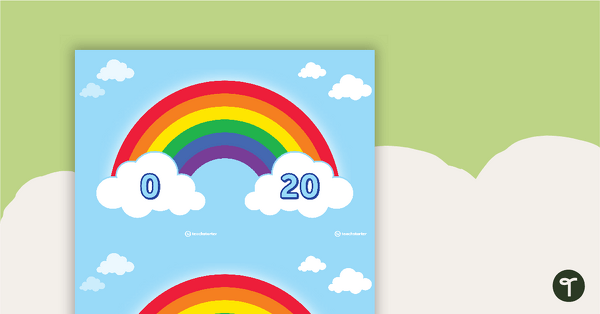
Friends of 20 – Addition Match-up Activity
A set of 40 matching cards to explore the number combinations of 20.
- Plus Plan
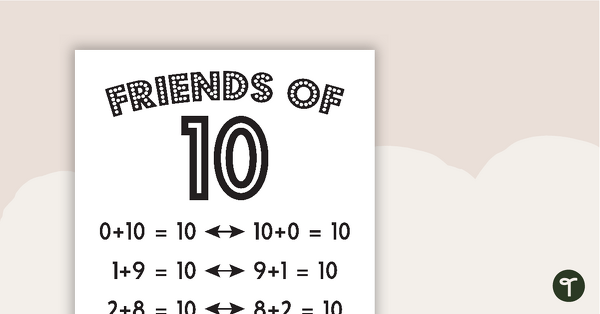
Friends of... 1 to 10 - Black and White Version
A set of 10 posters showing the different combinations to make the numbers 1 to 10.
- Plus Plan
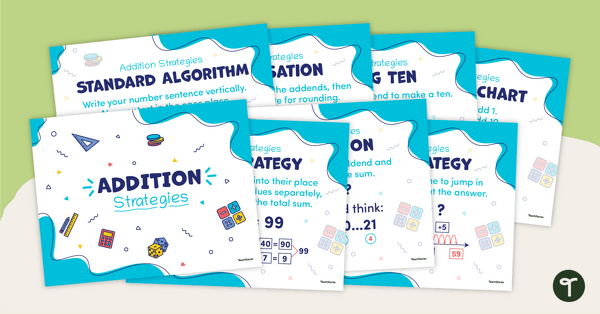
Addition Strategies Posters
Create an "addition strategies display" for your students with this set of 7 posters.
- Plus Plan
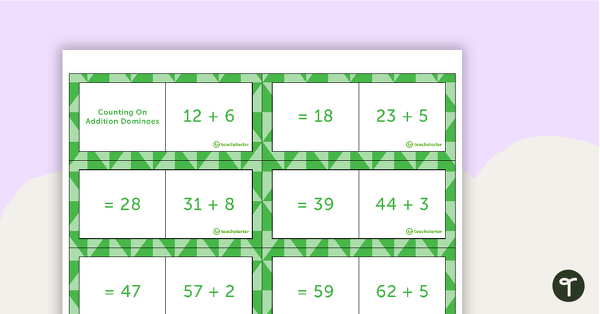
Counting On Addition Dominoes
A set of addition dominoes to use in the classroom when applying counting on strategies.
- Plus Plan
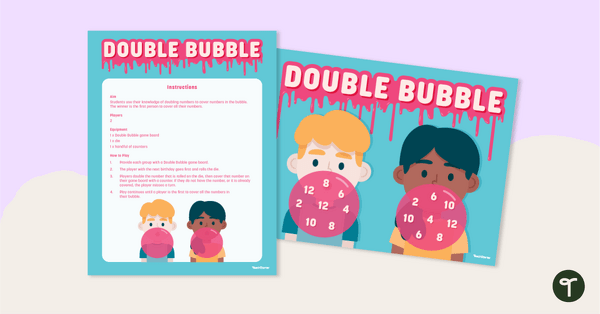
Double Bubble – Doubling Game
Practice the doubles addition strategy with this fun board game.
- Free Plan
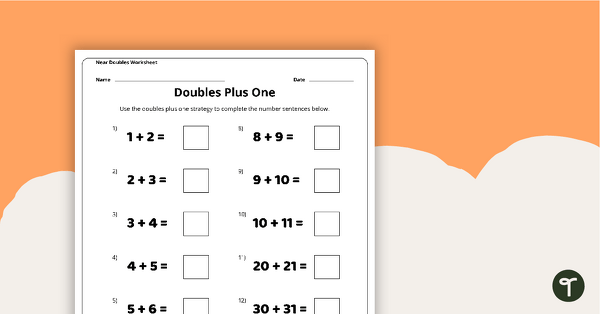
Doubles Plus One - Worksheet
Practice the doubles plus one addition strategy with this one-page worksheet.
- Plus Plan
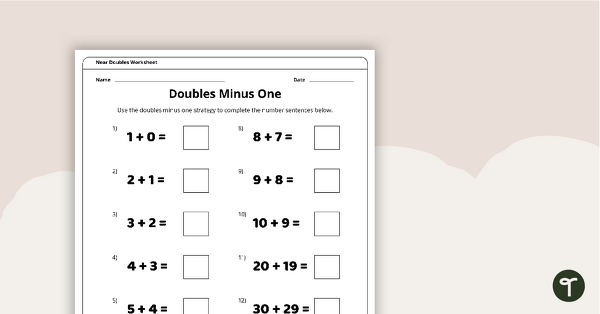
Doubles Minus One - Worksheet
Practice the doubles minus one addition strategy with this one-page worksheet.
- Free Plan
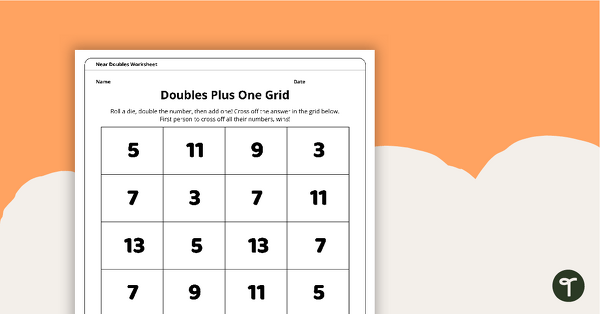
Doubles Plus One - Grid Game
Practice the doubles plus one addition strategy with this dice game.
- Plus Plan
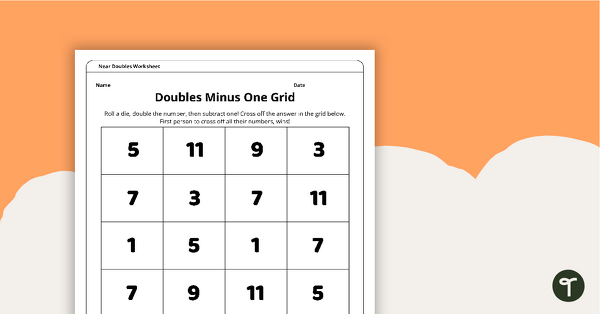
Doubles Minus One - Grid Game
Practice the doubles minus one addition strategy with this dice game.
- Plus Plan
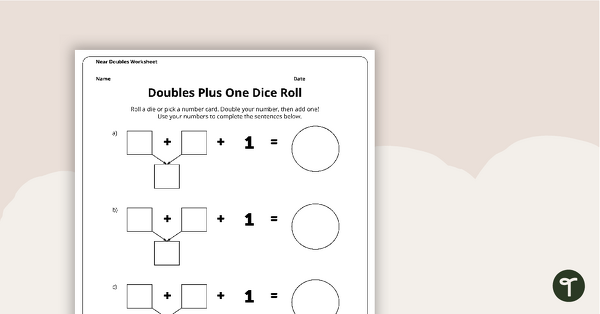
Doubles Plus One - Dice Roll Worksheet
Practice the doubles plus one addition strategy with this one-page worksheet.
- Plus Plan
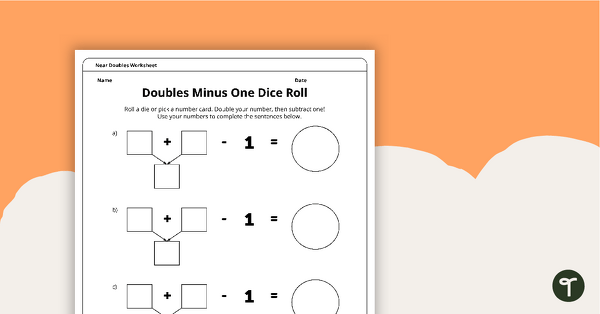
Doubles Minus One - Dice Roll Worksheet
Practice the doubles minus one addition strategy with this one-page worksheet.
- Plus Plan
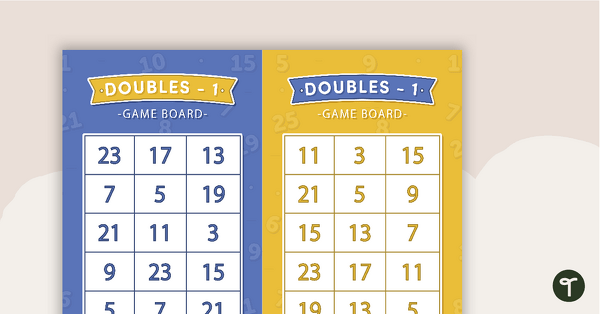
Doubles Minus 1 - Game Boards
30 game boards to use when practicing the doubles minus one strategy with single and double-digit numbers.