Number Sense Teaching Resources
Browse printable worksheets, hands-on math center activities and more teaching resources designed to teach number sense in the elementary classroom.
Developing number sense is an important building block for elementary math students and unlocks a deeper understanding of numbers and their relationships. Aligned with Common Core, each worksheet, game and century activity was created by teachers with teachers — and students — in mind to help build those skills in ways that engage and excite students about numbers!
Want to learn more about number sense? Read on for a primer from our teacher team, including a definition of number sense, how to assess this important math skill and more!
What Is Number Sense?
In the most basic sense (no pun intended), number sense refers to a student's intuitive understanding of numbers and their relationships. It includes the ability to estimate and compare quantities, understand numerical patterns and relationships and make reasonable judgments about the accuracy of calculations.
When students show an understanding of numbers, their size, relationships, and how they are affected by the four mathematical operations, what they're really showing is their number sense.
In an educational setting, building number sense is closely related to other foundational skills such as problem-solving, critical thinking and logical reasoning. As our students get older, it will become a crucial skill for daily life they will use to manage finances, calculate time and make decisions based on numerical information.
Teach Starter Teacher Tip: Although the names may seem interchangeable, it's worth noting that number sense is not the same as mathematical fluency or memorization of algorithms, but rather a deep understanding of the underlying concepts and relationships between numbers.
When Does Number Sense Develop?
There is no one grade level when we're teaching students number sense — instead, it continues to develop and become more sophisticated as students progress through elementary school.
Research suggests that babies as young as 6 months old can distinguish between small and large numbers of objects, and by preschool, students are already working on number sense as they begin to learn counting and one-to-one correspondence. At this level, they're also beginning to develop an understanding of quantity and relative size — both key to overall number sense.
Number sense will continue to grow in elementary school as students become more adept at recognizing and using numbers to solve problems, and it continues into high school and — for many students — into college.
Assessing Number Sense
When we assess students for their number sense skills, there are certain mathematical concepts that they should have under their belts. These include:
- Ability to Recognize Missing Numbers in a Pattern —When kids can fill in missing numbers in a sequence, they're showing that they can make connections between numbers and develop an understanding of the relationships between them.
- Ability to Use Mental Math — Students with number sense can use mental math to solve problems involving the four basic operations.
- Ability to Engage in Systematic Counting — Children who can count systematically can more easily understand the relationships between numbers, including number magnitude, patterns, and sequences.
- Ability to Subitize Numbers — Students can use visual clustering skills to instantly recognize how many objects are in a group without physically counting them.
- Ability to Relate Numbers to Real-World Problems —For example, a student may understand that "3" means "three objects" or "three days" or "three dollars."
- Ability to Compose and Decompose Numbers — Students use number sense when they break down numbers and put them back together. For example, a student who can break down the number 10 into 8 and 2, then add the two back together to again make 10, is using number sense.
- Free Plan
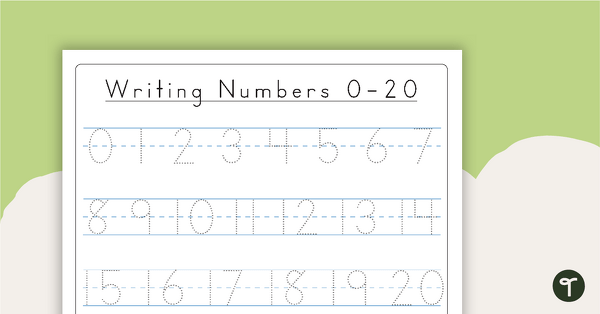
Tracing Numbers 0-20
Practice writing numbers 0–20 with this tracing activity.
- Free Plan
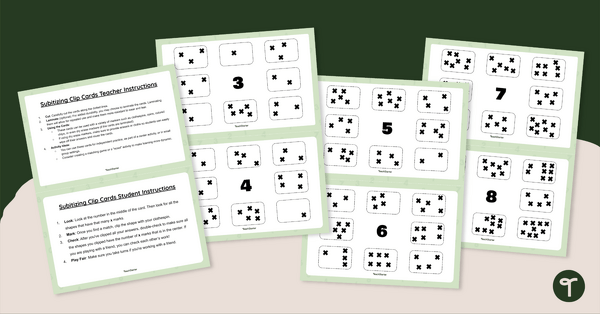
Subitizing Activity — Clip Cards (Numbers 1 - 10)
Share this subitizing activity with your students to give them hands-on practice subitizing to 10.
- Plus Plan
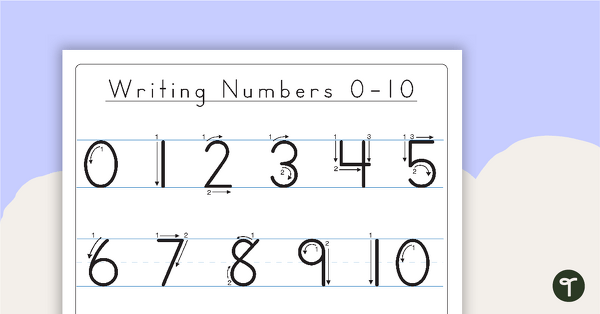
Writing Numbers 0-10 - Poster
A poster for students to reference when learning how to write the numbers 0–10.
- Plus Plan
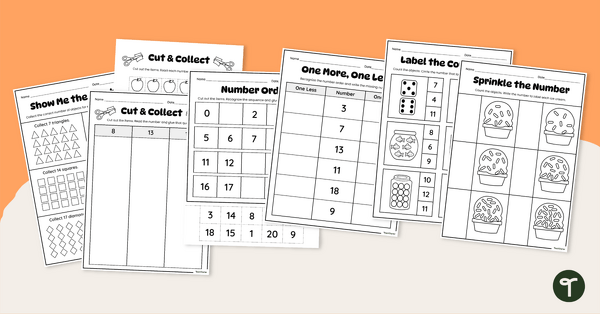
Counting and Ordering Numbers Worksheet Pack
Support counting and ordering numbers with this handy worksheet pack that helps students build early numeracy skills quickly and confidently.
- Plus Plan
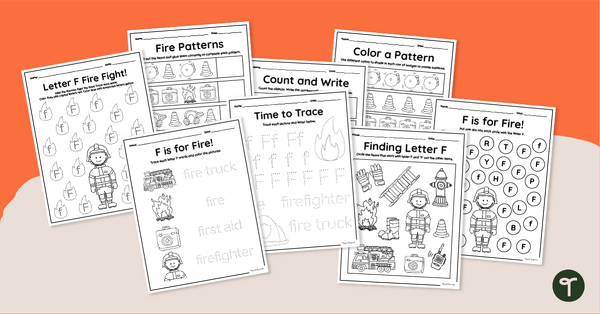
F is for Fire - Letter F Worksheet Pack
Help your PK and K students learn the letter F with 'F is for Fire' Letter F worksheets, which focus on phonetic sounds, handwriting, and activities for early math and literacy.
- Plus Plan
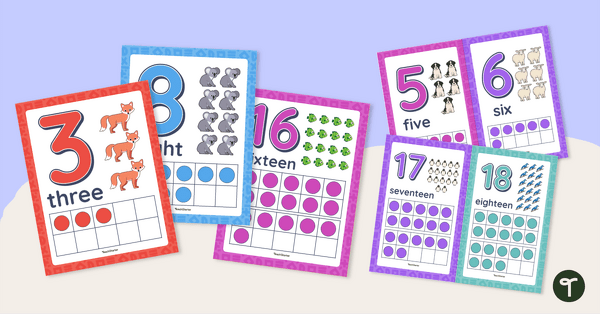
Ten Frame Number Posters (0-20)
Decorate your classroom with our ten frame number posters that will delight your animal-loving students while providing concrete representations of the numbers 0-20.
- Free Plan
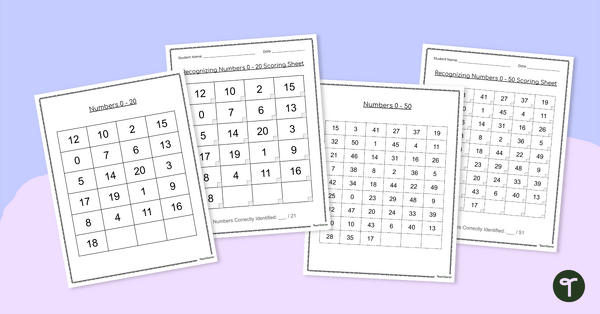
Number Recognition Assessment Pack
Utilize this Number Recognition Assessment Pack to evaluate your students’ progress in recognizing the numbers 0 through 120.
- Free Plan
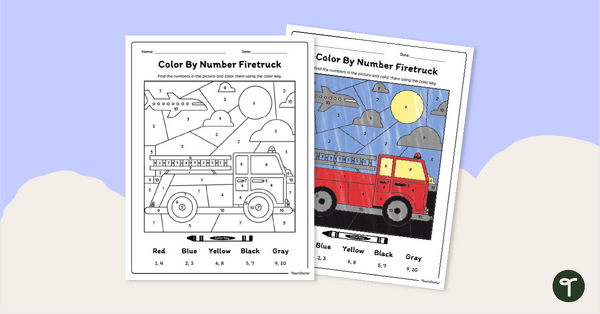
Color By Number Fire Truck Coloring Page
Build number identification skills with a Color by Number Fire Truck Coloring Page.
- Free Plan
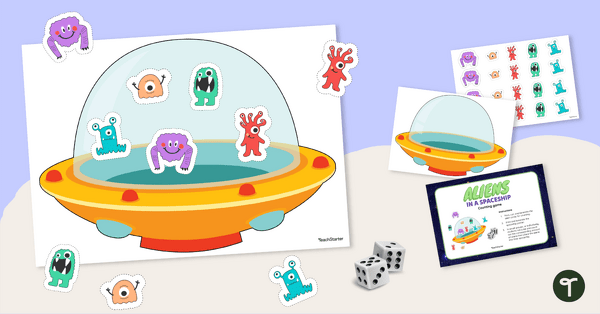
Aliens in a Spaceship Counting and Subitizing Game
Download a fun, hands-on game for teaching kids to count and use one-to-one correspondence or to subitize.
- Plus Plan
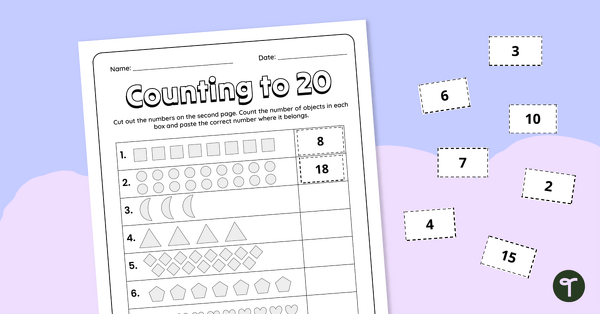
Counting to 20 Cut and Paste Worksheet
Count objects within 20 and match the total to its written number on this 2-page cut-and-paste worksheet.
- Free Plan
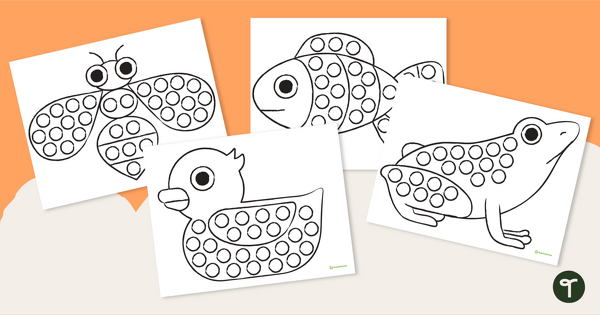
Roll & Cover Counting Printables for Kindergarten
Build fine motor skills and counting skills with a set of printable Roll and Cover Counting Printables for Kindergarten.
- Free Plan
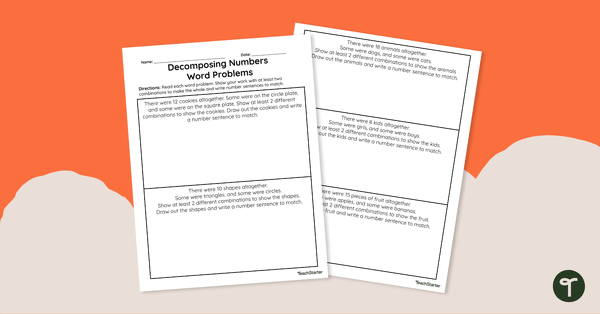
Decomposing Numbers – Word Problem Worksheet
Challenge students to decompose numbers presented in a word problem by rearranging the parts and showing different combinations.
- Free Plan
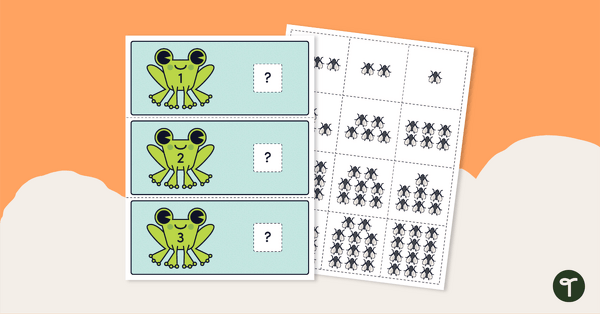
Frog and Flies Match-Up Activity (Counting to 12)
Practice counting numbers 1 to 12 with this fun frog and fly match-up activity.
- Plus Plan
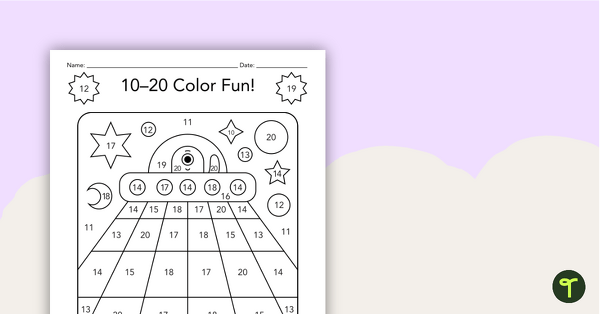
Color by Number - Numbers 10–20
A color by number activity for students to practice recognizing teen numbers.
- Free Plan
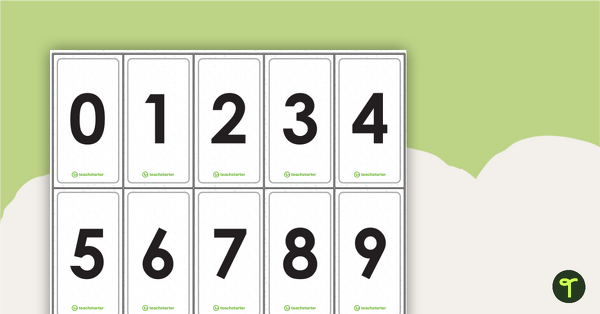
0-9 Digit Cards
A set of 0-9 digit cards to be used for numeracy games in the classroom.
- Free Plan
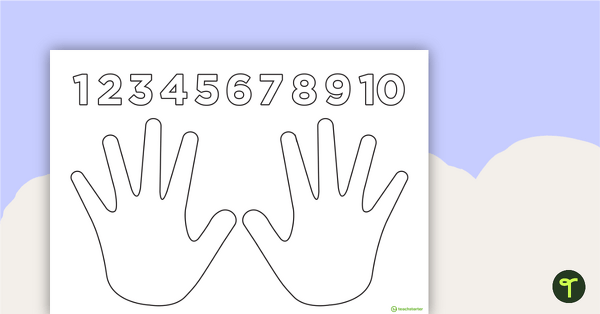
Free Counting From 1 to 10 Activity — Hands And Numbers Template
Teach counting from 1 to 10 and one-to-one correspondence with a creative (and free) printable activity for preschool, kindergarten, or 1st grade.
- Plus Plan
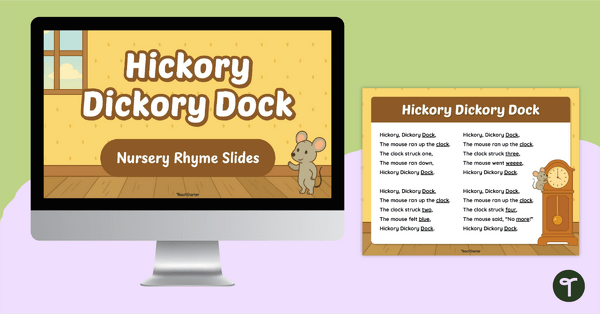
Hickory Dickory Dock – Nursery Rhyme Poster and PowerPoint
Use this “Hickory Dickory Dock” nursery rhyme poster and PowerPoint to teach your youngest students about rhyme, rhythm and counting.
- Free Plan
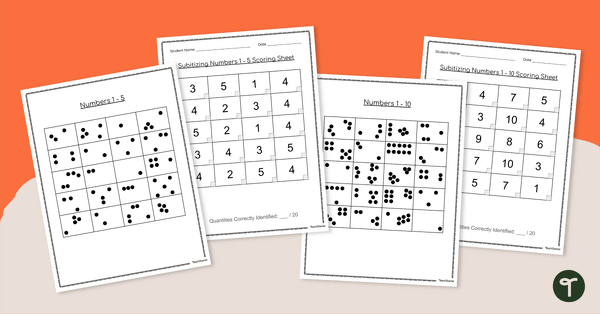
Subitizing Assessment Pack
Utilize our Subitizing Assessment Pack to test your students' ability to subitize quantities up to 10.
- Plus Plan
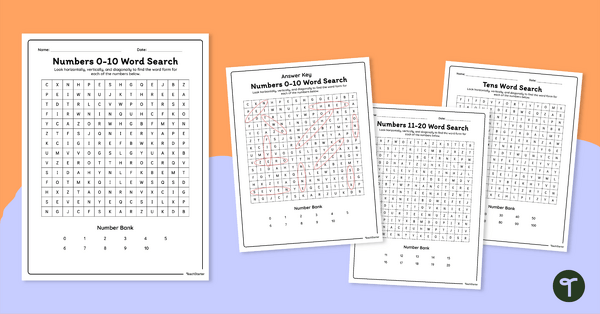
Number Word Search Puzzles
Assign these number word search puzzles to your students to give them practice identifying the word form of the numbers 0 through 20.
- Plus Plan
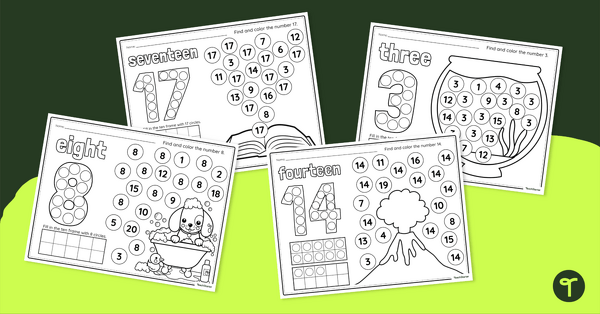
Number Recognition Worksheets — Numbers 1 - 20
Use these number recognition worksheets to help your students master a variety of math skills for the numbers 1 through 20.
- Free Plan
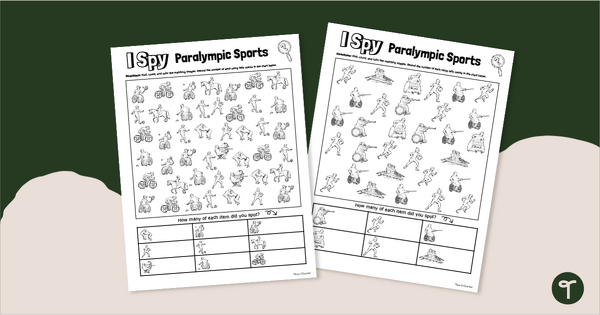
Paralympic Games Count and Color Worksheets
Count and tally Paralympic icons with our engaging I Spy Worksheets, perfect for enhancing your students' observation and counting skills.
- Free Plan
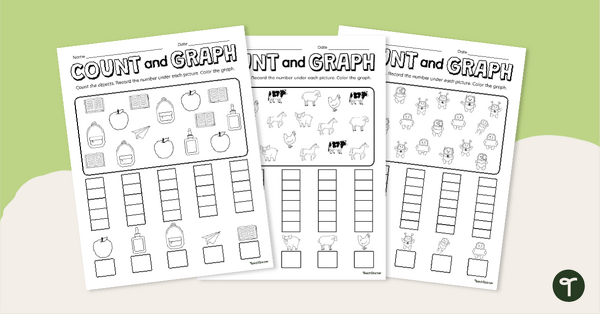
Count and Graph Worksheet Pack
Explore counting and graphing skills with this set of three worksheets.
- Plus Plan
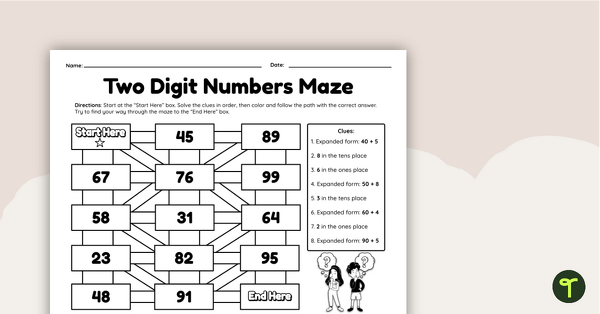
Two-Digit Numbers Maze Worksheet
Explore two-digit numbers with this fun maze where students use clues to make their way from the start to the finish.
- Plus Plan
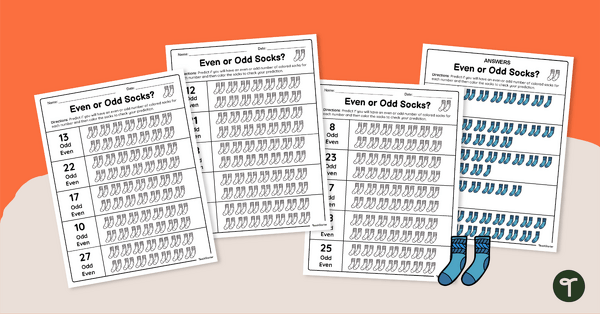
2nd Grade Even or Odd Socks Worksheets
Predict and confirm if a number is odd or even by pairing socks using this fun set of worksheets.
- Plus Plan
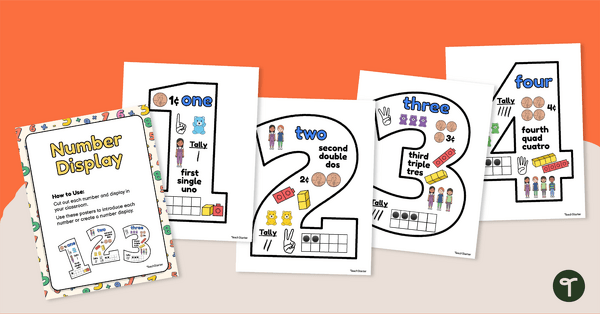
Number Anchor Charts - Math
Display this set of 1-20 math anchor charts in the classroom to encourage knowledge and understanding of each number.
- Free Plan
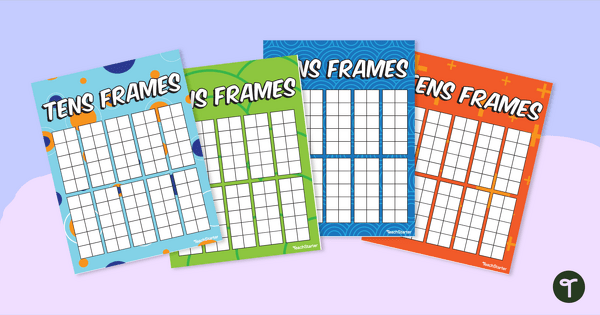
Numbers to 100 - Printable Tens Frames
Print a colorful set of tens frames to enhance your small group math lessons.
- Free Plan
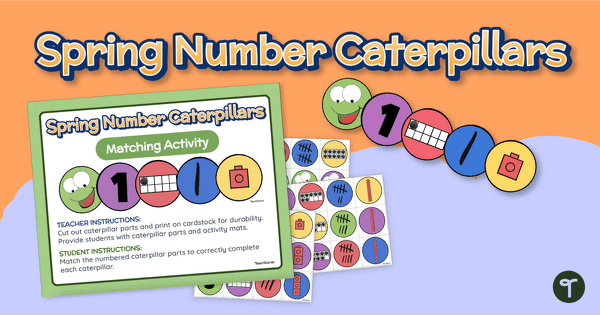
Spring "Numberpillars" — Kindergarten Caterpillar Puzzles
Match numbers 1-10 with their various visual representations to build fun caterpillar puzzles!
- Plus Plan
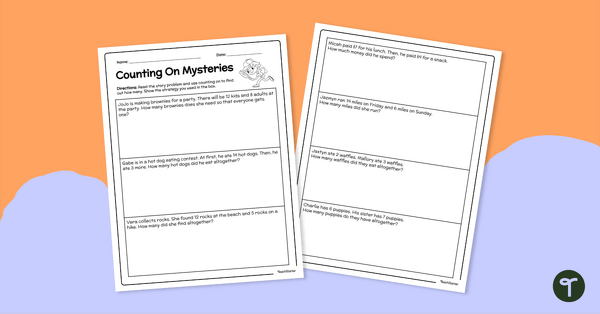
Counting On – Word Problem Worksheet
Practice adding within 20 by using the counting on strategy to solve word problems.
- Plus Plan
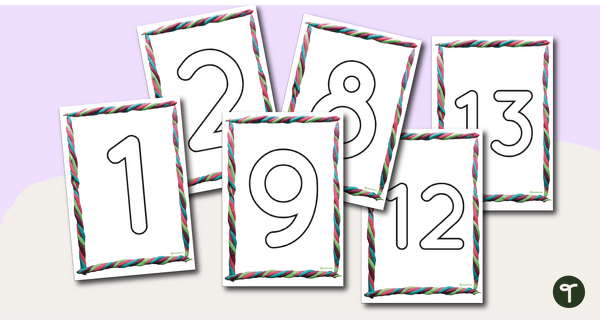
Numbers 0 to 20 - Playdough Mats for Fine Motor Development
A set of number playdough mats to help children develop their fine motor skills and identify the numbers from 0 to 20.
- Free Plan
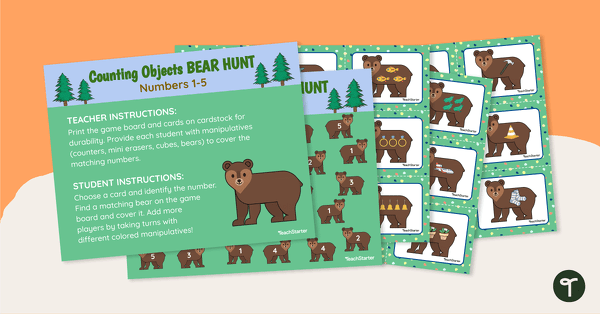
Counting Objects Bear Hunt - Numbers 1-5
Use one-to-one correspondence and basic counting skills with this hands-on game.
- Plus Plan
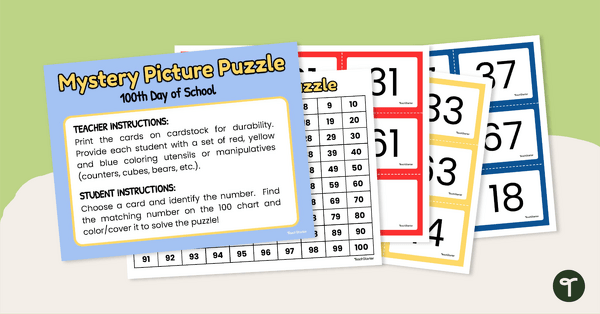
100 Chart Mystery Picture Puzzle
Practice identifying numbers within 100 with this set of 44 number cards and hundred chart.
- Plus Plan
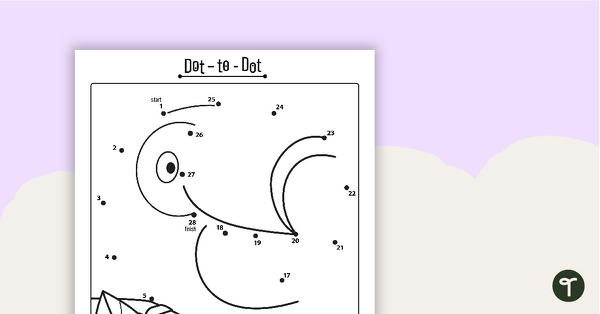
Dot-to-Dot Worksheets – Counting by Ones
Use this set of 3 dot-to-dot worksheets to get your youngest students practicing how to count by ones.