Number Patterns Teaching Resources
Explore number patterns in your math classes this school year with fun worksheets, number sequence games and more teacher resources created to help your students understand how numbers in a sequence relate to one another.
Aligned with both TEKS and Common Core math standards, the printable and digital activities in this collection were created by the math teachers on the Teach Starter team to help you save time on your lesson plans.
Whether this is your first year teaching about number patterns or you're just looking for a little extra help, we've got you covered. Read on for a primer from our teacher team! We explain what number patterns are so you can share with your class, plus we explore three common patterns.
What Are Number Patterns? A Kid-Friendly Definition
A number pattern is a series of numbers that each follow the same rule. These patterns or sequences can help us find missing numbers or identify what number will come next in a series.
For example, let's say you are given the following list of numbers:
- 4, 8, 12, 16, 20, 24
This is an example of a number pattern in which the next number in the series is 4 more than the previous number. Once you can identify the pattern in a series of numbers like this one, you can then use that pattern to determine what number comes next or even what numbers could have come before the list began.
This is one of the many reasons number patterns are an important part of building students' algebraic reasoning skills. They help students understand how numbers can be related to one another and apply what they know about those relationships to solve problems.

3 Common Types of Number Patterns
We can't talk about number patterns without breaking down the different types your students are going to encounter in their math journey!
Linear Patterns
Linear patterns are number patterns in which the numbers increase or decrease by the same amount each time.
The example used above — in which each number in the series increased by a quantity of 4 — is a simple example of a linear pattern.
Geometric Number Patterns
Another type of pattern students may have to contend with is the geometric number pattern. This type involves numbers that are multiplied or divided by a constant factor.
The multiplication table is an example of a geometric number pattern.
Recursive Patterns
Students will have to make full use of their understanding of the four whole number operations to work with recursive patterns. That's because this pattern involves finding each successive number in the sequence by performing a specific operation on the previous number(s).
- Plus Plan
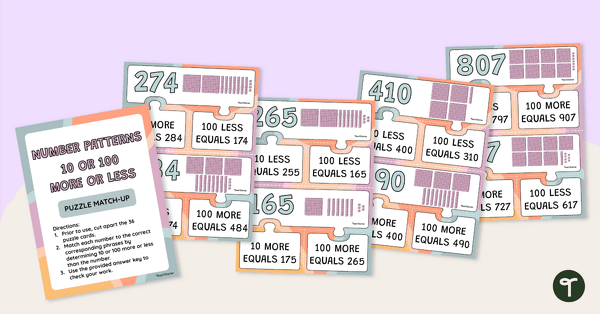
Number Patterns: More or Less – Puzzle Match-Up
Use your understanding of place value and skip counting to determine 10 or 100 more or less than a 3-digit number with this set of puzzles.
- Plus Plan
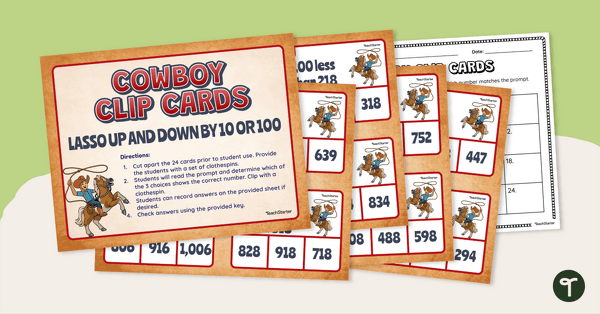
Cowboy Clip Cards – 10 More, 10 Less/100 More, 100 Less
Use an understanding of place value to determine a number 10 or 100 more or less than a number with this set of clip cards.
- Plus Plan
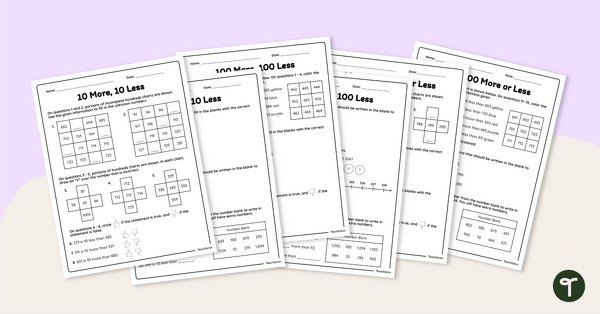
Number Patterns – More and Less Worksheets
Use place value skills to mentally add and subtract 10 or 100 to a given number with this set of worksheets.
- Plus Plan
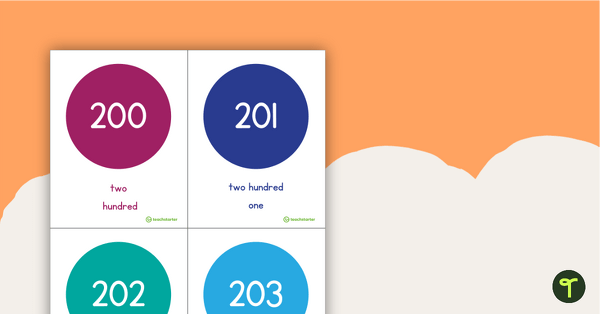
200-299 Number And Word Flashcards – Circles
Use these flashcards when learning about numbers and words.
- Plus Plan
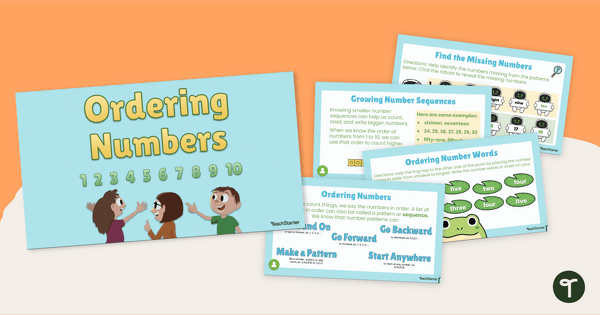
Ordering Numbers - Instructional Slide Deck
Help your students understand the concept of number sequencing with an interactive instructional slide deck.
- Plus Plan
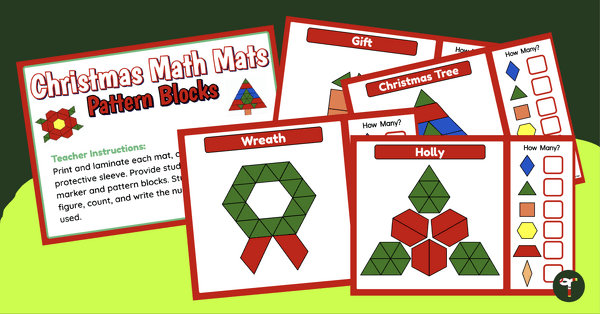
Christmas Math Mats - Pattern Block Picture Cards
Print a set of Christmas pattern block picture cards to help children develop shape recognition and fine motor skills.
- Plus Plan
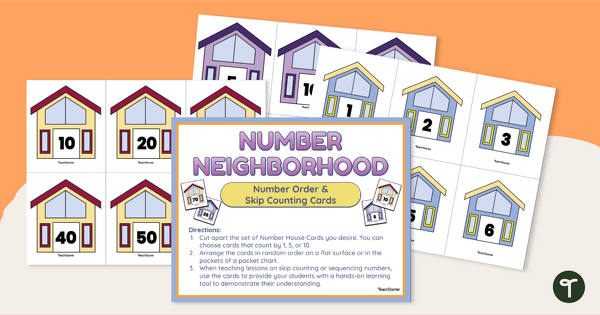
Number Neighborhood - Printable Number Line Sequencing Cards
Print a set of colorful numbered houses to use for skip counting, ordering, and comparing numbers.
- Plus Plan
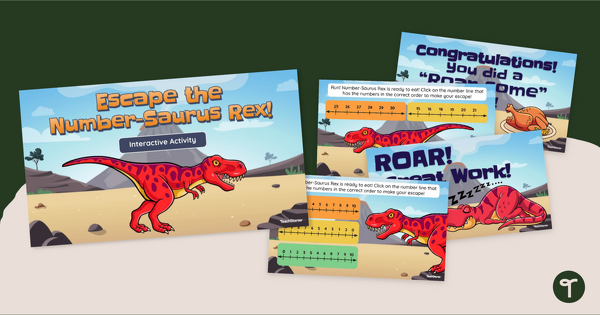
Escape the Number-Saurus Rex! Number Line Interactive
Escape the Number-Saurus Rex and practice number sequencing skills with an interactive, self-checking math adventure!
- Plus Plan
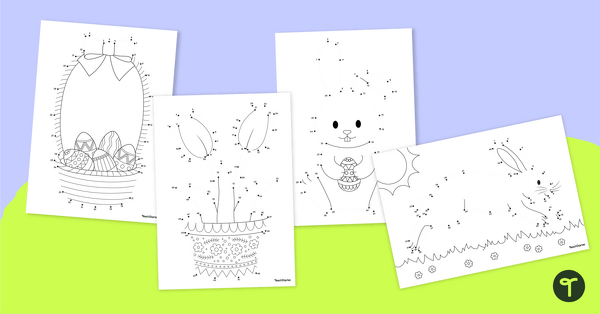
Easter Dot-to-Dot Printables
Practice counting in 1s, 2s, 5s, and 10s with these Easter-themed dot-to-dot printables.
- Plus Plan
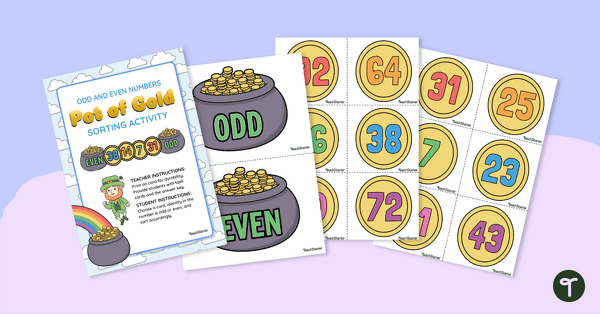
St. Patrick's Day Math Center - Odd and Even Number Sort
Sort odd and even numbers into their corresponding pots with a St. Patricks Day math activity.
- Plus Plan
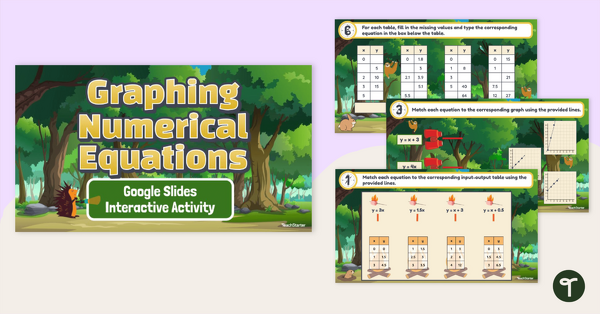
Graphing Numerical Equations – Google Slides Interactive Activity
Recognize and analyze patterns in graphs, input-output tables, and equations with this interactive activity.
- Plus Plan
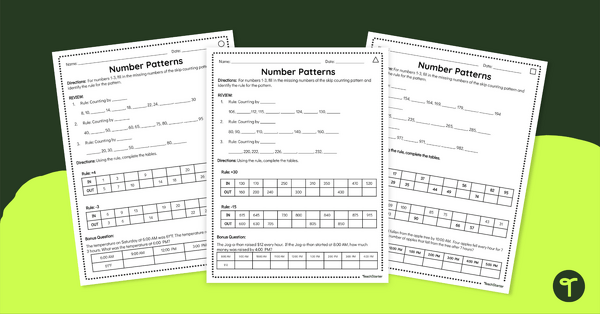
Differentiated Number Pattern Worksheets
Practice completing number patterns and determining their rules with this set of differentiated worksheets.
- Plus Plan
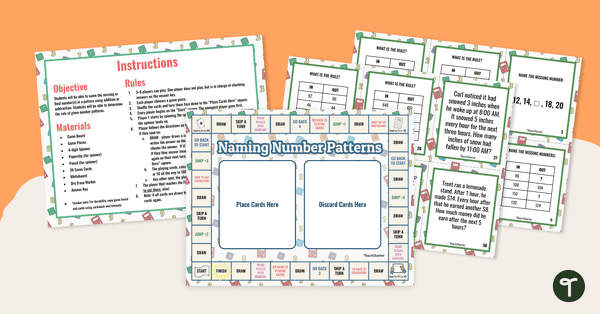
Naming Number Patterns – Board Game
Identify the rule or missing numbers from an input-output table, number sequence, or word problem with this number patterns board game.
- Plus Plan
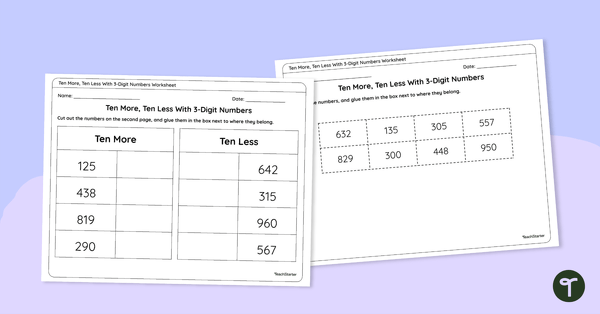
Ten More, Ten Less Within 999 - Cut and Paste Worksheet
Practice adding and subtracting 10 from a given 3-digit number in this cut-and-paste worksheet.
- Plus Plan
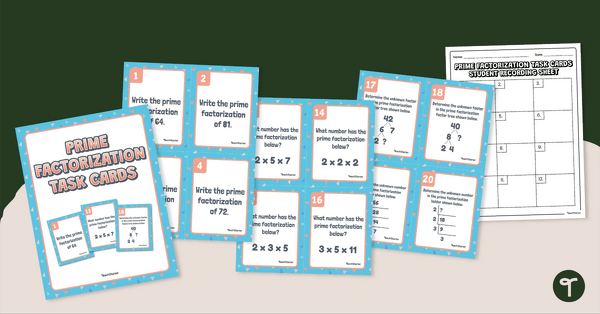
Prime Factorization – Task Cards
Practice how to find the prime factorization of a number with this set of 24 task cards
- Plus Plan
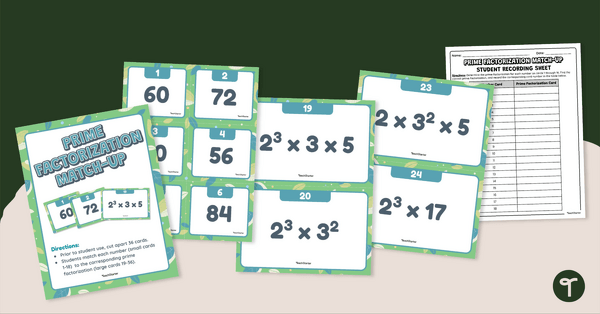
Prime Factorization Match-Up
Practice how to find the prime factorization of a number with this match-up activity.
- Plus Plan
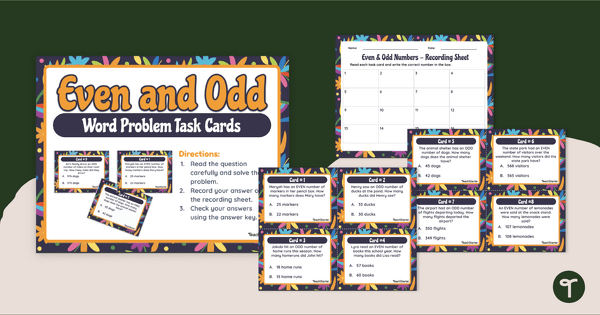
Even and Odd Numbers Task Cards - Word Problems
Identify odd and even numbers within word problems with a set of task cards.
- Plus Plan
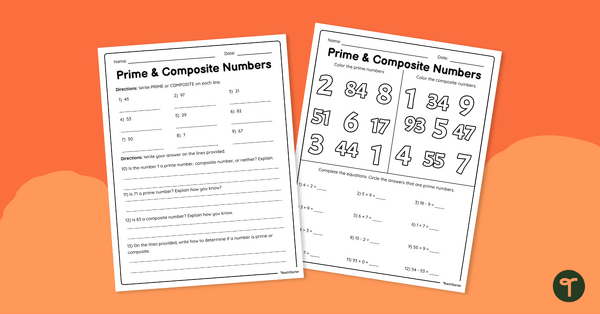
Identifying Prime & Composite Numbers – Worksheet
Use understanding of factors to identify composite and prime numbers with this worksheet.
- Plus Plan
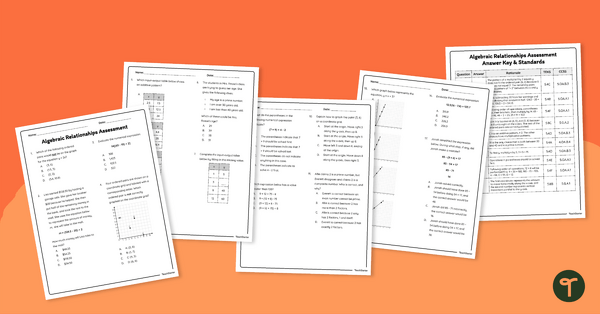
5th Grade Algebraic Relationships Assessment
Assess student understanding of prime and composite numbers, numerical expressions, graphing numerical patterns, and more with this math assessment.
- Plus Plan
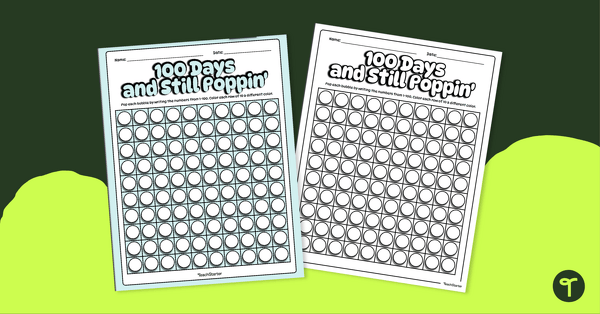
100 Days and Still Poppin! Counting to 100 Worksheet
Add to your stockpile of 100th Day of School ideas with a Pop-It-themed 100th Day of School worksheet.
- Plus Plan
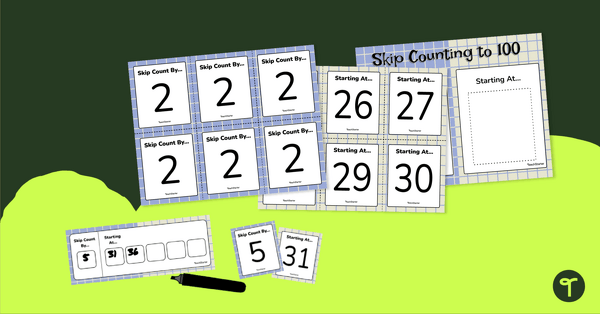
Skip Counting to 100 - Card Game
Practice skip counting by 2, 5, and 10 with this card game for small groups.
- Plus Plan
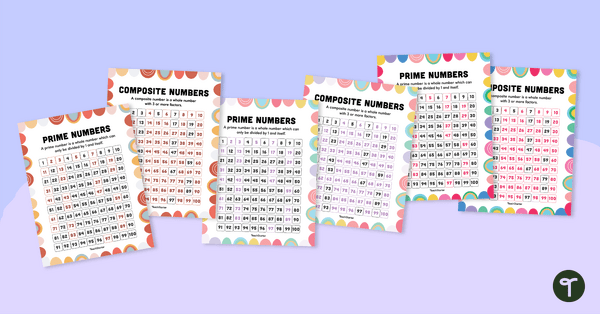
Prime and Composite Numbers Poster Pack
Distinguish between prime and composite numbers with this set of different rainbow-themed math posters.
- Plus Plan
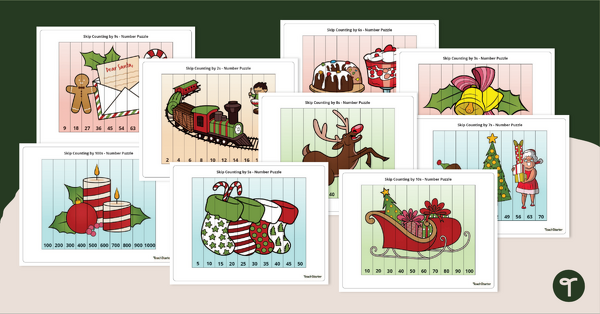
Christmas Printables - Math Skip Counting Puzzles
Grab a set of 10 printable Christmas puzzles to help students skip count in the classroom.
- Free Plan
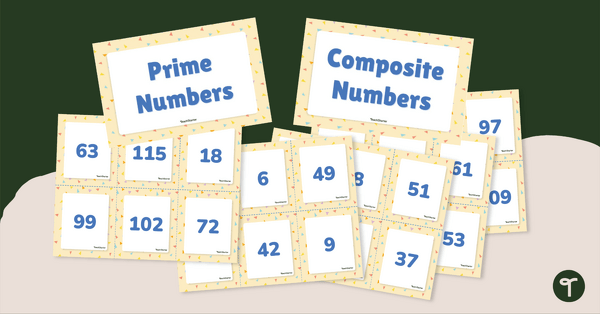
Prime and Composite Number Sort
Identify prime and composite numbers by sorting 30 number cards into their proper category.
- Plus Plan
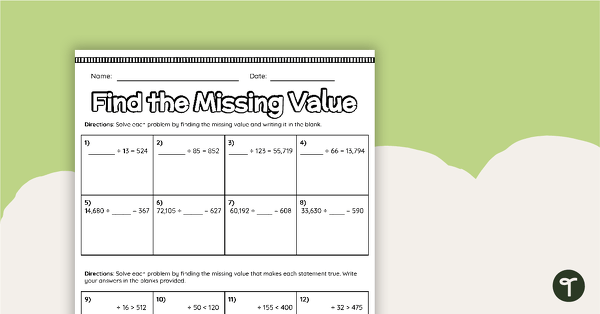
Find the Missing Value – Division Worksheet
Strengthen understanding of inverse operations by finding the missing value of each division equation.
- Plus Plan
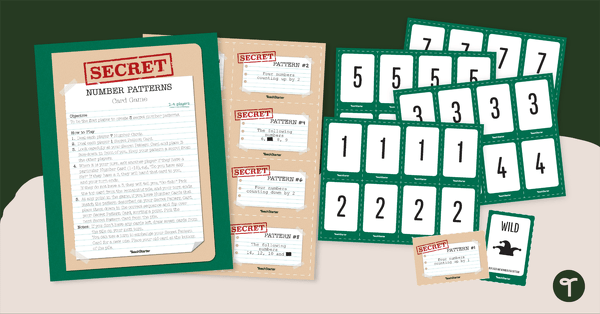
Secret Number Patterns – Card Game
Keep your secret number pattern hidden as you race to be the first to create number patterns based on given rules.
- Plus Plan
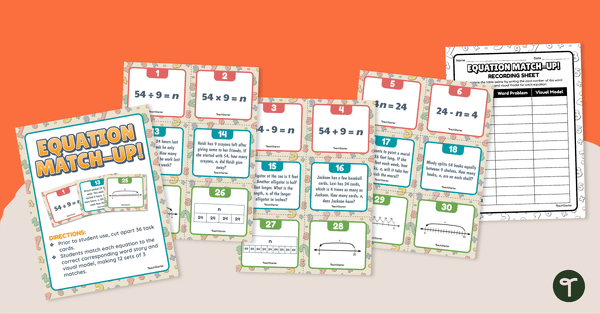
Equation Match-Up!
Match word problems, equations, and visual models with this match-up activity.
- Plus Plan
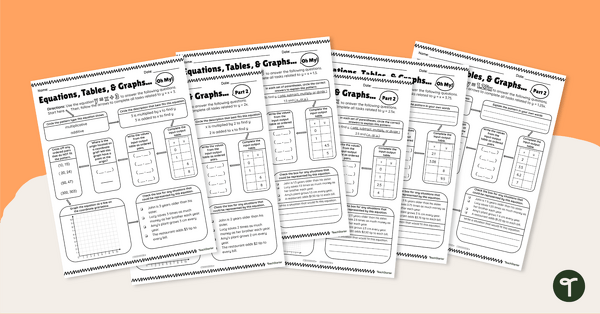
Equations, Tables, and Graphs, Oh My! – Differentiated Worksheets
Use these differentiated worksheets to practice using equations to create patterns within input-output tables and graphs.
- Plus Plan
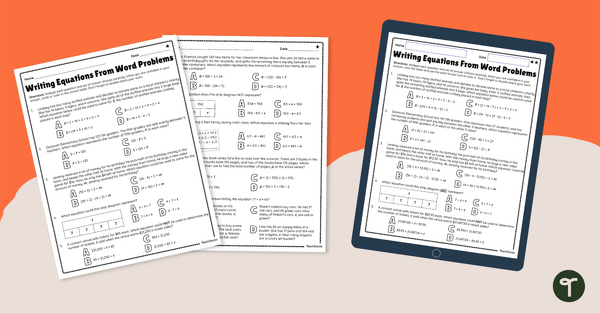
Writing Equations From Word Problems – Differentiated Digital & Printable Worksheets
Practice writing equations from word problems with this set of differentiated worksheets.
- Plus Plan
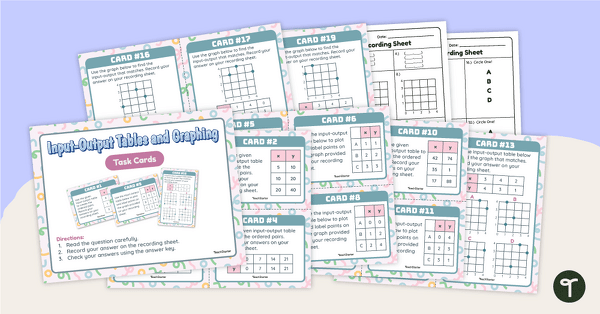
Input-Output Tables and Graphing Task Cards
Practice reading input-output tables and plotting points in the first quadrant with this set of task cards.
- Plus Plan
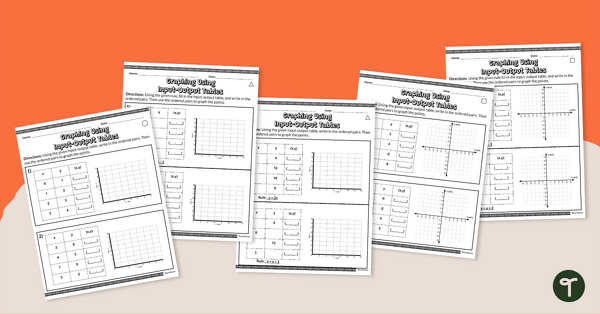
Graphing Using Input-Output Tables – Differentiated Worksheets
Use data from input-output tables to graph points with this set of differentiated worksheets.
- Plus Plan
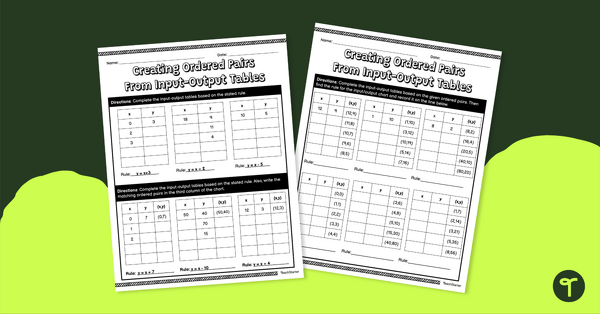
Creating Ordered Pairs From Input-Output Tables – Worksheet
Create ordered pairs from an input-output table and determine the rule for each table with this worksheet.
- Number Patterns Worksheets
- Number Patterns Games
- Number Patterns Posters
- Number Patterns Templates
- Number Patterns for Pre-K
- Number Patterns for Kindergarten
- Number Patterns for 1st Grade
- Number Patterns for 2nd Grade
- Number Patterns for 3rd Grade
- Number Patterns for 4th Grade
- Number Patterns for 5th Grade
- Number Patterns for 6th Grade